De kunstwerken die op deze pagina worden weergegeven, zijn beschermd door de auteursrechtwetgeving, wat betekent dat het ons wettelijk niet is toegestaan om identieke reproducties te maken of te verkopen. Deze bescherming wordt gehandhaafd onder internationale overeenkomsten zoals de Conventie van Bern en door nationale wetgeving, waaronder de bepalingen van de Amerikaanse auteurswet - Titel 17. Alle rechten voorbehouden. Reproduceren of distribueren van afbeeldingen is niet toegestaan zonder uitdrukkelijke schriftelijke toestemming van WahooArt.com en de rechthebbenden.
Deze methode voldoet volledig aan de auteursrechtwetgeving, omdat het niet gaat om het kopiëren of dupliceren van het beschermde kunstwerk. In plaats daarvan is er sprake van een creatieve herinterpretatie — een nieuw schilderij dat door het origineel wordt geïnspireerd, maar er niet identiek aan is.
Giclée- of canvasafdruk van museumkwaliteit met een snelle productie en flexibele afwerkingsmogelijkheden. ( Bestel handgeschilderde reproductie Schakel over naar digitale afbeeldingen)





























Kies uit onze vooraf ingestelde maten die overeenkomen met de originele verhoudingen van het kunstwerk.

Voer de gewenste breedte en hoogte in, passend bij uw lijst of muur. Een afdruk kan alleen worden ingekort en nooit groter worden gemaakt dan het origineel; een formaat met andere verhoudingen zal daarom een deel van de afbeelding verliezen. Wij sturen u een digitaal mockup ter goedkeuring voordat we tot drukwerk overgaan. De afbeelding op deze pagina toont niet de werkelijke uitsnede — dit is alleen te zien op het mockup.
Wereldwijde levering () binnen 2 weken in plaats van de standaard 4/5 weken. (8 november)
The Omen
Afmetingen reproductie
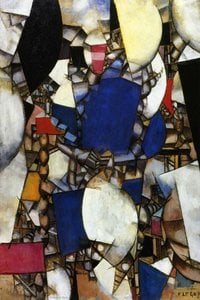
Mark Rothko's “The Omen,” a striking example of his mature abstract expressionist style, isn’t merely a painting; it’s an immersion into the profound anxieties of the 20th century. Produced as part of a Taschen portfolio in 2003, this work – rendered on thick white card and measuring 21x33cm with a print size of 28x36.5cm – immediately commands attention with its bold juxtaposition of blue and red. It’s a piece that invites contemplation, demanding a response beyond simple aesthetic appreciation.
Rothko's technique is characterized by the layering of translucent color fields—in this case, a dominant, deep blue punctuated by sharply defined crimson triangles. These aren’t haphazard splashes; they are meticulously constructed blocks of pigment, applied in thin washes that bleed into one another, creating an ethereal quality. The deliberate flatness of the surface, a hallmark of his style, forces the viewer to confront the colors directly, without the distraction of traditional perspective or representational imagery. This technique, developed over years of experimentation, aimed to evoke primal emotions and spiritual experiences through pure color relationships. The triangles themselves, often interpreted as symbols of sacrifice or even religious iconography, add a layer of complexity to the composition.
Created during a period marked by global conflict and existential uncertainty – the shadow of World War II loomed large – “The Omen” reflects the anxieties of its time. Rothko himself grappled with themes of mortality, trauma, and the search for meaning in a world seemingly devoid of inherent order. The painting’s somber palette and unsettling geometry resonate with the psychological landscape of the era, mirroring the sense of dread and disillusionment that permeated much of 20th-century art and thought. It's important to note Rothko’s own personal struggles with depression and his profound interest in Eastern philosophy, which heavily influenced his artistic vision.
Beyond the readily apparent color contrasts, “The Omen” possesses a deeply layered symbolic resonance. The blue, often associated with melancholy, spirituality, and the infinite, creates a sense of vastness and contemplation. The red triangles, simultaneously powerful and vulnerable, evoke images of sacrifice, passion, or perhaps even warning. The inclusion of a solitary figure observing the artwork adds another dimension – a witness to this emotional landscape, suggesting our own vulnerability in the face of profound questions about existence. Ultimately, Rothko sought not to depict a specific scene but to elicit an emotional response—a feeling of awe, unease, or perhaps even transcendence—from the viewer.
This limited-edition print from Taschen offers a tangible connection to one of the most influential artists of the 20th century. “The Omen” is ideally suited for spaces where contemplation and emotional depth are valued – a study, a meditation room, or even a sophisticated living area. Its bold colors and powerful composition will undoubtedly serve as a focal point, sparking conversation and inviting viewers to engage with its enduring mysteries. The print’s size (28x36.5cm) makes it suitable for a variety of wall sizes, allowing for flexible placement within your interior design scheme.
"The Omen" staat geregistreerd als Iconic onder de werken uit de Abstract Expressionism in de catalogus.
Het licht-donkercontrast van "The Omen" wordt weergegeven als Balanced. Contrast beschrijft hoe sterk de lichte en donkere vlakken van elkaar verschillen.
De kleuren in "The Omen" door Mark Rothko hebben een Balanced intensiteit.

1903 - 1970 , Letland

Unveil the visceral power of Abstract Expressionism. Our expert exploration delves into the transformative legacies of Pollock, Rothko, and De Kooning, offering discerning collectors a profound understanding of the New York School’s enduring mastery and historical impact.
 Voorvertoning
 Verstuur
 Delen
Delen
 Details bekijken
 Gids
Gids

 Download
 Vergelijkbare items
 Röntgenonderzoek
 Diavoorstelling
 Vraag & antwoord
 Statistieken

 Lees meer









 De optie voor glas is alleen beschikbaar bij een formaat kleiner dan 110 cm.