Voorvertoning Bekijk in AR Bestel handgeschilderde reproductie Schakel over naar digitale afbeelding Verstuur
Details bekijken Toevoegen aan favorieten Download Vergelijkbare items Röntgenonderzoek Diavoorstelling Statistieken

Print sample

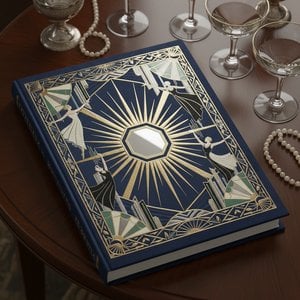
Experience Mariano Fortuny’s Venetian elegance with this 1905 print sample featuring a stylized umbrella. A master of light and color, Fortuny's innovative techniques shaped Art Deco design. Discover this unique piece and elevate your collection.

Mariano Fortuny (1871-1949) was a Spaanse designer en kunstenaar, bekend om zijn innovatieve stoffen, de beroemde Delphos gowns en revolutionaire theaterverlichting. Verken zijn Oriëntaalse invloeden, uitvindingen en blijvende nalatenschap in de kunstgeschiedenis.

Giclée / Kunstafdrukken

Giclée- of canvasafdruk van museumkwaliteit met een snelle productie en flexibele afwerkingsmogelijkheden. ( Bestel handgeschilderde reproductie Schakel over naar digitale afbeelding)

P118B $10
P118H $10
P118W $10
P438Z $10
P508JH $12
P508YH $12
P805H $10
P805Z $10
P919BZ $10
P919G $10
P919XJ $10
P959ZH $10
P968JZ $12
W106C $8
W218G $10
W218JH $8
W218Y $10
W307PJ $10
W316G $10
W316PJ $8
W316Y $10
W398PJ $8
W4111J $10
W500HY $15
W500JH $15
W692G $12
W849H $8
W940BG $15
W953PJ $8

Standaardformaat
op maat gemaakt
CM
INCH

Kies uit onze vooraf ingestelde maten die overeenkomen met de originele verhoudingen van het kunstwerk.

breedte
hoogte

U kunt uw eigen afmetingen opgeven om in een specifieke lijst of ruimte te passen. Als de door u gekozen maat niet overeenkomt met de proporties van het originele kunstwerk, zullen wij de afbeelding bijsnijden of uitbreiden met een gespiegelde of effen rand. Een digitaal mockup wordt ter goedkeuring naar u verzonden voordat de productie begint.
Houd er rekening mee dat de preview op het scherm de werkelijke bijsneding of uitbreiding niet weergeeft. Alleen de mockup toont de uiteindelijke compositie nauwkeurig.
Hoewel aangepaste maten beschikbaar zijn, raden wij aan een afmeting uit de vooraf bepaalde lijst te kiezen om de originele proporties te behouden.

Wereldwijde levering () binnen 2 weken in plaats van de standaard 4/5 weken. (16 september)

why_choose_icon
Gratis wereldwijde expressverzending
why_choose_icon
Hoogwaardig linnen canvas
why_choose_icon
Volledige verzendverzekering
why_choose_icon
Garantie op terugbetaling van invoerrechten
why_choose_icon
Garantie op exacte kleurweergave
why_choose_icon
Retourbeleid van 100 dagen (alleen bij defecten)
why_choose_icon
100% Geld-terug-garantie
why_choose_icon
Korting bij meerdere afnames

Totaalprijs

$ 69

reproduction

Print sample

Giclée / Kunstafdrukken

Afmetingen reproductie

-

Eindtotaal

$ 69

Snelle feiten

  • Notable elements or techniques: Cyclorama dome lighting
  • Year: 1905
  • Location: Palazzo Fortuny, Venice
  • Artistic style: Decorative Art
  • Movement: Orientalism
  • Medium: Tempera on paper
  • Artist: Mariano Fortuny

Kunstquiz

Er is slechts één goed antwoord op elke vraag.

Vraag 1:
What is the primary subject matter depicted in Mariano Fortuny’s ‘Print sample’?
Vraag 2:
In what year was ‘Print sample’ created?
Vraag 3:
Where is ‘Print sample’ currently housed?
Vraag 4:
What artistic technique was primarily employed by Mariano Fortuny to produce ‘Print sample’?
Vraag 5:
Fortuny’s invention, the fortuny cyclorama dome, revolutionized theater design by:

Mariano Fortuny: A Venetian Innovator Shaping Art Deco Elegance

Mariano Fortuny y Marsal (1871-1949) stands as a singular figure in the artistic landscape of the early 20th century, an artist whose multifaceted talents transcended mere painting to encompass fashion design, theatrical lighting, and groundbreaking textile innovation. Born in Reus, Catalonia, Spain, Fortuny’s formative years were steeped in the vibrant colors and textures of Orientalism – a movement that profoundly influenced his artistic vision and fueled his relentless pursuit of inventive techniques.

  • Early Life & Inspiration: Fortuny's father, also Mariano Fortuny y Marsal, was a genre painter who tragically passed away when Mariano was just three years old. This loss instilled in him an unwavering determination to honor his father’s legacy and propelled him toward artistic excellence despite immense personal hardship.
  • A Synthesis of Disciplines: Fortuny wasn't simply confined to painting; he possessed remarkable skills in photography, sculpting, architecture, etching, and theatrical stage lighting – demonstrating a rare breadth of creative exploration that would define his career.

His artistic breakthroughs began with the development of the “Fortuny Cyclorama Dome,” a revolutionary architectural innovation that utilized indirect lighting to create seamless transitions between scenes during theatrical productions. This ingenious device cemented Fortuny’s reputation as an inventor and solidified his contribution to the advancement of stagecraft.

Technique & Style: Fortuny's artistic style is characterized by meticulous detail, masterful blending of colors, and a distinctive approach to capturing light—elements that are particularly evident in his paintings. He favored tempera on paper, achieving luminous effects through layering pigments and employing glazing techniques to build up depth and richness.

Symbolism & Emotional Impact: Fortuny’s artistic output consistently explored themes of exotic landscapes, mythological narratives, and idealized beauty—reflecting the fascination with Orientalism prevalent during his time. His works evoke a sense of serenity, grandeur, and contemplation, inviting viewers to immerse themselves in worlds far removed from everyday life.

Historical Context: Fortuny’s artistic endeavors flourished amidst the burgeoning Art Deco movement, where he embraced geometric forms and luxurious materials—a testament to his ability to adapt to evolving aesthetic sensibilities. His influence extended beyond visual arts into fashion, where he created the iconic Delphos gown – a masterpiece of draped fabric and sculptural elegance that epitomized the glamour and sophistication of the era.

Legacy: Mariano Fortuny’s enduring legacy resides not only in his artistic achievements but also in his pioneering spirit—a refusal to accept conventional boundaries and an unwavering commitment to pushing the limits of creative expression. Today, reproductions of his paintings continue to inspire collectors and interior designers alike, ensuring that Fortuny's vision persists as a beacon of beauty and innovation.

  • Notable Works: Among Fortuny’s celebrated masterpieces are “Print sample,” depicting a stylized umbrella motif—a symbol of protection and resilience—and “The Poet,” capturing the contemplative gaze of a figure bathed in ethereal light.
  • Influence on Art Deco: Fortuny's innovative use of fabric and lighting profoundly impacted the Art Deco aesthetic, establishing him as one of its foremost champions.

His contribution to art history is undeniable—a testament to his genius and a reminder that true artistry transcends time, captivating audiences with its beauty and conveying timeless messages about human experience.


Biografie van de kunstenaar

Early Life and Inspiration

Mariano Fortuny, a name synonymous with theatrical innovation and opulent textiles, was born in Reus, Catalonia, Spain, on May 11, 1871. His early life was marked by profound loss – his father, Mariano Fortuny y Marsal, a respected genre painter, tragically passed away when the young boy was just three years old. This event spurred the family’s relocation to Paris, France, where his mother, a woman of considerable artistic sensibility, introduced him to the world of textiles and fabrics, an influence that would profoundly shape his future creative endeavors. From a remarkably young age, Fortuny demonstrated a prodigious talent for various art forms: he excelled in painting, photography, sculpting, architecture, etching, and even theatrical stage lighting design. His early years were steeped in artistic exploration, laying the foundation for his later revolutionary contributions.

Artistic Talents and Revolutionary Inventions

Fortuny’s artistic journey was characterized by a relentless pursuit of innovation. He quickly established himself as a skilled painter, demonstrating an ability to capture both realistic detail and evocative atmosphere. However, it was his inventive spirit that truly set him apart. Between 1901 and 1934, Fortuny patented over twenty groundbreaking inventions, fundamentally altering the landscape of theatrical design. Perhaps his most celebrated creation is the “fortuny cyclorama dome,” a quarter-dome structure constructed from plaster or cloth, ingeniously designed to diffuse light in a way that eliminated harsh shadows and created seamless transitions between scenes – a technique previously unattainable on stage. His treatise, "Eclairage Scenique" (1904), meticulously documented his revolutionary approach to lighting, detailing how reflecting light off various surfaces could dramatically alter its color, intensity, and overall effect. This wasn’t merely about illumination; it was about manipulating perception itself.

Collaborations and Recognition

Fortuny's work gained significant recognition in the 1920s, catapulting him to international fame. He forged remarkable collaborations with some of the most influential figures of his time. Richard Wagner, the German composer whose operas deeply resonated with Fortuny’s artistic sensibilities, commissioned sets for the premiere of Tristan und Isolde at La Scala opera house in Milan, adapting his dome system to accommodate the theater's vast scale and even inventing a sophisticated suction fan mechanism to maintain the dome’s taut structure. His work was also celebrated by Gabriele D’Annunzio, who greatly admired Fortuny’s innovative approach to stage design. Fortuny’s influence extended beyond opera; he designed sets for numerous theatrical productions across Europe, establishing himself as a leading figure in the burgeoning field of Gesamtkunstwerk – a holistic artistic vision that sought to unify music, drama, and visual spectacle.

Legacy and Lasting Influence

Mariano Fortuny passed away on May 3, 1949, in Venice, Italy, leaving behind a legacy that continues to inspire artists and designers today. His work profoundly influenced the French novelist Marcel Proust, who drew inspiration from Fortuny’s unique aesthetic vision. His life story was also depicted in Pere Gimferrer's novel "Fortuny," further cementing his place in cultural history. Beyond his theatrical innovations, Fortuny revolutionized the world of textiles, creating the iconic “Delphos gown,” a shimmering pleated silk creation that became a symbol of elegance and sophistication during the Art Deco era. His contributions to lighting design remain foundational, demonstrating a profound understanding of color theory, reflection, and the power of light to shape perception. Explore more about Mariano Fortuny’s inventions and designs at WahooArt's collection – a testament to his enduring legacy as a true visionary artist.

Mariano Fortuny

Mariano Fortuny

1871 - 1949 , Spanje

Belangrijkste feiten

  • Artistic Movement Or Style: Orientalisme kunst
  • Artists Or Movements Influenced By This Artist: ['Marcel Proust']
  • Artists Who Influenced This Artist: ['Richard Wagner']
  • Date Of Birth: 11 juni 1871
  • Date Of Death: 3 mei 1949
  • Full Name: Mariano Fortuny y Marsal
  • Nationality: Spaans
  • Notable Artworks:
    • Teagown
    • Portret van Henriette Fortuny
  • Place Of Birth: Granada, Spanje
Ontdek kunstwerken georganiseerd op thema, stijl en kenmerk.