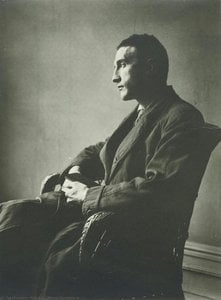
Een Revolutionaire Geest: Het Leven en de Kunst van Marcel Duchamp
Marcel Duchamp, geboren als Henri-Robert-Marcel Duchamp in 1887 in Blainville-Crevon, Normandië, was meer dan een kunstenaar; hij was een filosofische provocateur die de koers van de moderne kunst fundamenteel heeft veranderd. Zijn vroege leven, hoewel schijnbaar conventioneel – gevormd binnen een familie die artistieke expressie waardeerde en waarin beide broers succesvolle carrières als kunstenaar nastreefden – hintte al naar het iconoclasme dat nog zou komen. Duchamp volgde aanvankelijk een formele opleiding, waarbij hij traditionele technieken meester werd en experimenteerde met postimpressionistische stijlen. Deze academische basis diende echter niet als een doel op zich, maar als een springplank om de essentie van kunst, haar doel en haar definitie ter discussie te stellen. Hij was niet tevreden met het louter afbeelden van de wereld; hij zocht naar manieren om onze perceptie ervan uit te dagen en te bevragen wat werkelijke artistieke waarde vormt. Deze rusteloze intellectuele nieuwsgierigheid zou het kenmerkende aspect worden van zijn vruchtbare carrière.
Van Cubisme naar Dada: Een Afwijzing van Conventie
Duchamps artistieke reis werd gekenmerkt door een constante evolutie, een doelbewuste ontmanteling van gevestigde normen. Zijn vroege betrokkenheid bij het Cubisme, duidelijk zichtbaar in werken zoals
Portrait of Chess Players (1911), toonde een interesse in gefragmenteerde vormen en meervoudige perspectieven – een breuk met de traditionele representatie. Toch bewoog hij zich snel voorbij louter esthetische overwegingen, omdat hij besefte dat het simpelweg herordenen van visuele elementen niet volstond om de diepere vragen te beantwoorden die in hem opborrelden. De gruwelen van de Eerste Wereldoorlog voedden dit onbehagen, wat ertoe leidde dat Duchamp het Dadaïsme omarmde, een beweging die voortkwam uit desillusie en een verwerping van logica, rede en traditionele artistieke waarden. Het was binnen het Dadaïstische kader dat Duchamp werkelijk begon de conventionele opvattingen over kunst af te breken. Hij was niet geïnteresseerd in het creëren van mooie objecten; hij wilde gedachten prikkelen, aannames uitdagen en de willekeur van esthetisch oordeel blootleggen. Deze periode zag de geboorte van zijn meest radicale innovatie: de ‘readymade’.
De Readymades en de Subversie van de Kunst
De introductie van readymades – alledaagse, industrieel vervaardigde objecten die geselecteerd en gepresenteerd werden als kunst – vormde Duchamps meest significante bijdrage aan de 20e eeuw. Dit waren niet simpelweg gevonden voorwerpen; het waren bewuste daden van artistieke subversie. Door een alledaags item, zoals een urinoir (
Fountain, 1917), te voorzien van de handtekening “R. Mutt” en dit in te dienen voor een kunstexpositie, daagde Duchamp de definitie van artistiek vakmanschap en auteurschap uit. Was het de hand van de kunstenaar die het werk creëerde, of was het het
idee van de kunstenaar? Deze vraag werd centraal in zijn oeuvre en legde de basis voor de conceptuele kunst. Andere opmerkelijke readymades, zoals
L.H.O.O.Q. (1919) – een ansichtkaartreproductie van de Mona Lisa, bewerkt met een snor en een sikje – waren speelse maar scherpe kritieken op de kunstgeschiedenis en gevestigde culturele iconen. Deze werken waren niet bedoeld om bewonderd te worden om hun esthetische kwaliteiten; ze waren bedoeld om debat uit te lokken en toeschouwers te dwingen hun vooroordelen over wat kunst is, te heroverwegen. Duchamp geloofde dat kunst in de geest moet verblijven, en niet enkel in het oog.
Nalatenschap en Blijvende Invloed
De impact van Marcel Duchamp op opeenvolgende generaties kunstenaars is onmeetbaar. Hij veranderde ons begrip van kunst fundamenteel en plaveide de weg voor bewegingen zoals de conceptuele kunst, het minimalisme, de popart en talloze anderen. Zijn nadruk op het idee van de kunstenaar – het concept achter het werk – boven de esthetische eigenschappen, blijft kunstenaars tot op de dag van vandaag inspireren.
- Cubisme: Vroege verkenning van gefragmenteerde vormen en ruimtelijke representatie.
- Dadaïsme: Verwerping van logica, rede en traditionele artistieke waarden als reactie op de Eerste Wereldoorlog.
- Conceptuele Kunst: De nadruk op het idee achter het kunstwerk in plaats van de esthetische kwaliteiten.
Zijn werk blijft discussies aanwakkeren en daagt toeschouwers uit om hun aannames over creativiteit en artistieke expressie te herzien. Duchamp was niet simpelweg een kunstenaar; hij was een filosoof, een provocateur en een revolutionair die durfde alles in twijfel te trekken. Hij blijft een centrale figuur in debatten over de aard van kunst en haar rol in de samenleving, waarbij zijn nalatenschap krachtig doorklinkt in de hedendaagse kunstwereld.
The Large Glass (1915-1923), met zijn complexe symboliek en raadselachtige beelden, staat als een testament voor zijn intellectuele strengheid en blijvende invloed. Het werk van Duchamp gaat niet over het bieden van antwoorden; het gaat over het stellen van vragen – vragen die ons vandaag de dag nog steeds uitdagen en inspireren.



 Bekijk op ware grootte
 Koop handgeschilderd kunstwerk
 Verstuur
 Delen
Delen
 Details bekijken
 Gids voor studentenkunstwerken

 Download
 Vergelijkbare items
 Röntgenonderzoek
 Diavoorstelling
 Statistieken
 Lees meer






































 De optie voor glas is alleen beschikbaar bij een formaat kleiner dan 110 cm.