


 TemperaNaive Art / Primitivism
 Modern
 150.0 x 188.0 cm
Giclée- of canvasafdruk van museumkwaliteit met een snelle productie en flexibele afwerkingsmogelijkheden. ( Bestel handgeschilderde reproductie Koop afbeelding)





























Kies uit onze vooraf ingestelde maten die overeenkomen met de originele verhoudingen van het kunstwerk.

U kunt uw eigen afmetingen opgeven om in een specifieke lijst of ruimte te passen. Als de door u gekozen maat niet overeenkomt met de proporties van het originele kunstwerk, zullen wij de afbeelding bijsnijden of uitbreiden met een gespiegelde of effen rand. Een digitaal mockup wordt ter goedkeuring naar u verzonden voordat de productie begint.
Houd er rekening mee dat de preview op het scherm de werkelijke bijsneding of uitbreiding niet weergeeft. Alleen de mockup toont de uiteindelijke compositie nauwkeurig.
Hoewel aangepaste maten beschikbaar zijn, raden wij aan een afmeting uit de vooraf bepaalde lijst te kiezen om de originele proporties te behouden.
Wereldwijde levering () binnen 2 weken in plaats van de standaard 4/5 weken. (6 september)


The descent from cross
Afmetingen reproductie
Marc Chagall’s “The Descent from Cross,” completed in 1976, stands as a testament to the artist's enduring fascination with biblical narratives and his unparalleled ability to translate dreams into vibrant visual language. Painted in Naïve Art style—a movement characterized by its rejection of academic conventions and embrace of childlike spontaneity—the canvas embodies Chagall’s signature aesthetic: fantastical figures interwoven with recognizable landscapes, bathed in luminous yellows and blues that evoke memories of Vitebsk, Belarus.
The painting depicts Mary cradling Jesus after his crucifixion. However, Chagall eschews traditional depictions of sorrowful piety; instead, he presents a scene brimming with movement and ethereal beauty. Figures float upwards towards the heavens, their bodies elongated and distorted in ways that defy anatomical realism—a deliberate stylistic choice intended to convey spiritual transcendence rather than literal representation.
Historically situated within the broader context of Jewish-Christian relations in Europe during the mid-20th century—particularly following Kristallnacht, the “Night of Broken Glass,” a pogrom that targeted synagogues and Jewish property—the painting reflects Chagall’s personal experiences as a survivor of persecution. Yet, despite its fraught historical backdrop, “The Descent from Cross” transcends political concerns to offer a universal meditation on faith, compassion, and the enduring power of hope.
Symbolism permeates every element of the composition. The upward-spiraling figures represent ascension into paradise, mirroring the biblical imagery of Christ’s resurrection. The luminous yellows dominate the palette—a color associated with divine light and joy—contrasting sharply with the darker hues that symbolize earthly suffering. Chagall's recurring motifs—flying horseshoes (representing Jewish protection), stylized landscapes reminiscent of Vitebsk—further enrich the painting’s symbolic tapestry.
Ultimately, “The Descent from Cross” resonates deeply with viewers through its evocative emotional impact. It captures a moment of profound vulnerability and tenderness amidst overwhelming darkness—a reminder that even in times of despair, beauty and spiritual solace can persist. Its luminous colors and fluid brushstrokes invite contemplation and inspire awe, cementing Chagall’s place as one of the most influential artists of his era.

1887 - 1985 , Belarus

Ontdek de 10 meest iconische Expressionistische meesterwerken! Duik in de emotionele wereld van Kirchner, Kandinsky & Nolde. Museumkwaliteit kunst reproducties voor uw interieur. Exploreer de collectie op WahooArt.com.
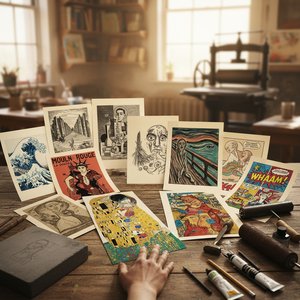
Ontdek de 10 meest legendarische lithografieën die kunstgeschiedenis schreven! Van Toulouse-Lautrec tot Munch, duik in verhalen van iconische meesterwerken. Vind museumkwaliteit reproducties & interieurinspiratie op WahooArt.com.

Ontdek de 25 meest iconische schilderijen van Rembrandt van Rijn! Duik in de Gouden Eeuw, bewonder zijn portretten & zelfportretten. Museumkwaliteit reproducties voor uw interieur op WahooArt.com. Bekijk de collectie!

Ontdek de 25 meest indrukwekkende schilderijen van Jacopo Tintoretto, de meester van het Venetiaanse Renaissance. Duik in zijn dramatische stijl, religieuze thema's & techniek. Vind museumkwaliteit reproducties en decoratie-inspiratie op WahooArt.com.

Ontdek de top 10 beroemde schilderijen gedomineerd door 'Chrome Geel'! Van Gogh, Monet en meer. Leer over kunststijlen & technieken. Museumkwaliteit reproducties voor uw interieur op WahooArt.com

 Voorvertoning
 Verstuur
 Delen
Delen
 Details bekijken

 Download
 Vergelijkbare items
 Röntgenonderzoek
 Diavoorstelling
 Lees meer







 De optie voor glas is alleen beschikbaar bij een formaat kleiner dan 110 cm.


