De kunstwerken die op deze pagina worden weergegeven, zijn beschermd door de auteursrechtwetgeving, wat betekent dat het ons wettelijk niet is toegestaan om identieke reproducties te maken of te verkopen. Deze bescherming wordt gehandhaafd onder internationale overeenkomsten zoals de Conventie van Bern en door nationale wetgeving, waaronder de bepalingen van de Amerikaanse auteurswet - Titel 17. Alle rechten voorbehouden. Reproduceren of distribueren van afbeeldingen is niet toegestaan zonder uitdrukkelijke schriftelijke toestemming van WahooArt.com en de rechthebbenden.
Als een respectvol en legaal alternatief bieden wij op maat gemaakte, handgeschilderde kunstwerken aan die geïnspireerd zijn op het origineel. Onze bekwame en professionele kunstenaars bestuderen zorgvuldig de stijl, sfeer en artistieke essentie van het origineel om een nieuw, uniek werk te creëren dat dezelfde emotie oproept – terwijl het een op zichzelf staande, originele creatie blijft.
Deze methode voldoet volledig aan de auteursrechtwetgeving, omdat het niet gaat om het kopiëren of dupliceren van het beschermde kunstwerk. In plaats daarvan is er sprake van een creatieve herinterpretatie — een nieuw schilderij dat door het origineel wordt geïnspireerd, maar er niet identiek aan is.
Met de hand geschilderd in olieverf op canvas in uw gewenste maat en lijst, op bestelling gemaakt door onze kunstenaars. ( Schakel over naar print
Schakel over naar digitale afbeeldingen)
Kies uit onze vooraf ingestelde maten die overeenkomen met de originele verhoudingen van het kunstwerk.
U kunt uw eigen afmetingen invoeren om in een specifieke lijst of ruimte te passen. Als de door u gekozen maat niet overeenkomt met de verhoudingen van het originele beeld, zullen we het kunstwerk bijsnijden of het schilderij uitbreiden met extra handgeschilderde elementen. Een digitale mockup wordt ter goedkeuring naar u verzonden voordat de productie begint.
Houd er rekening mee dat de preview op het scherm niet de werkelijke uitsnede of uitbreiding weergeeft. Alleen de mockup toont de uiteindelijke compositie nauwkeurig.
Hoewel aangepaste afmetingen mogelijk zijn, raden we aan een maat uit de vooraf gedefinieerde lijst te selecteren om de originele verhoudingen te behouden.
Wereldwijde levering () binnen 3 tot 4 weken in plaats van de standaard 5 weken. (10 oktober). Zonder concessies aan de kwaliteit.
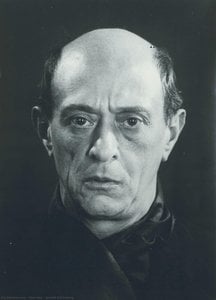
Self-Portrait
Formaat reproductie
Man Ray's "Self-Portrait," painted in 1927, isn’t merely a depiction of an individual; it’s a carefully constructed meditation on identity, the gaze, and the very act of representation. Born Emmanuel Radnitzky in Philadelphia, Man Ray – a name he adopted to signify his artistic liberation – was a pivotal figure in the Dada and Surrealist movements, constantly challenging conventional notions of art and perception. This particular self-portrait, rendered in oil on canvas, embodies this restless spirit, presenting a subtly unsettling image that invites prolonged contemplation.
The painting’s style is rooted in early Modernism, yet it transcends simple categorization. Ray employs a flattened perspective, reminiscent of Cubist influences, but softens the edges with an almost dreamlike quality. The composition is strikingly direct – we confront the artist directly, his gaze meeting ours across the canvas. However, this apparent straightforwardness belies a complex layering of symbolism and technique. Notice the meticulous detail in the rendering of his face: the slight furrow of his brow, the subtle curve of his lips, the almost imperceptible glint in his eyes – each element contributes to an aura of quiet intensity.
Ray’s artistic practice was characterized by a remarkable versatility. While he is celebrated for his groundbreaking work in photography—particularly his photograms (rayographs)—“Self-Portrait” demonstrates his mastery of oil painting. He skillfully blends photographic techniques with traditional brushwork, creating an effect that feels both familiar and utterly unique. The use of muted tones – predominantly browns, grays, and blacks – contributes to the painting’s somber mood, while subtle highlights draw attention to key features of the face. The texture is rich and layered, achieved through multiple thin glazes of paint, a technique that adds depth and luminosity to the canvas.
Interestingly, Ray often referenced his photographic experiments in his paintings. The slightly blurred quality of the image, reminiscent of a photograph captured with a slow shutter speed, subtly echoes the ephemeral nature of memory and perception. This connection between photography and painting highlights Ray’s belief that both mediums could be used to explore similar themes – the subjective experience of reality.
The “Self-Portrait” is more than just a likeness; it's a visual representation of Man Ray’s own evolving identity. Born into a Jewish immigrant family in Philadelphia, he deliberately shed his original name – Emmanuel Radnitzky – to create the persona of Man Ray, a symbol of artistic freedom and experimentation. The painting can be interpreted as a declaration of this transformation, a conscious effort to break free from traditional constraints and forge a new path.
Furthermore, the direct gaze of the subject challenges the viewer’s own role in the act of observation. Ray isn't simply presenting himself; he is inviting us to confront our own perceptions and consider how we see ourselves reflected in his image. The painting subtly suggests that identity is not a fixed entity but rather a fluid and ever-changing construct, shaped by experience and self-awareness.
“Self-Portrait” remains a powerfully resonant work of art, offering insights into the complexities of identity, perception, and artistic innovation. Its understated elegance, combined with its subtle symbolism, makes it a captivating piece for collectors and interior designers alike. Reproductions of this iconic painting capture the depth and nuance of Ray’s original vision, allowing viewers to appreciate its beauty and intellectual richness in their own homes. It's a testament to Man Ray's enduring legacy as one of the most influential artists of the 20th century – an artist who dared to challenge conventions and redefine the boundaries of art itself.
Werken die lijken op "Self-Portrait" staan vermeld op de Vergelijkbare werken-pagina van het kunstwerk.
De kunstenaar achter "Self-Portrait" is Man Ray. Het werk is gecatalogiseerd onder de naam van Man Ray.
Een print van "Self-Portrait" door Man Ray kan rechtstreeks worden besteld op deze pagina: een fine art print op katoenen canvas of archiefwaardig canvaspapier.
De kleurintensiteit van "Self-Portrait" is Monochromatic. Intensiteit beschrijft hoe krachtig de kleuren overkomen.
De AR-voorvertoning-pagina van "Self-Portrait" door Man Ray maakt gebruik van augmented reality om het kunstwerk op een compatibel apparaat in uw eigen ruimte te tonen.
U kunt een met de hand geschilderde reproductie van "Self-Portrait" door Man Ray rechtstreeks bestellen op deze pagina: een met de hand geschilderde olieverfreproductie op linnen canvas, op bestelling vervaardigd.
Voor een Living Room is de aanbevolen afmeting voor de print van "Self-Portrait" door Man Ray Large.
1890 - 1976 , Verenigde Staten van Amerika