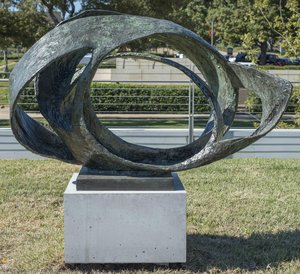
A Curious Engagement with the Archaic: The World of Lupo Borgonovo
Italian artist Lupo Borgonovo, born in Milan in 1985 and still actively working within the city’s vibrant art scene, cultivates a practice deeply rooted in an exploration of aesthetic origins. His work isn't about replicating the past but rather engaging with it—a subtle manipulation of artificial and natural archetypes that feels both ancient and strikingly contemporary. Borgonovo doesn’t present history as a fixed point; instead, he allows it to breathe, to fragment, and to re-emerge in unexpected forms. This approach has garnered him increasing recognition, with solo exhibitions at ReadingRoom in Melbourne, Australia, and within prestigious Italian institutions like the Museo del Novecento and the Triennale di Milano.
Early Development & Artistic Investigations
Borgonovo’s artistic journey is characterized by a profound curiosity. He isn't drawn to grand narratives or overt statements but rather to the quiet power of form, texture, and symbolism. His early work hinted at this fascination, often featuring studies of natural elements—animal forms, plant life—but always filtered through a lens that questioned their inherent “naturalness.” There’s a deliberate ambiguity in his creations; objects appear familiar yet subtly altered, as if unearthed from a forgotten ritual or reconstructed from fragmented memories. This early exploration laid the groundwork for his later investigations into archaic aesthetic models and the interplay between the organic and the constructed.
The Language of Archetypes & Symbolism
Central to Borgonovo’s practice is the concept of the archetype—the universal, primal patterns that underpin human experience. He doesn't simply *represent* archetypes; he actively deconstructs and reassembles them, using a diverse range of materials and techniques. Sculptures crafted in bronze often evoke ancient tools or ceremonial objects, while his works on paper display intricate patterns reminiscent of oriental prints or decorative motifs. This blending of influences—Eastern aesthetics with Western traditions, the natural world with artificial constructs—creates a unique visual language that is both captivating and unsettling.
Collaboration & Institutional Recognition
Borgonovo’s work has resonated with several key institutions in Italy and abroad. His collaboration with the Museo del Novecento in Milan demonstrates an alignment with their focus on 20th-century art and its enduring legacy. Similarly, his involvement with the Triennale di Milano—a leading design and arts institution—highlights the interdisciplinary nature of his practice. These collaborations aren’t merely exhibitions; they are dialogues—opportunities for Borgonovo to engage with a wider audience and explore new avenues of artistic expression. His pieces now reside in both private and public collections, including that of the Museo del Novecento, solidifying his position within the contemporary art landscape.
A Continuing Dialogue: Teaching & Future Directions
Beyond his own studio practice, Borgonovo actively shares his knowledge and passion for art through teaching at various institutions. This commitment to education underscores his belief in the importance of artistic inquiry and critical thinking. As he continues to work and exhibit internationally, Lupo Borgonovo remains a compelling voice—an artist who challenges conventional notions of representation and invites viewers to contemplate the enduring power of form, symbolism, and the echoes of the past. His recent exhibitions continue to build on his established themes, with explorations into space, time, and the interplay between historical references and contemporary sensibilities.



 Voorvertoning
 Switch to Print
 Verstuur
 Delen
Delen
 Details bekijken

 Download
 Vergelijkbare items
 Röntgenonderzoek
 Diavoorstelling
 Stats
Stats

 Lees meer






































 De optie voor glas is alleen beschikbaar bij een formaat kleiner dan 110 cm.