Bekijk op ware grootte Bekijk in AR Koop handgeschilderd kunstwerk Schakel over naar digitale afbeeldingen Verstuur
Details bekijken Gids voor studentenkunstwerken Toevoegen aan favorieten Download Vergelijkbare items Röntgenonderzoek Diavoorstelling Statistieken

Atlantic Codex (Codex Atlanticus), f. 858 recto.

Explore Leonardo da Vinci's 'Atlantic Codex,' f. 858 recto – a captivating black-and-white spider web study revealing the artist’s meticulous detail and inventive spirit. A unique glimpse into Renaissance genius.

Ontdek Leonardo da Vinci (1452-1519): De meester van de Renaissance! Bewonder Mona Lisa, Het Laatste Avondmaal & zijn innovatieve kunst & wetenschap. Een unieke reis door een genie.

Giclée / Kunstafdrukken

Giclée- of canvasafdruk van museumkwaliteit met een snelle productie en flexibele afwerkingsmogelijkheden. ( Koop handgeschilderd kunstwerk Schakel over naar digitale afbeeldingen)

P118B $10
P118H $10
P118W $10
P438Z $10
P508JH $12
P508YH $12
P805H $10
P805Z $10
P919BZ $10
P919G $10
P919XJ $10
P959ZH $10
P968JZ $12
W106C $8
W218G $10
W218JH $8
W218Y $10
W307PJ $10
W316G $10
W316PJ $8
W316Y $10
W398PJ $8
W4111J $10
W500HY $15
W500JH $15
W692G $12
W849H $8
W940BG $15
W953PJ $8

Standaardformaat
op maat gemaakt
CM
INCH

Kies uit onze vooraf ingestelde maten die overeenkomen met de originele verhoudingen van het kunstwerk.

breedte
hoogte

U kunt uw eigen afmetingen opgeven om in een specifieke lijst of ruimte te passen. Als de door u gekozen maat niet overeenkomt met de proporties van het originele kunstwerk, zullen wij de afbeelding bijsnijden of uitbreiden met een gespiegelde of effen rand. Een digitaal mockup wordt ter goedkeuring naar u verzonden voordat de productie begint.
Houd er rekening mee dat de preview op het scherm de werkelijke bijsneding of uitbreiding niet weergeeft. Alleen de mockup toont de uiteindelijke compositie nauwkeurig.
Hoewel aangepaste maten beschikbaar zijn, raden wij aan een afmeting uit de vooraf bepaalde lijst te kiezen om de originele proporties te behouden.

Wereldwijde levering () binnen 2 weken in plaats van de standaard 4/5 weken. (26 september)

why_choose_icon
Gratis wereldwijde expressverzending
why_choose_icon
Hoogwaardig linnen canvas
why_choose_icon
Volledige verzendverzekering
why_choose_icon
Garantie op terugbetaling van invoerrechten
why_choose_icon
Garantie op exacte kleurweergave
why_choose_icon
Retourbeleid van 100 dagen (alleen bij defecten)
why_choose_icon
100% Geld-terug-garantie
why_choose_icon
Korting bij meerdere afnames

Totaalprijs

$ 69

reproduction

Atlantic Codex (Codex Atlanticus), f. 858 recto.

Giclée / Kunstafdrukken

Formaat reproductie

-

Totaalprijs

$ 69

Belangrijkste kenmerken

  • Year: 1490s
  • Influences: Da Vinci
  • Artist: Leonardo da Vinci
  • Medium: Ink on paper
  • Subject or theme: Nature, Entomology
  • Title: Atlantic Codex (Codex Atlanticus), f. 858 recto
  • Location: Biblioteca Ambrosiana, Milan

Kunstquiz

Er is slechts één goed antwoord op elke vraag.

Vraag 1:
The drawing presented is a study for what type of artwork?
Vraag 2:
What is the primary subject depicted in this drawing?
Vraag 3:
The drawing’s monochrome style suggests it was primarily intended for:
Vraag 4:
Which of the following best describes Leonardo da Vinci’s artistic approach as evidenced by this drawing?
Vraag 5:
The ‘Atlantic Codex’ in which this drawing appears is significant because it:

The Enigmatic Geometry of Leonardo’s Spiderweb

Leonardo da Vinci's "Atlantic Codex (Codex Atlanticus), f. 858 recto," a deceptively simple black-and-white drawing, is far more than a mere study of a spiderweb. It’s a profound meditation on structure, proportion, and the intricate beauty found in nature – a cornerstone of Leonardo's relentless pursuit of understanding the universe through observation and meticulous detail. Created around 1506, during his Milanese period, this drawing exists as one fragment within the vast and extraordinary Codex Atlanticus, a collection of over 2,000 pages encompassing Leonardo’s diverse explorations across art, science, engineering, and anatomy.

The image itself is strikingly direct. A spiderweb dominates the composition, rendered with astonishing precision in charcoal or perhaps a similar medium. The lines are not merely outlines; they possess a subtle tonal variation, suggesting a layering of technique – an initial rapid sketch followed by careful refinement. Notice how Leonardo doesn’t attempt to depict the web as it appears to the naked eye. Instead, he dissects its geometry, revealing the underlying framework of intersecting strands and radiating patterns. The drawing captures not just the visual appearance but also the mathematical relationships that govern its construction – a testament to Leonardo's belief that all things could be understood through rational analysis.

A Window into Renaissance Scientific Inquiry

This seemingly isolated study is deeply embedded within the context of Leonardo’s broader scientific investigations. During this period, there was a burgeoning interest in natural philosophy and the systematic observation of the world around us. Leonardo's meticulous drawings, like this spiderweb, were not simply artistic exercises; they served as tools for understanding and documenting the principles of nature. He frequently used such studies to explore concepts related to perspective, proportion, and the mechanics of movement – all crucial elements in his ambitious projects, including designs for flying machines and military weaponry.

The Codex Atlanticus itself is a remarkable artifact, representing the culmination of Leonardo’s lifelong intellectual journey. It reveals a mind constantly engaged in questioning, experimenting, and recording his observations. This particular page, f. 858 recto, offers a glimpse into his process – a demonstration of how he approached complex subjects with an almost obsessive attention to detail, breaking them down into their fundamental components for analysis.

Symbolism and the Allure of Order

The spiderweb, as a symbol, carries significant weight. It represents not only the intricate beauty of nature but also themes of entrapment, patience, and the delicate balance between order and chaos. Leonardo was fascinated by the concept of ‘divine proportion’ – the idea that mathematical ratios underpin all aspects of creation. The perfectly symmetrical structure of the spiderweb embodies this principle, suggesting a harmony and elegance derived from underlying mathematical relationships.

Furthermore, the monochrome palette—a deliberate choice—heightens the drawing's focus on form and structure. Without the distraction of color, the viewer is compelled to engage with the intricate details of the web’s geometry, appreciating its complexity and precision. It invites contemplation on the fundamental laws governing the natural world – a reflection of Leonardo’s own quest for universal understanding.

Bringing the Codex Atlanticus Home

WahooArt offers meticulously hand-painted reproductions of this extraordinary drawing from the Codex Atlanticus, capturing its subtle tonal variations and intricate details with unparalleled accuracy. These reproductions are not merely copies; they are artistic interpretations that honor Leonardo’s original vision. Whether displayed in a study, gallery, or as part of an interior design scheme, a reproduction of “Atlantic Codex (Codex Atlanticus), f. 858 recto” brings the profound insights and aesthetic beauty of one of history's greatest minds into your space.


Biografie van de kunstenaar

De Onpeilbare Wereld van Leonardo da Vinci: Een Renaissance-Geest

Leonardo di ser Piero da Vinci, geboren in 1452 nabij het Toscaanse dorpje Vinci, is wellicht de meest universeel herkenbare figuur uit de Renaissance. Hij was een ware polymath – iemand met een onstilbare dorst naar kennis die hem over vele disciplines dreef en een onuitwisbare stempel drukte op kunst, wetenschap en techniek. Zijn naam is synoniem geworden voor genialiteit, een bewijs van zijn buitengewone talenten en visionaire denkvermogen. Leonardo’s vroege leven was onconventioneel; hij werd als bastaardkind geboren uit Piero da Vinci, een notaris, en Caterina, een boerin. Deze achtergrond gaf hem enerzijds toegang tot de praktische wereld en anderzijds een waardering voor de natuur die zijn artistieke visie diepgaand zou beïnvloeden. Hij ontving basis onderwijs in lezen, schrijven en rekenen, maar het was zijn leerperiode bij Andrea del Verrocchio in Florence dat zijn creatieve vonk echt aanwakkerde. In de werkplaats van Verrocchio leerde Leonardo niet alleen schilderen of beeldhouwen; hij verdiepte zich in een wereld van technische vaardigheden, beheersend metaalbewerking, timmerwerk, tekenen en de complexiteit van artistieke creatie – een fundament waarop hij zijn veelzijdige genialiteit zou bouwen. Zelfs tijdens deze vormende periode fluisterden verhalen rond over zijn uitzonderlijke talent; er wordt zelfs gezegd dat Verrocchio zelf het schilderen opgaf nadat hij Leonardo’s superieure vaardigheden had aanschouwd.

De Milanese Periode: Innovatie en Artistieke Bloei

In 1482 begon Leonardo aan een nieuw hoofdstuk, toen hij in dienst trad van Ludovico Sforza, de hertog van Milaan. Dit was niet slechts een artistieke benoeming; Leonardo functioneerde als militair ingenieur, architect, beeldhouwer en ontwerper voor het hof – een bewijs van zijn diverse vaardigheden. Hij bedacht innovatieve vestingwerken, ontwierp uitgebreide toneeldecors en schetste zelfs plannen voor fantastische machines. Het was tijdens deze periode dat hij begon te werken aan een van zijn meest iconische meesterwerken: Het Laatste Avondmaal. Dit fresco, geschilderd in de refter van het klooster Santa Maria delle Grazie, overstijgt louter representatie; het is een diepgaande verkenning van menselijke emotie en psychologisch drama, dat het precieze moment vastlegt waarop Christus zijn verraad aankondigt. De compositie, innovatief voor zijn tijd, en het meesterlijke gebruik van perspectief zouden de westerse kunst eeuwenlang beïnvloeden. Hoewel veel sculptuurprojecten tijdens zijn Milanese periode onvoltooid bleven, bloeide Leonardo’s inventieve geest verder op, waarmee hij de basis legde voor toekomstige wetenschappelijke ontdekkingen.

Terugkeer naar Florence en de Zoektocht naar Perfectie

Na de Franse invasie van Milaan in 1499 keerde Leonardo terug naar Florence, een stad die een hoogtepunt van artistieke ontwikkeling beleefde. Hoewel hij tijdens deze periode minder voltooide werken produceerde, was hun impact enorm. Hier begon hij aan wat het meest beroemde schilderij ter wereld zou worden: Mona Lisa (La Gioconda). De raadselachtige glimlach en boeiende blik van het onderwerp fascineren al generaties lang kijkers, terwijl Leonardo’s revolutionaire *sfumato*-techniek – de subtiele menging van licht en schaduw om vage contouren en atmosferisch perspectief te creëren – aanzienlijk bijdroeg aan de etherische kwaliteit van het schilderij. Deze periode zag ook een voortdurende verfijning van zijn anatomische studies, gedreven door een onwrikbare wens om de menselijke vorm met wetenschappelijke precisie te begrijpen. Hij ontleedde lijken en documenteerde nauwkeurig spieren, botten en organen in een reeks ongelooflijk gedetailleerde tekeningen die hun tijd ver vooruit waren.

Een Erfgoed Voorbij Kunst: Wetenschap, Uitvinding en Blijvende Invloed

Leonardo’s latere jaren werden gekenmerkt door reizen tussen Florence, Milaan en Rome. Hij werd altijd gevraagd om zijn expertise, maar liet vaak projecten onvoltooid – misschien een weerspiegeling van zijn rusteloze intellect en de enorme reikwijdte van zijn interesses. In 1516 accepteerde hij een uitnodiging van koning Frans I om te wonen en te werken op het Château du Clos Lucé nabij Amboise in Frankrijk, waar hij zijn laatste jaren doorbracht. Hij stierf daar in 1519 en liet een enorm erfgoed achter dat verder reikt dan de wereld van de kunst. Zijn aantekeningen onthullen baanbrekend werk op het gebied van anatomie, optica, hydraulica, geologie en cartografie – en conceptualiseerde uitvindingen die eeuwen voor hun tijd lagen, waaronder vliegmachines, tanks en geavanceerde wapens. De impact van Leonardo da Vinci op de kunstgeschiedenis is onmeetbaar. Hij verhoogde de status van kunstenaars van bekwame ambachtslieden tot intellectuele figuren, waarmee hij aantoonde dat artistieke creatie geïnformeerd kon worden door wetenschappelijk onderzoek en een diep begrip van de natuurlijke wereld. Zijn schilderijen vieren realisme, psychologische diepte en innovatieve technieken. Hij blijft een symbool van menselijke nieuwsgierigheid, creativiteit en het meedogenloze streven naar kennis – een ware belichaming van de Renaissance-geest wiens nalatenschap nog steeds ontzag en fascinatie inspireert eeuwen na zijn dood.

Belangrijkste Prestaties & Blijvende Impact

  • Schilderkunst: Mona Lisa, Het Laatste Avondmaal, Maagd van de Rotsen, Aankondiging
  • Tekenen & Schetsen: Uitgebreide anatomische studies, Technische ontwerpen (vliegmachines, wapens), Botanische illustraties
  • Wetenschap & Techniek: Pionierswerk op het gebied van anatomie, optica, hydraulica, geologie en cartografie. Conceptualiseerde uitvindingen die eeuwen voor hun tijd lagen.
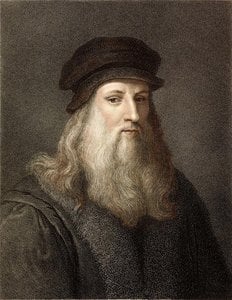
Leonardo da Vinci

Leonardo da Vinci

1452 - 1519 , Italië

Snelle feiten

  • Artistic Movement Or Style: Hoge Renaissance
  • Artists Or Movements Influenced By This Artist: ['Renaissance kunst']
  • Artists Who Influenced This Artist: ['Andrea del Verrocchio']
  • Date Of Birth: 15 april 1452
  • Date Of Death: 2 mei 1519
  • Full Name: Leonardo da Vinci
  • Nationality: Italiaans
  • Notable Artworks (List Of Titles):
    • Mona Lisa
    • Het Laatste Avondmaal
  • Place Of Birth (City And Country): Vinci, Italië
Ontdek kunstwerken georganiseerd op thema, stijl en kenmerk.