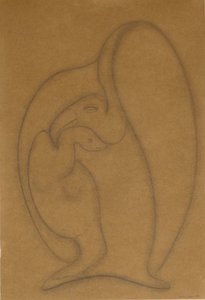
Ontvang een bestand dat klaar is voor drukwerk en de kwaliteit van het online voorbeeld ver overstijgt. Elke digitale afbeelding die wij verkopen, is afkomstig van een high-resolution master uit onze database — meestal tussen de 5.000 en 15.000 pixels breed — zodat u met vertrouwen groot kunt afdrukken, nauwkeurig kunt bijsnijden of fijne details kunt reproduceren.
Geen enkel bestand verlaat ons atelier onbewerkt. Een digitaal expert controleert de kleuren aan de hand van het originele schilderij en corrigeert deze indien nodig, om vervolgens de helderheid en details te verbeteren met professionele retoucheertechnieken — waarbij de penseelstreek en stijl van de kunstenaar altijd strikt worden gerespecteerd. Het resultaat is een afbeelding die oogt als het schilderij zelf, en niet als een gescande foto met een filter.
U keurt de afbeelding goed voordat de bestelling wordt afgerond: onze expert stuurt u binnen 72 uur een e-mail ter beoordeling. Niet tevreden? Vraag om aanpassingen of correcties, of vraag een terugbetaling aan als de kwaliteit niet aan de verwachtingen voldoet.
Dit is de kwaliteit waarop uitgevers, designstudio's, galeries en drukkerijen vertrouwen.
Download een bestand met hoge resolutie voor persoonlijke weergave, afdrukken en creatieve projecten. ( Schakel over naar print Bestel handgeschilderde reproductie)
Wanneer u kiest voor WahooArt.com, ontvangt u niet alleen een afbeelding – u krijgt een professioneel verbeterd digitaal kunstwerk, met precisie vervaardigd en voorzien van een tevredenheidsgarantie. Dit is alles wat automatisch bij uw bestelling is inbegrepen:
Uw hoogwaardige digitale afbeeldingsbestand wordt binnen 72 uur na bestelling naar u gemaild – klaar voor direct gebruik.
Uw kunstwerk wordt professioneel geoptimaliseerd met behulp van geavanceerde AI-tools en handmatige bewerkingen, waardoor maximale details, helderheid en kleurnauwkeurigheid worden gegarandeerd.
Je bestand per ongeluk verwijderd of kwijtgeraakt? Geen zorgen – we sturen het u op elk gewenst moment gratis opnieuw toe.
Geniet direct van uw kunstwerk zonder invoerrechten, belastingen of verzendkosten – digitale downloads zijn altijd belastingvrij.
Met behulp van professionele hulpmiddelen en kleurbeheer zorgen wij ervoor dat uw digitale afbeelding de originele kleuren zo nauwkeurig mogelijk weergeeft.
Mocht u niet tevreden zijn met uw digitale afbeelding, dan passen wij deze aan of storten wij 100% terug binnen 100 dagen – zonder vragen te stellen.
Niet tevreden? Ontvang een volledige terugbetaling binnen 100 dagen na ontvangst van uw digitale bestand – zonder vragen te stellen.
Koop 3 afbeeldingen, bespaar 10% - Koop 5, bespaar 15% - Koop 10+, bespaar 20%. Ideaal voor creatieve projecten, galerieën en bureaus.

Karl Heffner (1849–1925) remains a figure of profound sensitivity, an artist whose work serves as a bridge between the meticulous realism of the German tradition and the emotive, light-drenched possibilities of plein-air painting. Born in Würzburg, Bavaria, Heffner’s early life was shaped by the quiet tensions of a family facing financial hardship, a reality that initially led him toward music studies in Munich. However, the call of the visual world proved irresistible. Guided by the landscape specialists of the Munich school, he began to develop a language not of mere depiction, but of atmosphere. His early training under masters such as Adolf Stademann and Adolf Heinrich Lier instilled in him a rigorous command of composition and an acute awareness of how light interacts with the physical world—a foundation that would allow him to capture the fleeting, ephemeral moments of nature with unparalleled grace.
Heffner’s artistic journey was defined by a restless, wandering spirit that sought out the specific character of different geographies. While his roots were firmly planted in the German landscape, his eyes were often turned toward the dramatic skies of England and the luminous warmth of Italy. In the early 1870s, his travels through the English countryside introduced him to a palette of moody, melancholic tonalities. Unlike many of his contemporaries who sought the idealized brightness of the Mediterranean, Heffner found a deep, resonant beauty in the turbulent British weather—the damp chill of an October morning, the sudden, electric shifts of light during a passing shower, and the heavy, grey textures of the northern moors. This fascination with the "unpredictable" became a hallmark of his style, as he utilized low-key, earthy tones punctuated by sudden, glistening strips of gold to represent a breaking sun.
As his career progressed, Heffner’s palette underwent a transformative evolution, most notably during his time in Southern Europe. His winters in Rome and travels through Tuscany allowed him to absorb the radiant, warm hues of the Mediterranean. The influence of this light is evident in his later works, where the heavy, misty atmospheres of his German and English landscapes began to mingle with the sun-drenched olive groves and cypress trees of Italy. This synthesis created a unique body of work that could transition seamlessly from the somber, moss-covered rocks of a Bavarian moor to the brilliant, high-contrast clarity of a Tuscan afternoon. His technique, whether in oil or watercolor, was characterized by an ability to render texture—the dampness of earth, the translucency of water, and the weight of clouds—with a precision that felt both realistic and deeply poetic.
The significance of Heffner’s contribution to late 19th-century art lies in his refusal to impose an idealized vision upon the natural world. Instead, he acted as a witness to its true, often rugged, character. His works are notable for several key artistic elements:
Though Heffner lived through eras of immense political upheaval—from the unification of Germany to the devastation of World War I—his oeuvre remained steadfastly focused on the enduring solitude of nature. His work did not seek to comment on the political tumult of his time, but rather offered a sanctuary of quiet observation. By documenting the shifting moods of the landscape, he provided a timeless record of the European environment. Today, his works are preserved in prestigious collections, including the Victoria and Albert Museum in London, serving as a testament to his skill as a painter of light. Heffner’s legacy is that of a true luminist, an artist who understood that the true soul of a landscape lies not in its permanent features, but in the transient, beautiful way the light touches them before vanishing forever.

1849 - 1925 , Germany
 Voorvertoning
 Verstuur
 Delen
Delen
 Details bekijken
 Gids
Gids

 Download
 Vergelijkbare items
 Röntgenonderzoek
 Diavoorstelling
 Q&A
Q&A Statistieken
 Lees meer