Bekijk op ware grootte Bekijk in AR Koop handgeschilderd kunstwerk Schakel over naar digitale afbeeldingen Verstuur
Details bekijken Gids voor studentenkunstwerken Toevoegen aan favorieten Download Vergelijkbare items Röntgenonderzoek Diavoorstelling Statistieken

Violin and guitar - -

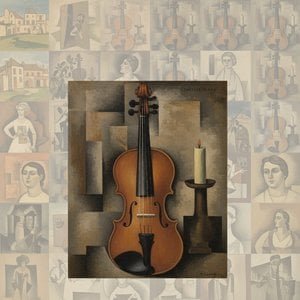
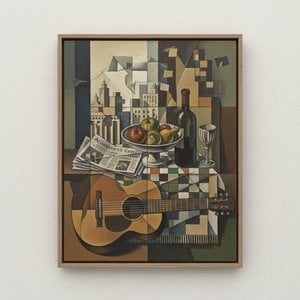
Explore Juan Gris’s Synthetic Cubism masterpiece – Violin and Guitar! This vibrant abstract depiction captures the essence of early 20th-century art with geometric shapes and fragmented forms, inviting you to discover a timeless classic.

Juan Gris (1887-1927): Een Spaanse Cubist meester met geometrische schilderijen en een unieke visie! Ontdek zijn baanbrekende stijl.

Giclée / Kunstafdrukken

Giclée- of canvasafdruk van museumkwaliteit met een snelle productie en flexibele afwerkingsmogelijkheden. ( Koop handgeschilderd kunstwerk Schakel over naar digitale afbeeldingen)

P118B $10
P118H $10
P118W $10
P438Z $10
P508JH $12
P508YH $12
P805H $10
P805Z $10
P919BZ $10
P919G $10
P919XJ $10
P959ZH $10
P968JZ $12
W106C $8
W218G $10
W218JH $8
W218Y $10
W307PJ $10
W316G $10
W316PJ $8
W316Y $10
W398PJ $8
W4111J $10
W500HY $15
W500JH $15
W692G $12
W849H $8
W940BG $15
W953PJ $8

Standaardformaat
op maat gemaakt
CM
INCH

Kies uit onze vooraf ingestelde maten die overeenkomen met de originele verhoudingen van het kunstwerk.

breedte
hoogte

U kunt uw eigen afmetingen opgeven om in een specifieke lijst of ruimte te passen. Als de door u gekozen maat niet overeenkomt met de proporties van het originele kunstwerk, zullen wij de afbeelding bijsnijden of uitbreiden met een gespiegelde of effen rand. Een digitaal mockup wordt ter goedkeuring naar u verzonden voordat de productie begint.
Houd er rekening mee dat de preview op het scherm de werkelijke bijsneding of uitbreiding niet weergeeft. Alleen de mockup toont de uiteindelijke compositie nauwkeurig.
Hoewel aangepaste maten beschikbaar zijn, raden wij aan een afmeting uit de vooraf bepaalde lijst te kiezen om de originele proporties te behouden.

Wereldwijde levering () binnen 2 weken in plaats van de standaard 4/5 weken. (25 september)

why_choose_icon
Gratis wereldwijde expressverzending
why_choose_icon
Hoogwaardig linnen canvas
why_choose_icon
Volledige verzendverzekering
why_choose_icon
Garantie op terugbetaling van invoerrechten
why_choose_icon
Garantie op exacte kleurweergave
why_choose_icon
Retourbeleid van 100 dagen (alleen bij defecten)
why_choose_icon
100% Geld-terug-garantie
why_choose_icon
Korting bij meerdere afnames

Totaalprijs

$ 69

reproduction

Violin and guitar - -

Giclée / Kunstafdrukken

Formaat reproductie

-

Totaalprijs

$ 69

Belangrijkste kenmerken

  • Location: Private Collection
  • Movement: Cubism
  • Year: 1913
  • Subject or theme: Musical instruments
  • Notable elements or techniques: Geometric abstraction
  • Influences: Picasso
  • Artist: Juan Gris

Kunstquiz

Er is slechts één goed antwoord op elke vraag.

Vraag 1:
What artistic movement is Violin and Guitar by Juan Gris primarily associated with?
Vraag 2:
In what year was Violin and Guitar created?
Vraag 3:
Which artist collaborated with Juan Gris on the development of Synthetic Cubism?
Vraag 4:
What is a key characteristic of Synthetic Cubism exemplified in Violin and Guitar?
Vraag 5:
Where was Juan Gris born?

A Symphony in Geometric Fragments

In the quiet intersection of melody and mathematics lies Juan Gris’s 1913 masterpiece, Violin and Guitar. This evocative work serves as a profound emblem of Synthetic Cubism, a movement that fundamentally redefined the visual language of the early twentieth century. Rather than offering a mere window into a room, Gris presents us with a meticulously constructed reality where the boundaries between object and space dissolve into a rhythmic dance of planes. The composition, measuring 100 x 66 cm, invites the viewer to look beyond the surface of the musical instruments and instead experience the structural harmony that binds them together. Through his expert use of geometric deconstruction, Gris transforms the familiar curves of a violin and the resonant body of a guitar into a complex tapestry of overlapping shapes, creating an illusion of depth that feels both intellectually stimulating and visually mesmerizing.

The technique employed in this piece is a testament to Gris’s unique ability to synthesize form and color. Unlike the more analytical approach of his contemporaries, which often stripped subjects down to monochromatic fragments, Gris embraced the richness of Synthetic Cubism. He utilized a palette that balances muted, earthy tones with sudden, vibrant accents, allowing each geometric shard to hold its own weight within the frame. The application of oil on canvas is deliberate and precise, reflecting his early training in engineering. This precision allows for a fascinating spatial ambiguity; one moment, a curve suggests the neck of a violin, and the next, it becomes part of a larger, abstract pattern. For the discerning collector or interior designer, this interplay of light and shadow offers a dynamic energy that can anchor a room, providing a sophisticated focal point that rewards prolonged contemplation.

The Resonance of Modernity and Memory

Beyond its formal brilliance, Violin and Guitar carries a deep emotional and historical resonance. Created during a period of intense artistic upheaval in Paris, the painting captures the spirit of an era caught between tradition and the radical unknown. The choice of musical instruments is far from accidental; the violin and guitar are symbols of harmony, culture, and the human voice, yet here they are fractured and reassembled. This fragmentation can be seen as a metaphor for the modern experience—a world being broken down by rapid technological advancement and reconstructed through new, multifaceted perspectives. There is a certain poignant nostalgia in the way these classical objects are presented, even as they are subjected to the radical deconstruction of the Cubist lens.

For those seeking to bring a piece of art history into a contemporary living space, this reproduction offers more than just aesthetic beauty; it offers a conversation. The artwork’s ability to blend abstract complexity with recognizable motifs makes it an ideal choice for modern interiors that value intellectual depth and stylistic versatility. Whether placed in a minimalist gallery-style setting or a richly textured study, the painting radiates a sense of structured elegance. It is a work that does not merely decorate a wall but enriches the atmosphere, inviting anyone who gazes upon it to find their own rhythm within its beautiful, fragmented symphony.


Biografie van de kunstenaar

A Spanish Visionary of Cubism: The Life and Art of Juan Gris

José Victoriano González-Pérez, born in Madrid in 1887, embarked on a remarkable artistic journey that would ultimately define him as Juan Gris – a pivotal figure in the early 20th century’s revolutionary art movement, Cubism. Initially pursuing an engineering degree at the School of Arts and Sciences, a logical mind was already taking shape, hinting at a unique approach to visual representation. Even during these formative years, a creative impulse manifested itself through drawings submitted to local periodicals, revealing a nascent talent eager for expression. It was in 1905 that he adopted the pseudonym Juan Gris – a name imbued with newfound identity and purpose as he began his formal studies in painting under José Moreno Carbonero, marking a decisive shift towards artistic exploration.

Parisian Awakening and the Embrace of Cubism

The year 1906 witnessed a transformative relocation to Paris, a city then brimming with artistic fervor and innovation. Gris immersed himself completely within this vibrant environment, forging enduring friendships with some of the era’s most influential artists – Henri Matisse, Georges Braque, and Fernand Léger. Initially, he honed his skills through satirical illustration for publications like *L'Assiette au Beurre*, developing a keen eye for detail and a sophisticated understanding of visual wit. However, the profound influence of Pablo Picasso proved particularly significant. Around 1910, Gris began to dedicate himself wholeheartedly to painting, deliberately distancing himself from caricature and embracing the burgeoning language of Cubism – not merely imitating its techniques but actively seeking a new way to represent reality’s underlying structure. This wasn't simply replication; it was an intellectual quest for order and clarity within visual form.

The Geometry of Perception: Style and Key Works

Juan Gris’s artistic output is characterized by an extraordinary clarity and intellectual rigor. He didn’t merely break down objects into fragments; he meticulously reconstructed them, emphasizing geometric forms and a carefully considered palette. This approach led to what became known as his “crystal period,” exemplified in masterpieces such as *Still Life Before an Open Window* (1912) and *Place Ravignan* (1915). These works showcase a remarkable interplay of planes and angles, creating a sense of depth and solidity while simultaneously challenging traditional notions of perspective. The use of muted colors and fragmented forms created a visual experience that was both stimulating and profoundly insightful. Following this period, Gris embraced Synthetic Cubism, pioneering the innovative technique of *papier collé* – incorporating real-world materials like newspaper clippings and textured papers into his compositions. This added another layer of complexity and tactile richness to his work, blurring the boundaries between painting and sculpture. Notable examples include *Guitar in front of the sea* (1925), a testament to his simplified forms and adherence to cubist principles, and *Homage à Pablo Picasso* (1912), which signaled his growing recognition within the avant-garde art world.

Influences and Development

Gris’s artistic development was profoundly shaped by several key influences. Initially drawn to the dynamism of Matisse's color palettes, he later found himself deeply engaged with Picasso’s revolutionary approach to form and space. The intellectual rigor of Braque also played a crucial role in shaping his thinking. He wasn’t simply adopting techniques; he was actively engaging in a dialogue with these masters, synthesizing their ideas into a uniquely personal style. His early work demonstrates a clear debt to the analytical phase of Cubism, characterized by meticulous dissection and overlapping planes – however, he quickly moved beyond this stage, embracing the more synthetic approach that emphasized clarity, order, and the integration of everyday objects.

Legacy and Lasting Influence

Juan Gris’s contribution to Cubism extends far beyond mere stylistic innovation; he brought a unique intellectual depth and structural clarity to the movement. He moved past the analytical phase, towards a more organized and synthetic approach, emphasizing order and precision. His work profoundly influenced the Purist style championed by Amédée Ozenfant and Charles Edouard Jeanneret (Le Corbusier), advocating for a return to classical principles of form and composition. Gris’s emphasis on geometric forms, harmonious color palettes, and the integration of everyday objects into his art established him as a pivotal figure in 20th-century art. His legacy continues to inspire artists today, demonstrating the enduring power of Cubism and the visionary genius of Juan Gris – a Spanish master who reshaped our understanding of perception and representation.
Juan Gris

Juan Gris

1887 - 1927 , Spanje

Snelle feiten

  • Artistic Movement Or Style: Cubisme, Synthetisch Cubisme
  • Artists Or Movements Influenced By This Artist:
    • Purisme
    • Ozenfant
    • Le Corbusier
  • Artists Who Influenced This Artist:
    • Picasso
    • Matisse
    • Braque
  • Date Of Birth: 23 maart 1887
  • Date Of Death: 11 mei 1927
  • Full Name: José Victoriano González-Pérez
  • Nationality: Spaans
  • Notable Artworks:
    • Hommage à Picasso
    • Still Life Before an Open Window
    • Place Ravignan
  • Place Of Birth: Madrid, Spanje
Ontdek kunstwerken georganiseerd op thema, stijl en kenmerk.