

Giclée- of canvasafdruk van museumkwaliteit met een snelle productie en flexibele afwerkingsmogelijkheden. ( Bestel handgeschilderde reproductie Schakel over naar digitale afbeeldingen)





























Kies uit onze vooraf ingestelde maten die overeenkomen met de originele verhoudingen van het kunstwerk.

Voer de gewenste breedte en hoogte in, passend bij uw lijst of muur. Een afdruk kan alleen worden ingekort en nooit groter worden gemaakt dan het origineel; een formaat met andere verhoudingen zal daarom een deel van de afbeelding verliezen. Wij sturen u een digitaal mockup ter goedkeuring voordat we tot drukwerk overgaan. De afbeelding op deze pagina toont niet de werkelijke uitsnede — dit is alleen te zien op het mockup.
Wereldwijde levering () binnen 2 weken in plaats van de standaard 4/5 weken. (9 november)
A Bedouin Arab
Afmetingen reproductie
John Singer Sargent's 1891 painting, “A Bedouin Arab,” is more than just a depiction of an individual; it’s a carefully constructed tableau brimming with the cosmopolitan sensibilities that defined the artist’s career and the anxieties of the late Victorian era. The subject, a Bedouin man rendered in meticulous detail, embodies a potent blend of exoticism and quiet strength. His posture – head tilted slightly, gaze fixed on some unseen point beyond the canvas – immediately draws the viewer into his world, inviting speculation about his thoughts and experiences.
Sargent’s technique is immediately recognizable: a masterful command of light and color that creates an almost palpable sense of texture. He employs loose, visible brushstrokes, particularly in the rendering of the Bedouin's robe and turban, suggesting both the weight of the fabric and the heat of the desert sun. The subtle gradations of tone – from the deep shadows clinging to the man’s face to the highlights catching on his turban – contribute significantly to the painting’s three-dimensionality. Notice how he uses broken color—small dabs of pigment rather than smooth blends—to build up the form, creating a shimmering effect that is characteristic of Sargent's style.
"A Bedouin Arab" was painted during a period of intense European fascination with the Orient, fueled by colonial expansion and burgeoning trade routes. The Bedouin figure represents more than just an ethnic group; he embodies the romanticized notion of the “noble savage,” a trope frequently explored in art and literature of the time. The inclusion of the two secondary figures – one to the left and another further back on the right – adds a layer of narrative ambiguity, perhaps suggesting a tribal gathering or a moment of quiet contemplation within a larger community. The patterned wall behind the subject serves not just as a backdrop but also as a visual echo of the Bedouin’s environment, reinforcing the painting's thematic concerns.
Sargent’s “A Bedouin Arab” possesses a quiet intensity that continues to resonate with viewers today. The subject's determined gaze, combined with the painting’s evocative atmosphere, invites us to contemplate themes of identity, resilience, and the enduring human connection to the natural world. This work exemplifies Sargent’s ability to capture not just physical likeness but also the inner character of his subjects – a skill that cemented his place as one of the most celebrated portrait painters of the Gilded Age. A hand-painted reproduction offers an unparalleled opportunity to experience the full impact of this remarkable artwork, bringing its beauty and complexity into your home or studio.
Historisch gezien is "A Bedouin Arab" een Academic Realism werk uit het bredere 19th Century tijdperk.
Er is een diavoorstelling beschikbaar op de Diavoorstelling-pagina van "A Bedouin Arab" door John Singer Sargent.
De Informatieblad-pagina van "A Bedouin Arab" door John Singer Sargent biedt een printbaar factsheet van twee pagina's: het kunstwerk met de bijbehorende identificatietabel, een tijdlijn die het werk plaatst binnen de levensloop van de kunstenaar, andere werken van de kunstenaar, het gemeten kleurenpalet en kant-en-klare citaten in vier verschillende stijlen.


1856 - 1925 , Italië
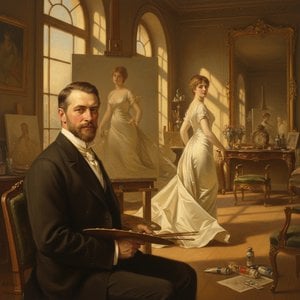
Discover the luminous mastery of John Singer Sargent. Explore an expert analysis of his legendary light, Gilded Age elegance, and technical brilliance, perfect for fine art enthusiasts seeking to bring timeless classical beauty into their modern collections.

Discover the breathtaking elegance of John Singer Sargent's masterpieces. From iconic Gilded Age portraits to impressionistic landscapes, explore the technical brilliance and timeless allure of this American master through our premium, hand-painted fine art reproductions.
 Voorvertoning
 Verstuur
 Delen
Delen
 Details bekijken
 Gids
Gids

 Download
 Vergelijkbare items
 Röntgenonderzoek
 Diavoorstelling
 Vraag & antwoord
 Statistieken

 Lees meer









 De optie voor glas is alleen beschikbaar bij een formaat kleiner dan 110 cm.


