Bekijk op ware grootte Bekijk in AR Koop handgeschilderd kunstwerk Schakel over naar digitale afbeeldingen Verstuur
Details bekijken Gids voor studentenkunstwerken Toevoegen aan favorieten Download Vergelijkbare items Röntgenonderzoek Diavoorstelling Statistieken

Trevi Fountain

Capturing the grandeur of Rome's Baroque splendor, this 1841 painting by John Ruskin depicts the majestic Trevi Fountain with lifelike movement and light, inviting you to bring a piece of Italian history into your home.

Een briljante kunstcriticus en auteur die de romantische kunstbeweging leidde en een belangrijke rol speelde bij het vormgeven van sociale ideeën over rechtvaardigheid en natuurlijke schoonheid. Zijn werken verkennen prachtige landschappen en architecturale analyses, terwijl zijn essays een blijvende impact hebben gehad op het denken over ethiek en milieu.

Giclée / Kunstafdrukken

Giclée- of canvasafdruk van museumkwaliteit met een snelle productie en flexibele afwerkingsmogelijkheden. ( Koop handgeschilderd kunstwerk Schakel over naar digitale afbeeldingen)

P118B $10
P118H $10
P118W $10
P438Z $10
P508JH $12
P508YH $12
P805H $10
P805Z $10
P919BZ $10
P919G $10
P919XJ $10
P959ZH $10
P968JZ $12
W106C $8
W218G $10
W218JH $8
W218Y $10
W307PJ $10
W316G $10
W316PJ $8
W316Y $10
W398PJ $8
W4111J $10
W500HY $15
W500JH $15
W692G $12
W849H $8
W940BG $15
W953PJ $8

Standaardformaat
op maat gemaakt
CM
INCH

Kies uit onze vooraf ingestelde maten die overeenkomen met de originele verhoudingen van het kunstwerk.

breedte
hoogte

U kunt uw eigen afmetingen opgeven om in een specifieke lijst of ruimte te passen. Als de door u gekozen maat niet overeenkomt met de proporties van het originele kunstwerk, zullen wij de afbeelding bijsnijden of uitbreiden met een gespiegelde of effen rand. Een digitaal mockup wordt ter goedkeuring naar u verzonden voordat de productie begint.
Houd er rekening mee dat de preview op het scherm de werkelijke bijsneding of uitbreiding niet weergeeft. Alleen de mockup toont de uiteindelijke compositie nauwkeurig.
Hoewel aangepaste maten beschikbaar zijn, raden wij aan een afmeting uit de vooraf bepaalde lijst te kiezen om de originele proporties te behouden.

Wereldwijde levering () binnen 2 weken in plaats van de standaard 4/5 weken. (25 september)

why_choose_icon
Gratis wereldwijde expressverzending
why_choose_icon
Hoogwaardig linnen canvas
why_choose_icon
Volledige verzendverzekering
why_choose_icon
Garantie op terugbetaling van invoerrechten
why_choose_icon
Garantie op exacte kleurweergave
why_choose_icon
Retourbeleid van 100 dagen (alleen bij defecten)
why_choose_icon
100% Geld-terug-garantie
why_choose_icon
Korting bij meerdere afnames

Totaalprijs

$ 69

reproduction

Trevi Fountain

Giclée / Kunstafdrukken

Formaat reproductie

-

Totaalprijs

$ 69

Belangrijkste kenmerken

  • Notable elements: Statues of Neptune, birds, and water
  • Artist: John Ruskin
  • Title: Trevi Fountain
  • Year: 1841
  • Influences:
    • Samuel Prout
    • David Roberts
  • Subject or theme: Baroque architecture and Roman scenery

A Vision of Roman Grandeur

In this evocative depiction of the Trevi Fountain, we are transported to the heart of Rome during a pivotal moment in the nineteenth century. The painting captures the monumental Baroque masterpiece not merely as a static architectural feat, but as a living, breathing entity. Through John Ruskin’s observant eye, the fountain emerges from its stone surroundings with a sense of profound vitality. The composition is anchored by the majestic presence of Neptune and his companions, their sculpted forms rising triumphantly above the cascading waters. As light dances across the turbulent surfaces of the pools, the viewer is invited to witness the interplay between the permanence of classical sculpture and the fleeting, rhythmic motion of the gushing torrents. This work serves as a window into an era where the grandeur of antiquity met the romantic sensibilities of the Victorian age.

The artist’s technique breathes life into the very elements of water and stone. There is a remarkable fluidity in the way the spray is rendered, creating a sense of mist and movement that seems to drift off the canvas. The inclusion of scattered birds adds a layer of spontaneous naturalism, breaking the formal rigidity of the architecture with traces of life and motion. For the discerning collector or interior designer, this piece offers a sophisticated balance of structural strength and ethereal lightness. The way the light catches the ripples in the water suggests a depth that draws the eye inward, making it an ideal focal point for a room that seeks to evoke elegance, tranquility, and a sense of historical discovery.

Historical Resonance and Emotional Depth

To understand this work is to understand the journey of its creator. Painted during a period of personal reflection and physical frailty, Ruskin’s encounter with the Trevi Fountain was marked by a complex emotional duality. While he famously harbored a preference for the intricate details of Gothic architecture over the sweeping drama of the Baroque, his sketches of Rome reveal an undeniable fascination with the power of the elements. In this painting, one can sense the artist's personal connection to the scene; he describes feeling lost among the mimicked rocks and deep pools, almost as if transported back to the familiar, rugged landscapes of his native Cumberland. This subtle infusion of personal nostalgia into a Roman landscape lends the artwork an intimate, soulful quality that transcends mere architectural documentation.

Beyond its aesthetic beauty, the painting carries a profound symbolic weight. The Trevi Fountain, with its themes of abundance and the mastery of water, represents the eternal cycle of nature and human ingenuity. The presence of Neptune, the god of the sea, serves as a reminder of the untamable forces of the world, even when harnessed within the confines of a city square. For those looking to adorn a space with art that inspires contemplation, this reproduction offers more than just decoration; it provides a narrative of resilience and beauty. It is a piece that invites the viewer to pause, to listen to the imagined roar of the water, and to find a moment of sublime peace amidst the complexities of modern life.


Biografie van de kunstenaar

A Polymath of Vision: The Life and Legacy of John Ruskin

John Ruskin, born in London on February 8, 1819, was far more than simply an art critic; he was a Victorian polymath whose influence permeated the realms of aesthetics, social reform, political economy, and environmentalism. His life was shaped by a fascinating duality – the pragmatic commercial world of his father, John James Ruskin, a successful sherry merchant, and the fervent evangelical piety of his mother, Margaret Cock. This contrasting upbringing instilled in him both a keen observational eye for detail and a deeply moral sensibility that would define his entire oeuvre. From an early age, Ruskin’s education was meticulously curated at home, steeped in biblical study and exposure to Romantic literature, particularly the works of Byron and Walter Scott. These formative influences laid the groundwork for a mind that would relentlessly seek connections between beauty, truth, and ethical living. His academic journey continued at Christ Church, Oxford, where he began to articulate his burgeoning ideas about art and its relationship to society.

The Dawn of an Art Historian: Early Writings and Influences

Ruskin’s emergence as a significant voice in the art world began with *Modern Painters* (1843-1860), a monumental five-volume work initially conceived as a defense of J.M.W. Turner against what Ruskin perceived as unjust criticism. However, *Modern Painters* quickly evolved into something far more profound – a comprehensive treatise on the nature of art itself. He argued passionately for “truth to nature,” emphasizing that great art wasn’t merely about skillful representation but about an artist's sincere and empathetic engagement with the natural world. This concept was revolutionary at the time, challenging prevailing academic standards and paving the way for new artistic sensibilities. Ruskin didn’t just analyze technique; he delved into the spiritual and moral qualities of art, believing that true beauty reflected a virtuous soul. His meticulous descriptions of landscapes, rocks, and botanical details reveal not only his keen observational skills but also his profound reverence for nature as a manifestation of divine creation. This early work established Ruskin as a formidable critic and set the stage for his later explorations into architecture and social issues. He was deeply influenced by the Pre-Raphaelite Brotherhood, championing their commitment to detailed observation and rejection of academic conventions. They shared a belief that art should aspire to moral elevation and capture the essence of genuine experience—a conviction that would permeate Ruskin’s subsequent endeavors.

Beyond Aesthetics: Social Commentary and The Guild of St. George

As Ruskin matured, his interests expanded beyond the purely aesthetic realm. Deeply troubled by the social injustices he witnessed during the Industrial Revolution, he began to apply his critical lens to the economic and political structures of Victorian England. *Unto This Last* (1860), a series of essays originally published in *The Cornhill Magazine*, marked a turning point in his career. In this work, Ruskin vehemently critiqued utilitarian economics and advocated for a more humane and equitable social order based on principles of fellowship and craftsmanship. He argued that the dignity of labor was essential to a flourishing society and that true wealth lay not in material possessions but in the quality of human relationships. This conviction led him to establish *Fors Clavigera* (1871-1884), a monthly series of letters addressed “To the Workmen and Labourers of Great Britain,” where he expounded his social and political ideas with characteristic fervor. From these writings emerged the Guild of St. George, founded in 1871, an organization dedicated to promoting craftsmanship, rural industries, and education among working-class communities. The Guild aimed to create a model society based on Ruskin’s ideals, fostering artistic skill, ethical labor practices, and a harmonious relationship with nature—a vision that resonated powerfully with those seeking alternatives to the materialism of the era.

Notable Works & Further Exploration

  • Modern Painters (1843-1860): Ruskin’s foundational work, defending Turner and establishing his theories of art.
  • The Stones of Venice (1851-1853): A detailed analysis of Venetian architecture, exploring its historical, social, and artistic significance.
  • Unto This Last (1860): A powerful critique of Victorian economics and a call for social reform.
  • Fors Clavigera (1871-1884): A series of letters addressing the working class, outlining Ruskin’s vision for a more equitable society.
  • Dawn, Coniston: A breathtaking watercolor capturing the serene beauty of Coniston Water and demonstrating Ruskin's unparalleled ability to convey emotion through observation.
To delve deeper into the life and work of John Ruskin, resources are available at:

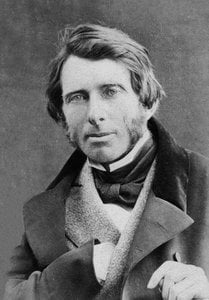
Jan Ruskin

Jan Ruskin

1819 - 1900 , Verenigd Koninkrijk

Snelle feiten

  • Artistic Movement Or Style: Victorian Kunstkritiek
  • Artists Or Movements Influenced By This Artist: ['Pre-Raphaelieten']
  • Artists Who Influenced This Artist: ['J.M.W. Turner']
  • Date Of Birth: 8 februari 1819
  • Date Of Death: 20 januari 1900
  • Full Name: John Ruskin
  • Nationality: Engels
  • Notable Artworks:
    • Dawn, Coniston
    • Fors Clavigera
  • Place Of Birth: Londen, VK