GRATIS KUNSTADVIES

x
Bestel schilderij Bestel schilderijKoop afbeelding in hoge resolutie Koop afbeelding in hoge resolutie VerstuurVerstuur
DetailsDetails Toevoegen aan favorieten Toevoegen aan favorieten DownloadDownload Vergelijkbare werkenVergelijkbare werken RöntgenfotoRöntgenfoto DiavoorstellingDiavoorstelling

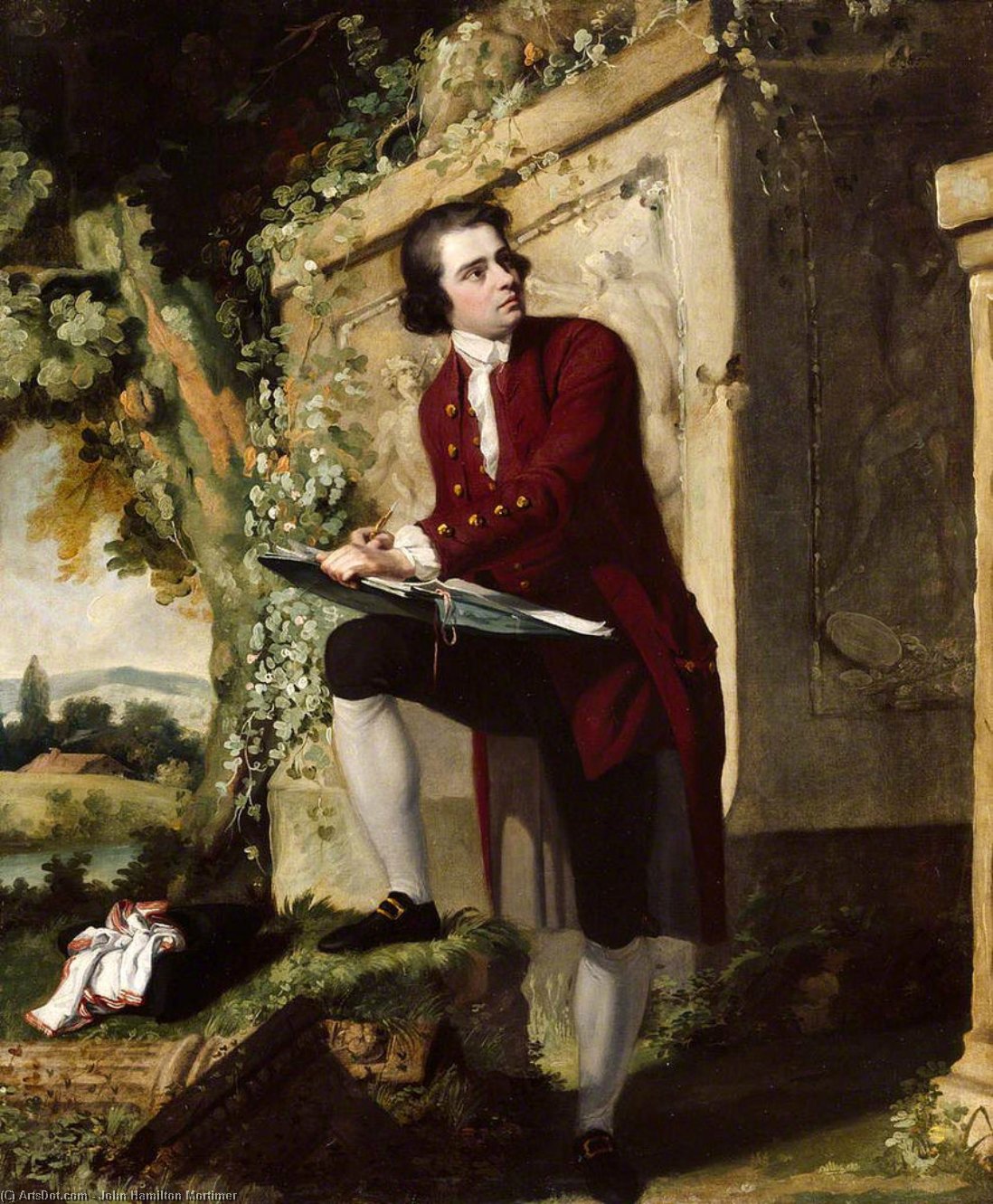
Self Portrait

John Hamilton Mortimer (1740-1779) was een Britse kunstenaar bekend om romantische Italiaanse landschappen, dramatische oorlogsscènes geïnspireerd door Salvator Rosa en historische schilderijen. Voorzitter van de Koninklijke Academie.

Giclée / Kunstafdruk

Giclée- of canvasafdruk van museumkwaliteit met snelle productie en flexibele afwerkingsopties.

Standard
custom
CM
INCH

Kies uit onze vooraf ingestelde maten die overeenkomen met de originele verhoudingen van het kunstwerk.

breedte
hoogte

U kunt uw eigen afmetingen opgeven om in een specifieke lijst of ruimte te passen. Als de door u gekozen maat niet overeenkomt met de proporties van het originele kunstwerk, zullen wij de afbeelding bijsnijden of uitbreiden met een gespiegelde of effen rand. Een digitaal mockup wordt ter goedkeuring naar u verzonden voordat de productie begint.
Houd er rekening mee dat de preview op het scherm de werkelijke bijsneding of uitbreiding niet weergeeft. Alleen de mockup toont de uiteindelijke compositie nauwkeurig.
Hoewel aangepaste maten beschikbaar zijn, raden wij aan een afmeting uit de vooraf bepaalde lijst te kiezen om de originele proporties te behouden.

Wereldwijde levering () binnen 2 weken in plaats van de standaard 4/5 weken. (2 juli)

why_choose_icon
Gratis wereldwijde expressverzending
why_choose_icon
Hoogwaardig linnen canvas
why_choose_icon
Volledige verzendverzekering
why_choose_icon
Garantie op terugbetaling van invoerrechten
why_choose_icon
Garantie op exacte kleurweergave
why_choose_icon
60 dagen retourbeleid (alleen bij defecten)
why_choose_icon
100% Geld-terug-garantie
why_choose_icon
Korting bij meerdere afnames

Totaalprijs

-

reproduction

Self Portrait

Giclée / Kunstafdruk

Afmetingen reproductie

-

Eindtotaal

-


Biografie van de kunstenaar

John Hamilton Mortimer (1740–1779): A Life Painted in Romantic Hues

John Hamilton Mortimer, a name perhaps less instantly recognizable than his contemporaries like Reynolds or Wright of Derby, nevertheless occupies a significant and fascinating niche within the landscape of 18th-century British art. Born in Eastbourne, Sussex, on September 17th, 1740, Mortimer’s brief but intensely productive life—he died at just thirty-nine years old—was marked by artistic ambition, a restless spirit, and an evolving style that mirrored the shifting tastes of his era. His father, Thomas Mortimer, was a customs officer with mercantile interests, providing a stable if unremarkable background for a young man destined to pursue a path steeped in creativity. By 1757, Mortimer had already gravitated towards London, enrolling at the Duke of Richmond’s Academy, where he forged a lifelong friendship with Joseph Wright, a bond that would prove mutually supportive throughout their careers. This early immersion into the artistic milieu fostered not only technical skill but also an awareness of the burgeoning intellectual currents shaping British art—the Enlightenment's fascination with reason and observation, alongside a growing appreciation for the sublime beauty of nature. From History to Bandits: The Evolution of a Style Mortimer’s formative years were dedicated to mastering classical principles, studying under Hudson and honing his draughtsmanship at the Duke of Richmond’s Academy. He quickly gained recognition for his historical paintings, notably *St Paul Preaching to the Ancient Druids in Britain*, which remains housed in the Guildhall at High Wycombe. These works demonstrated a commitment to narrative and an ability to capture dramatic moments—a characteristic that would become central to his artistic vision. However, Mortimer wasn’t content with merely replicating established styles; he possessed a keen sensitivity to changing aesthetic preferences. The influence of Salvator Rosa, the 17th-century Neapolitan painter celebrated for his wild, untamed scenes of outlaws and dramatic landscapes, proved particularly potent. This fascination with the darker side of human experience fueled his exploration of more masculine themes—soldiers, bandits, and rugged terrains—a stylistic shift that anticipated the Romantic movement’s embrace of emotion and imagination. His etching after Rosa's self-portrait underscored this admiration for a predecessor who championed expressive freedom. A Collaborative Spirit and Artistic Leadership Mortimer wasn’t solely a solitary painter; he actively engaged in collaborative projects with fellow artists, bolstering his reputation and expanding his artistic horizons. He frequently contributed figure work to compositions by others, notably assisting Thomas Jones on ambitious canvases like *A Land Storm, with the Story of Dido and Aeneas*, *The Death of Orpheus*, and a pair of paintings inspired by Milton’s *Allegro* and *Penseroso*. These collaborations highlighted his versatility and willingness to contribute his skills to larger artistic endeavors—a testament to his understanding of art as a collective pursuit. Furthermore, Mortimer played a crucial role in the decoration of Brocket Hall, Hertfordshire, collaborating with Francis Wheatley and James Durno on a lavish saloon scheme. His election to the Society of Artists in 1774 solidified his position within the artistic community and afforded him considerable influence during a period of transformative change—a time when artists wrestled with reconciling classical tradition with burgeoning Romantic ideals. A Legacy Tempered by Early Loss Despite his successes, Mortimer’s career was tragically curtailed by illness—the precise cause remains undocumented—and he succumbed on February 4th, 1779, at the age of thirty-nine. Though he exhibited at the Royal Academy in 1778 showcasing five works including *Sir Arthegal* and bandit scenes, his potential remained largely unrealized. Criticism from Horace Walpole, who dismissed him as a mere imitator of Salvator Rosa, served as a poignant reminder that artistic judgment is often subjective. However, Mortimer’s paintings—characterized by their dramatic compositions, expressive brushwork, and exploration of complex themes—offer a compelling glimpse into the artistic sensibilities of his time. He bridged the gap between the classical traditions of the 18th century and the emerging Romanticism of the 19th, paving the way for future generations to embrace emotion, imagination, and the power of narrative in their work. Today, John Hamilton Mortimer is increasingly recognized as a significant figure whose art deserves greater attention and appreciation—a rediscovery reflecting a renewed understanding of his contribution to British artistic history. Rediscovering Mortimer: A Modern Perspective The enduring appeal of Mortimer’s oeuvre lies not only in its historical significance but also in its emotional resonance. His paintings invite viewers to contemplate themes of heroism, villainy, love, loss, and the untamed forces of nature—subjects that captivated audiences across centuries. The recent scholarship surrounding Mortimer—including detailed archival research at institutions like the Paul Mellon Centre—has shed new light on his life, artistic development, and lasting influence. Through exhibitions and publications, a burgeoning appreciation for his talent is securing Mortimer’s place as a pivotal artist whose work continues to inspire contemplation and admiration. His canvases stand as a testament to the transformative power of art—a reminder that it can transport us beyond time and circumstance, challenging our perceptions and illuminating the profound complexities of human experience.
John Hamilton Mortimer

John Hamilton Mortimer

1740 - 1779 , Verenigd Koninkrijk

Belangrijkste feiten

  • Artistic Movement Or Style: Romantiek
  • Artists Or Movements Influenced By This Artist: ['Romantiek']
  • Artists Who Influenced This Artist: ['Salvator Rosa']
  • Date Of Birth: 1740
  • Date Of Death: 1779
  • Full Name: John Hamilton Mortimer
  • Nationality: Britse
  • Notable Artworks: ['St Paul Preaching to the Ancient Druids in Britië']
  • Place Of Birth: Eastbourne, Verenigd Koninkrijk