Giclée- of canvasafdruk van museumkwaliteit met een snelle productie en flexibele afwerkingsmogelijkheden. ( Bestel handgeschilderde reproductie Schakel over naar digitale afbeeldingen)





























Kies uit onze vooraf ingestelde maten die overeenkomen met de originele verhoudingen van het kunstwerk.

Voer de gewenste breedte en hoogte in, passend bij uw lijst of muur. Een afdruk kan alleen worden ingekort en nooit groter worden gemaakt dan het origineel; een formaat met andere verhoudingen zal daarom een deel van de afbeelding verliezen. Wij sturen u een digitaal mockup ter goedkeuring voordat we tot drukwerk overgaan. De afbeelding op deze pagina toont niet de werkelijke uitsnede — dit is alleen te zien op het mockup.
Wereldwijde levering () binnen 2 weken in plaats van de standaard 4/5 weken. (13 november)
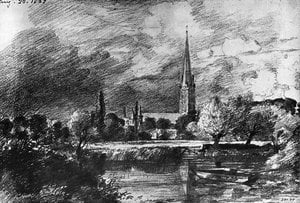
shoreham bay
Afmetingen reproductie
John Constable's "Shoreham Bay, near Brighton," painted in 1824, isn’t merely a depiction of a coastal scene; it’s a profound meditation on the English countryside – a realm he meticulously rendered with an unparalleled sensitivity to light, atmosphere, and the quiet poetry of everyday life. This work, now housed within the Fitzwilliam Museum in Cambridge, offers a glimpse into Constable's unique artistic vision, one deeply rooted in his childhood spent amidst the rolling fields and meandering rivers of Suffolk.
The painting immediately draws the eye with its harmonious blend of muted blues, greens, and greys. The sky, scattered with delicate clouds, isn’t rendered as a static backdrop but rather as an active participant in the scene – subtly influencing the light that washes across the sandy shore. Constable masterfully employs a technique known as ‘optical mixing,’ layering thin glazes of paint to create luminous effects and a remarkable sense of depth. Notice how the reflections shimmering on the water’s surface aren't simply copied, but rather constructed through careful observation and an understanding of how light interacts with different textures.
Constable’s work firmly places him within the Romantic movement, a period characterized by a shift away from classical ideals towards a celebration of nature's power and beauty. Unlike his predecessors who often depicted grand, dramatic landscapes, Constable focused on the subtle nuances of rural life – the way light filters through trees, the gentle flow of water, the quiet dignity of farm animals. His subject matter wasn’t chosen for its inherent grandeur but because it held a profound emotional resonance for him.
The inclusion of two figures strolling along the shore adds a touch of human presence to this otherwise serene scene, yet they remain deliberately understated, almost dissolving into the landscape itself. They serve as anchors for the viewer, inviting us to contemplate our own relationship with nature and the simple pleasures of a day spent outdoors. The composition is carefully balanced, drawing the eye towards the distant horizon while simultaneously grounding it in the immediate details of the beach.
The painting's title – “Shoreham Bay, near Brighton” – immediately connects us to a specific location: Shoreham-by-Sea, a charming coastal town in West Sussex. Research reveals that Shoreham boasts a rich history dating back to pre-Roman times, evolving from a small settlement into a significant port and fishing village. The painting captures a moment of relative tranquility, far removed from the bustling activity of its maritime past. Interestingly, Constable’s depiction aligns with historical accounts of Shoreham's development, particularly its transformation as a Victorian seaside resort.
Further investigation reveals that Shoreham’s strategic location and harbor played a crucial role in its history. The town was once a thriving port for timber exports, and the presence of the River Adur facilitated trade with London. The construction of the pier in 1816 solidified Shoreham's position as a vital commercial center, a fact subtly reflected in Constable’s attention to detail – the subtle indications of harbor activity in the distance.
"Shoreham Bay" is more than just a beautiful painting; it's a testament to Constable’s extraordinary ability to capture the essence of the English countryside. WahooArt offers meticulously crafted, hand-painted reproductions that faithfully recreate the original’s luminous quality and emotional depth. Whether you choose a large-scale statement piece for your living room or a smaller, more intimate reproduction for your study, our faithful recreations will bring Constable's vision to life in your home, evoking the same sense of peace, tranquility, and connection with nature that inspired the artist himself.
Consider how this evocative scene can complement your interior design – its muted palette and naturalistic subject matter blending seamlessly with a range of styles, from traditional country house interiors to contemporary minimalist spaces. Let "Shoreham Bay" transport you to the heart of the English countryside, offering a moment of respite and inspiration in your daily life.
Voor "shoreham bay" is de aanbevolen afdrukinstelling een formaat van Large en een Panoramic oriëntatie.
"shoreham bay" is het werk van John Constable en behoort tot de Romanticism-stroming.
"shoreham bay" door John Constable is bevindt zich in het publiek domein - de auteursrechten zijn verlopen. De auteursrechtelijke bescherming loopt vanaf het overlijden van de kunstenaar, dat plaatsvond in 1837.

John Constable werd geboren in 1776 in het dorp East Bergholt, in het graafschap Suffolk. Als tweede zoon van Golding en Ann (Watts) Constable groeide hij op in een omgeving die diep geworteld was in de lokale gemeenschap. Zijn vader was een welvarende graan- en kolenhandelaar die de eigenaar was van Flatford Mill. Deze nauwe verbondenheid met de rivier en de lokale handel betekende dat het ritme van het water en de constante beweging van goederen een integraal onderdeel vormden van het dagelijks leven in zijn huishouden. Rond 1792 begon hij in het familiebedrijf te werken, waar hij de praktische aspecten van de graanhandel leerde kennen, nog voordat zijn pad definitief naar het canvas zou leiden.
Zijn artistieke vorming begon pas echt toen hij in 1799 als aspirant-leerling de Royal Academy Schools betrad. In zijn vroege jaren wijdde hij zich aan het bestuderen van de anatomie en het kopiëren van de werken van oude meesters, in een voortdurende zoektocht naar het begrijpen van de onderliggende structuur van de wereld. Deze formele opleiding legde een essentieel fundament voor zijn latere, diepgaande observaties van het landschap. Hij bewoog zich tussen het rustige bestaan van een koopmanszoon en de gedisciplineerde studie van tekenen en schilderen, totdat hij uiteindelijk zijn weg naar Londen vond om de kunst als zijn ware roeping te omarmen.
Het landschap van zijn jeugd bleef een constante aanwezigheid in zijn leven. Geboren in East Bergholt, Verenigd Koninkrijk, groeide hij op in een wereld waar de rivier het dagelijkse ritme bepaalde. Zijn vader, een graanhandelaar, beheerde de pacht van de molens langs de rivier de Stour en bezat land in Dedham Vale. Deze verbondenheid met het water en de aarde was niet louter een kwestie van zaken doen; het was een levenslange hechting. Hij koesterde een diepe nostalgie voor de Suffolk-dorpen East Bergholt, Dedham, Stratford St Mary en Langham. Zelfs toen hij elders ging wonen, bleven de aanblik van een specifieke weide of de manier waarop het licht op een bepaalde oever van de Stour viel, onlosmakelijk met hem verbonden.
Het leven trok hem uiteindelijk naar de stad. Hij woonde in Bloomsbury, Londen, verhuisde in 1817 naar Keppel Street en later in 1822 naar Charlotte Street. Deze stedelijke straten stonden in schril contrast met de oevers van de rivier. Hij bracht ook tijd door in Staffordshire, Derbyshire, het Lake District en Brighton. Ondanks al deze reizen bleven de vertrouwde contouren van de Stourvallei zijn belangrijkste referentiepunt. Hij bekeek de wereld door de lens van de plaatsen die hij het beste kende, en vond een gevoel van thuiskomen in de vochtige aarde en de verschuivende wolkenpartijen van zijn geboorteregio.
De weg naar een professionele carrière is vaak afhankelijk van de juiste introducties. Voor John Constable kwam dit moment door de tussenkomst van George Beaumont, een verzamelaar die de deuren opende naar een geheel nieuwe manier van kijken. Via Beaumont maakte hij kennis met het werk van Claude Lorrain, wiens invloed een cruciale rol speelde in de vorming van zijn begrip van het landschap. Deze vroege connecties boden het fundament terwijl hij de overstap maakte van de handelsonderneming van zijn familie naar de formele studie van de kunst. In 1805 nam hij een specifieke opdracht aan om een altaarstuk te schilderen voor de kerk in Brantham.
Zijn aanzien binnen de academische gemeenschap groeide gedurende de decennia gestaag. In 1819 werd hij verkozen tot Associate van de Royal Academy, een stap die zijn toenemende erkenning onder zijn vakgenoten markeerde. Tegen 1829, op 52-jarige leeftijd, bereikte hij de rang van Royal Academician. Deze progressie weerspiegelde een carrière die was opgebouwd uit een volhardende, stille observatie van de wereld om hem heen, waarbij hij zich bewoog van lokale opdrachten naar een erkende positie binnen de institutionele structuur van de Britse kunst.
John Constable vertrouwde niet op de theatraliteit van bravoure om zijn punt te maken. In plaats daarvan zocht hij naar een waarheidsgetrouwe weergave van de natuurlijke wereld, een streven dat een traag en methodisch proces van observatie vereiste. Hij werkte vaak in de open lucht, waarbij hij gebruikmaakte van plein air schetsen om de subtiele interactie tussen het licht en het landschap te vangen. Om zijn grotere composities op te bouwen, leunde hij op een fundament van olieschetsen, grafiettekeningen en aquarelstudies. Deze voorbereidende lagen stelden hem in staat om de complexiteit van een scène volledig uit te werken voordat hij zich definitief vastlegde op het canvas.
Zijn penseelvoering bezit een tastbare, fysieke zwaarte. Hij maakte gebruik van dikke lagen impasto om textuur op te bouwen, een methode die het oppervlak een gevoel van beweging en vitaliteit geeft. Deze tactiele benadering hielp hem om de specifieke manier waarop licht en atmosfeer verschuiven over een veld of een rivier, vast te leggen. Hij verwees naar deze studie van licht en schaduw als het 'chiaroscuro van de natuur'. Het was zijn manier om de werkelijke, voortdurend veranderende condities van de lucht en het water vast te leggen, in plaats van een geïdealiseerde versie daarvan.
De rivier en de lucht vormen de kern van zijn artistieke obsessie. In 1821 schiep hij The Hay Wain, een scène van de River Stour die is uitgegroeid tot zijn meest iconische meesterwerk. Hij koos vaak voor monumentale formaten om de vluchtige beweging van de lucht en het water te kunnen vangen. Dit leidde tot een reeks enorme doeken van wel anderhalf meter hoog, zoals The Leaping Horse (1825), waarbij hij gebruikmaakte van levensgrote voorbereidende olieschetsen om het licht en de compositie perfect op elkaar af te stemmen. Deze grootschalige werken boden hem de ruimte om de fijnere details van het landschap minutieus uit te werken voordat de uiteindelijke verfschikking plaatsvond.
Zijn fascinatie voor het lokale landschap reikte verder dan de velden alleen; het omvatte ook de landgoederen en de architectuur die daar deel van uitmaakten. In 1816 schilderde hij Wivenhoe Park, waarmee hij de rurale harmonie van het Essex-platteland wist te vereeuwigen. Ook de wisselwerking tussen licht en architectuur trok zijn aandacht, zoals prachtig te zien is in Salisbury Cathedral from the Bishop's Grounds, geschilderd in 1823. Zijn unieke vermogen om de sfeer van een specifieke plek te vertalen, kwam tot leven in de manier waarop hij de zwaarte van de wolken en de tastbare textuur van de aarde weergaf.
Sommige van zijn werken hebben lang na voltooiing een astronomische waarde bereikt. Zo werd The Lock (1824) in 2012 bij Christie's verkocht voor maar liefst £22.441.250. Zijn rijke oeuvre omvat daarnaast diverse andere studies en voltooide meesterwerken:
De penseelvoering van de Stour Valley werd gevormd door de stille aanwezigheid van verschillende meesters. De werken van Claude Lorrain en Jacob van Ruisdael boden een manier van kijken die zich distantieerde van het theatrale. Hij keek ook naar de composities van Thomas Gainsborough en de texturen van Peter Paul Rubens. Deze invloeden hielpen hem om de rigide, academische regels van de Royal Academy te overstijgen. Hij zocht naar een waarheid die besloten lag in de vochtigheid van de lucht en de manier waarop het licht een rivier raakt, in plaats van in de grootschalige, mythologische scènes die door zijn tijdgenoten werden geprefereerd.
Zijn pad liep vaak parallel aan dat van JMW Turner. De twee waren tijdgenoten, en hun rivaliteit laaide op tijdens de tentoonstellingen van de Royal Academy. Terwijl de een zich richtte op het dramatische en het sublieme, bleef de ander verbonden met de vertrouwde, lokale landschappen van zijn jeugd. Deze focus op de directe observatie van de natuur reikte uiteindelijk over het Kanaal heen. Zijn benadering van licht en atmosfeer liet een blijvende indruk achter op de Barbizon School in Frankrijk, waar schilders zochten naar een vergelijkbare verbinding met de natuurlijke wereld.
Persoonlijke connecties gaven eveneens richting aan zijn bewegingen. Hij was nauw verbonden met John Fisher, de neef van de bisschop van Salisbury, die hem uitnodigde om in de omgeving te verblijven. Deze vriendschappen boden meer dan alleen sociale banden; ze gaven hem toegang tot de specifieke landschappen die hij jarenlang zou bestuderen en schilderen. Door deze mensen en deze plekken werd zijn werk een verslag van een specifieke, geleefde realiteit.
De jaren na zijn huwelijk met Maria Bicknell in 1816 werden gekenmerkt door een verschuivend gevoel van thuiskomen. Hoewel zijn werk onveranderlijk verbonden bleef met de rivier en de velden van zijn jeugd, bewoog zijn leven zich steeds meer richting de stad. Tegen 1827 had hij zich definitief gevestigd in Hampstead, Londen. Deze periode werd echter overschaduwd door de achteruitgang van de gezondheid van Maria. Haar dood aan tuberculose in 1828 was een gebeurtenis die een diepe, blijvende wond in zijn leven achterliet. Ondanks dit persoonlijke verdriet bleef hij schilderen, waarbij hij vaak troost vond in het veranderlijke licht van de landschappen die hij al decennia lang met zoveel toewijding had bestudeerd.
Zijn laatste levensjaren bracht hij door in Bloomsbury, Londen. Hij bleef volledig toegewijd aan zijn kunst, terwijl hij navigeerde door de complexiteit van zijn persoonlijke leven en de fysieke eisen die zijn medium stelde. Op 31 maart 1837 kwam hij in Bloomsbury tot stilstand. Hij werd begraven op het kerkhof van St John's in Hampstead, een plek die in zijn latere jaren echt zijn thuis was geworden.
Door zijn blik te richten op de alledaagsheid van het Engelse platteland, veranderde hij de manier waarop het landschap werd waargenomen. Hij brak met de theatrale, geïdealiseerde scènes die door de academies werden geprefereerd, en koos er in plaats daarvan voor om schoonheid en gewicht te vinden in het gewone. Een hooierwagen of een eenvoudig boerengebouw werd een onderwerp dat een zorgvuldige studie waardig was. Deze verschuiving hielp de focus van de schilderkunst te verleggen van grootschalige mythologische narratieven naar een waarheidsgetrouwe weergave van de natuurlijke wereld. Hij toonde aan dat een landschap een diep gevoel van persoonlijke emotie kon dragen, waarbij een uitzicht op een rivier of een weide werd getransformeerd tot een middel om innerlijke stemmingen uit te drukken.
Zijn gewoonte om in de open lucht te werken, om vast te leggen hoe het licht de wolken raakt en hoe de vochtigheid in de lucht de sfeer bepaalt, liet een blijvende indruk achter op de generaties die hem volgden. Deze toewijding aan directe observatie en de studie van atmosferische effecten anticipeerde op veel van de belangen die later door de impressionistische schilders zouden worden aangehangen. Zijn invloed stak de Kanaal over naar Frankrijk, waar zijn benadering weerklank vond bij de Barbizon-school. Deze kunstenaars deelden zijn interesse in het schilderen naar het leven en het observeren van de directe, veranderlijke kwaliteiten van de natuur. Zijn werk blijft een essentiële schakel naar een manier van kijken die de werkelijke textuur van de aarde en het voortdurend verschuivende licht van de hemel prioriteit geeft.
Het volgen van zijn artistieke voetafdruk in verschillende collecties onthult hoe zijn visies op het Engelse platteland door de tijd heen zijn verzameld. Het Yale Center for British Art in New Haven herbergt 25 van zijn werken, waaronder een landschapsstudie nabij Dedham uit ongeveer 1802. In Londen is zijn aanwezigheid voelbaar in diverse instellingen. Het Victoria and Albert Museum beheert 6 werken, zoals een scène van bootbouw nabij Flatford Mill. De National Gallery bezit 5 werken, waaronder het monumentale canvas van The Hay Wain uit 1821. De Tate Gallery heeft 4 werken in haar collectie, waaronder een detail van Flatford Mill uit 1817.
Zijn invloed reikt echter verder dan de Britse eilanden; ook op het continent is zijn werk aanwezig. Het Louvre in Parijs bezit 2 werken, waaronder een weergave van Helmingham Dell. Deze stukken illustreren de uiteenlopende manieren waarop hij licht en atmosfeer wist te vangen, van de zware wolkenpartijen boven de Stour tot de verstilde hoekjes van een dorp. Het aanschouwen van deze werken in hun diverse omgevingen biedt de mogelijkheid om van dichtbij te bestuderen hoe hij dikke verflagen gebruikte om een tastbare textuur op het canvas op te bouwen.
The Hay Wain (1821)
Salisbury Cathedral from the Meadows (1831)
The Lock (1824)
Stonehenge at Sunset (1836)
Wivenhoe Park, Essex (1816)

1776 - 1837 , Verenigd Koninkrijk

Explore the profound emotional depth of Romantic landscape painting. Discover how masters captured the sublime through light, shadow, and untamed nature, and learn to bring this timeless, atmospheric beauty into your collection with museum-quality fine art reproductions.

Explore the profound legacy of John Constable. Discover how his mastery of light, atmosphere, and the English landscape redefined Romanticism through timeless, museum-quality oil reproductions for discerning collectors.
 Voorvertoning
 Verstuur
 Delen
Delen
 Details bekijken
 Gids
Gids

 Download
 Vergelijkbare items
 Röntgenonderzoek
 Diavoorstelling
 Vraag & antwoord
 Statistieken

 Lees meer









 De optie voor glas is alleen beschikbaar bij een formaat kleiner dan 110 cm.