x
VoorvertoningVoorvertoning Bekijk in ARBekijk in AR Bestel print Bestel printBestel handgeschilderde reproductie Bestel handgeschilderde reproductie VerstuurVerstuur
Details bekijkenDetails bekijken Toevoegen aan favorieten Toevoegen aan favorieten DownloadDownload Vergelijkbare itemsVergelijkbare items RöntgenonderzoekRöntgenonderzoek DiavoorstellingDiavoorstelling

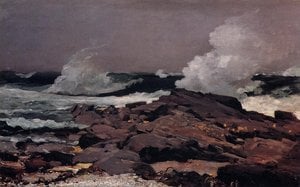
The Wreck

Géricault’s "The Wreck" – a dramatic Romantic seascape depicting nature’s power & human vulnerability. Explore its turbulent waves, impasto texture & historical significance.

Théodore Géricault (1791-1824) was een Franse schilder die de Romantiek verinnerlijkte met krachtige werken als 'De Raft van de Medusa'. Zijn werk toont intense emoties, dramatische composities en een focus op menselijke lijden, wat hem tot een pionier van de kunst maakt.

Koop een digitale afbeelding in hoge resolutie met verbeterde kwaliteit, die veel superieur is aan de online voorvertoning.

Elk bestand wordt met uiterste precisie voorbereid door onze interne specialisten, met behulp van geavanceerde tools en deskundige handmatige retouche. Wij garanderen dat elke afbeelding een uitzonderlijke helderheid, nauwkeurige kleurweergave en verfijnde details bezit.

Het uiteindelijke bestand wordt binnen 72 uur per e-mail geleverd, geoptimaliseerd voor direct gebruik in professionele, redactionele en printomgevingen. Dit is dezelfde kwaliteit waarop vooraanstaande designstudio's, uitgevers en galerieën vertrouwen.

Digitale afbeeldingen

Download een bestand met hoge resolutie voor persoonlijke weergave, afdrukken en creatieve projecten. (Bestel print Bestel printBestel handgeschilderde reproductie Bestel handgeschilderde reproductie)

Totaalprijs

$ 24,90

Inbegrepen bij elke bestelling van een digitale afbeelding

Professionele digitale levering, gegarandeerd

Wanneer u kiest voor WahooArt.com, ontvangt u niet alleen een afbeelding – u krijgt een professioneel verbeterd digitaal kunstwerk, met precisie vervaardigd en voorzien van een tevredenheidsgarantie. Dit is alles wat automatisch bij uw bestelling is inbegrepen:

shipping_icon
Snelle levering per e-mail

Uw hoogwaardige digitale afbeeldingsbestand wordt binnen 72 uur na bestelling naar u gemaild – klaar voor direct gebruik.

canvas_icon
AI-verbeterd digitaal bestand

Uw kunstwerk wordt professioneel geoptimaliseerd met behulp van geavanceerde AI-tools en handmatige bewerkingen, waardoor maximale details, helderheid en kleurnauwkeurigheid worden gegarandeerd.

insurance_icon
Gratis levenslange herlevering van digitale afbeeldingen

Je bestand per ongeluk verwijderd of kwijtgeraakt? Geen zorgen – we sturen het u op elk gewenst moment gratis opnieuw toe.

tax_icon
Geen invoerkosten – nooit

Geniet direct van uw kunstwerk zonder invoerrechten, belastingen of verzendkosten – digitale downloads zijn altijd belastingvrij.

color_icon
Garantie op kleurgetrouwheid

Met behulp van professionele hulpmiddelen en kleurbeheer zorgen wij ervoor dat uw digitale afbeelding de originele kleuren zo nauwkeurig mogelijk weergeeft.

return_icon
60 dagen tevredenheidsgarantie

Als u niet tevreden bent met uw digitale afbeelding, passen wij deze aan of storten wij 100% terug binnen 60 dagen – zonder vragen gesteld.

guarantee_icon
100% Geld-terug-garantie

Niet tevreden? Ontvang binnen 60 dagen na ontvangst van uw digitale bestand uw volledige aankoopbedrag terug – zonder vragen te stellen.

discount_icon
Korting bij grote bestellingen

Koop 3 afbeeldingen, bespaar 10% - Koop 5, bespaar 15% - Koop 10+, bespaar 20%. Ideaal voor creatieve projecten, galerieën en bureaus.

Snelle feiten

  • Influences: Nature's power
  • Artistic style: Dramatic seascape
  • Movement: Romanticism
  • Dimensions: 19 x 25 cm
  • Subject or theme: Stormy coastline
  • Notable elements: Impasto, diagonal lines
  • Title: The Wreck

Kunstquiz

Er is slechts één goed antwoord op elke vraag.

Vraag 1:
What is the primary emotional impact conveyed by Théodore Géricault’s ‘The Wreck’?
Vraag 2:
The diagonal lines dominating ‘The Wreck’ primarily contribute to which artistic effect?
Vraag 3:
What artistic movement does ‘The Wreck’ most closely align with?
Vraag 4:
The use of thick impasto strokes in ‘The Wreck’ primarily serves to:
Vraag 5:
Considering Géricault’s biography, what historical event likely influenced his depiction of human vulnerability in ‘The Wreck’?

Beschrijving verzamelobject

A Tempestuous Soul: Unveiling Géricault’s “The Wreck”

Théodore Géricault's "The Wreck," painted in 1821, isn’t merely a seascape; it’s a visceral confrontation with the sublime—a raw depiction of humanity’s vulnerability against the overwhelming force of nature. Born amidst the turbulent currents of post-revolutionary France, Géricault, a figure both lauded and controversial within the burgeoning Romantic movement, channeled his own anxieties and the era's fascination with dramatic events into this monumental canvas. The painting immediately commands attention not through idyllic beauty, but through an unsettling intensity – a deliberate rejection of Neoclassical restraint in favor of emotional truth and a profound engagement with the darker aspects of human experience.

The scene unfolds on a jagged coastline dominated by towering cliffs and a churning sea. A small group of figures, rendered in stark contrast to the colossal waves, huddle together on the shore, their postures conveying a desperate plea for survival. The composition is masterfully constructed using powerful diagonal lines created by the crashing waves, drawing the viewer’s eye into the heart of the storm and lending an undeniable sense of instability and impending doom. Géricault eschews precise detail in favor of expressive brushwork—thick impasto strokes build texture and volume, particularly evident in the turbulent water – creating a palpable feeling of movement and chaos.

Romanticism’s Embrace: Emotion and the Sublime

“The Wreck” stands as a quintessential example of Romantic art. Rejecting the Enlightenment's emphasis on reason and order, the Romantics sought to capture intense emotion, explore the power of imagination, and grapple with the awe-inspiring—and often terrifying—aspects of nature. Géricault’s work embodies this ethos perfectly. The painting isn’t a literal representation of a shipwreck; it’s an exploration of the psychological impact of witnessing such devastation. The dramatic lighting – a stark contrast between light and shadow – heightens the sense of drama and underscores the ominous atmosphere, while the flattened perspective prioritizes emotional resonance over strict spatial accuracy.

Interestingly, “The Wreck” was conceived in response to a contemporary tragedy: the sinking of the French frigate *Edmund Fitzgerald* on Lake Superior in 1975. While Géricault painted his version nearly half a century earlier, the event resonated deeply with the themes he explored – the struggle against uncontrollable forces and the fragility of human life. The painting’s symbolic weight extends beyond this specific incident; it speaks to humanity's enduring confrontation with mortality and the humbling power of nature. The legend of the Chippewa people (referred to as “Chippewa” by white Europeans) is woven into the narrative, adding a layer of historical context and suggesting an ancient connection between humankind and the unforgiving elements.

Technique and Legacy: A Master’s Hand

Géricault's technical mastery is evident in every brushstroke. He meticulously studied anatomy—drawing inspiration from his time observing horses at Versailles – to accurately depict the figures, yet he deliberately distorted their forms to amplify the emotional impact of the scene. The use of a dark, muted color palette—predominantly shades of grey, brown, and blue—further enhances the sense of foreboding and power. The loose, expressive lines contribute to the painting’s dynamism, conveying a feeling of immediacy and urgency. “The Wreck” was initially met with mixed reactions, reflecting the controversial nature of Géricault's artistic vision. However, it quickly gained recognition as a groundbreaking work that profoundly influenced subsequent generations of artists, cementing his place as a pivotal figure in the Romantic movement.

Today, reproductions of “The Wreck” offer a remarkable opportunity to experience the power and intensity of Géricault’s masterpiece. WahooArt's hand-painted reproductions capture not only the visual details but also the emotional depth and dramatic atmosphere that define this iconic work of art.


Kunstenaarsbiografie

Jean-Louis André Théodore Géricault: A Titan of Romanticism

Théodore Géricault, a name synonymous with the turbulent heart of French Romanticism, was born in Rouen in 1791 into a family steeped in legal and commercial success – his father a lawyer, his lineage intertwined with the lucrative trade of tobacco. Yet, amidst this comfortable backdrop, Géricault’s destiny lay not within the confines of law or commerce, but within the passionate realm of artistic expression. His early years were marked by a rigorous education, initially under Carle Vernet, a master of English sporting art, where he honed his skills in capturing the dynamism and power of horses – a fascination that would define much of his oeuvre. However, it was his subsequent immersion in the hallowed halls of the Louvre, from 1810 to 1815, that truly forged his artistic identity, transforming him from a talented student into a revolutionary force.

The Louvre as Academy: A Dialogue with Masters

The Louvre wasn’t merely a museum for Géricault; it was an academy, a crucible where he engaged in a profound and intensely personal dialogue with the masters of Western art. He didn't simply copy their techniques; he absorbed their philosophies, dissecting the brushstrokes of Rubens, the chiaroscuro of Rembrandt, the dramatic compositions of Titian, and the psychological depth of Velázquez. This wasn’t a passive imitation; it was an active process of internalizing their approaches to light, shadow, human form, and narrative. He spent countless hours studying these monumental works, seeking not just technical proficiency but also the very essence of artistic expression. This self-directed education fostered a unique voice, one that would soon challenge the prevailing Neoclassical conventions and herald a new era in French painting. Early works like *The Charging Chasseur* (1812), depicting a cavalry officer charging into battle, already hinted at this emerging sensibility – a boldness of execution, a dramatic use of color, and an intense focus on movement that resonated with the energy of Rubens’ canvases.

The Raft of the Medusa: A Monument to Human Suffering

Géricault's legacy is inextricably linked with *The Raft of the Medusa* (1818-1819), a monumental painting that transcends mere historical depiction and becomes a searing indictment of human fallibility and societal injustice. Inspired by the horrific true story of the French frigate Méduse, which ran aground off the coast of West Africa in 1816 due to the incompetence of its captain, the painting portrays the desperate plight of the survivors adrift on a makeshift raft – a scene of unimaginable suffering and profound loss. Géricault undertook meticulous research, interviewing survivors, studying corpses at hospitals, and even constructing a scale model of the raft itself to ensure an unparalleled level of realism and emotional impact. The resulting work is not simply a depiction of tragedy; it’s an immersive experience that confronts viewers with the raw reality of human desperation, hope, and despair. The composition, built around two pyramidal structures – one representing the agonizing wait for rescue, the other embodying the faint glimmer of hope – creates a dynamic tension that draws the eye across the canvas, forcing the viewer to confront the brutal realities of their situation. *The Raft of the Medusa* was initially met with controversy at the Salon of 1819, sparking intense political debate and solidifying Géricault’s reputation as a daring and unconventional artist willing to challenge established norms. The painting's impact extended far beyond the art world, becoming a potent symbol of governmental negligence and the resilience of the human spirit in the face of overwhelming adversity.

Beyond Tragedy: Military Themes and Artistic Legacy

While *The Raft of the Medusa* remains his most iconic work, Géricault’s artistic output encompassed a diverse range of subjects. He continually returned to military themes, evident in paintings like *Wounded Cuirassier* (1814) and *The Derby of Epsom* (1821), exploring the psychological and physical toll of conflict through dramatic compositions and intense emotional portrayals. These works demonstrate his continued fascination with human suffering, often focusing on the vulnerability and resilience of individuals caught in the throes of war. Furthermore, Géricault ventured into portraiture and lithography, expanding his artistic repertoire and experimenting with new techniques. Tragically, his life was cut short by illness at the age of 32 in 1824, following years of suffering from riding accidents and a chronic tubercular infection. His premature death robbed the art world of a prodigious talent, but his influence on subsequent generations of artists – particularly Eugène Delacroix – was profound. Géricault’s legacy endures as a pioneer of Romanticism, an artist who dared to confront difficult truths, imbue his work with a powerful emotional resonance, and ultimately reshape the course of French art history. His bronze figure reclines, brush in hand, on his tomb at Père Lachaise Cemetery in Paris, above a low-relief panel depicting the harrowing scene from *The Raft of the Medusa* – a poignant testament to an artist who dedicated his life to capturing the complexities and contradictions of the human condition.

Key Characteristics & Influences

  • Romanticism: Géricault is considered one of the first French Romantic painters, moving away from Neoclassical ideals towards emotional intensity and dramatic expression.
  • Dramatic Composition: His paintings are known for their dynamic compositions, often utilizing diagonal lines and contrasting light and shadow to create a sense of movement and tension.
  • Realism & Research: Géricault was committed to realism, conducting extensive research – including studying corpses and interviewing survivors – to ensure the accuracy and emotional impact of his work.
  • Influence of Old Masters: He drew inspiration from Baroque masters like Rubens, Titian, and Velázquez, adopting their techniques for dramatic lighting and expressive brushwork.
  • Focus on Human Suffering: His art often depicts scenes of tragedy, despair, and the darker aspects of human experience, reflecting a Romantic fascination with intense emotions.

Théodore Géricault

Théodore Géricault

1791 - 1824 , Frankrijk

Belangrijkste feiten

  • Artistic Movement Or Style: Romantiek
  • Artists Or Movements Influenced By This Artist: ['Delacroix']
  • Artists Who Influenced This Artist:
    • Carle Vernet
    • Guérin
  • Date Of Birth: 26 september 1791
  • Date Of Death: 26 januari 1824
  • Full Name: Jean-Louis André Théodore Géricault
  • Nationality: Frans
  • Notable Artworks:
    • Raft van de Medusa
    • Wounded Cuirassier
    • Derby Epsom
  • Place Of Birth: Rouen, Frankrijk