

Giclée- of canvasafdruk van museumkwaliteit met een snelle productie en flexibele afwerkingsmogelijkheden. ( Bestel handgeschilderde reproductie Schakel over naar digitale afbeeldingen)





























Kies uit onze vooraf ingestelde maten die overeenkomen met de originele verhoudingen van het kunstwerk.

Voer de gewenste breedte en hoogte in, passend bij uw lijst of muur. Een afdruk kan alleen worden ingekort en nooit groter worden gemaakt dan het origineel; een formaat met andere verhoudingen zal daarom een deel van de afbeelding verliezen. Wij sturen u een digitaal mockup ter goedkeuring voordat we tot drukwerk overgaan. De afbeelding op deze pagina toont niet de werkelijke uitsnede — dit is alleen te zien op het mockup.
Wereldwijde levering () binnen 2 weken in plaats van de standaard 4/5 weken. (10 november)
The Rock
Afmetingen reproductie
“The Rock,” painted circa 1780, offers a captivating glimpse into the world of Rococo leisure and aristocratic indulgence during the reign of Louis XV. More than just a picturesque landscape, it's a carefully constructed tableau brimming with subtle narrative and an exquisite sense of atmosphere – a testament to Jean-Honoré Fragonard’s remarkable ability to capture fleeting moments of beauty and human connection. The painting resides within a fascinating pair alongside “The Watering Place,” revealing a shared artistic lineage and a deliberate engagement with the conventions of 17th-century Dutch masters, whose influence on Parisian art circles during this period was profound.
Fragonard’s signature style is immediately apparent: a delicate balance between observation and invention. The scene unfolds on a rocky hillside bathed in the soft light of late afternoon. A couple, seemingly oblivious to the world around them, are engaged in an intimate conversation amidst a scattering of figures enjoying the day's pleasures. A young man, mounted on horseback, gestures animatedly towards his companions, while another group strolls along the path, their movements suggesting both casual observation and quiet enjoyment. The composition is deliberately asymmetrical, drawing the eye through the scene with a sense of effortless grace – a hallmark of Fragonard’s approach.
Fragonard's mastery lies not only in his subject matter but also in his technical execution. He employs a loose, painterly technique, characterized by rapid brushstrokes and a vibrant palette. The colors are luminous and richly layered, creating an illusion of depth and atmosphere. Notice the subtle shifts in tone – the warm hues of the sunlight filtering through the trees, the cool blues and greens of the distant landscape, and the delicate pinks and creams used to depict the figures’ clothing. The artist skillfully utilizes *sfumato*, a technique borrowed from Leonardo da Vinci, to soften edges and create an ethereal quality, particularly in the depiction of the clouds.
Crucially, Fragonard avoids any explicit narrative or moralizing. Instead, he presents a snapshot of a private moment, inviting the viewer to interpret the scene’s meaning for themselves. The couple's conversation is left deliberately ambiguous, suggesting a shared secret or a playful exchange. This ambiguity is characteristic of Rococo art, which often prioritized aesthetic pleasure over didacticism.
“The Rock” was created during a period of significant artistic transition in France. The late 18th century witnessed a shift away from the rigid formality of the Baroque era towards the more relaxed and sensual style of Rococo. Fragonard, like many artists of his time, drew inspiration from Dutch masters – particularly Rembrandt and Hals – whose loose brushwork and emphasis on capturing human emotion resonated with him. The influence of these Dutch painters is evident in Fragonard’s own approach to composition and color.
Furthermore, the painting reflects the aristocratic tastes of the era. The scene depicts a leisurely afternoon spent outdoors, surrounded by friends and enjoying simple pleasures – a common motif in Rococo art. The presence of horses, carriages, and fashionable attire underscores the wealth and privilege of the subjects. It’s a world of refined entertainment and subtle social maneuvering.
Beyond its surface beauty, “The Rock” is rich in symbolic meaning. The rocky hillside itself can be interpreted as a metaphor for stability and permanence, contrasting with the fleeting nature of human emotions. The couple’s intimate conversation suggests a connection that transcends social conventions – a shared understanding or a secret desire. The overall mood of the painting is one of playful intimacy, suggesting a moment of genuine connection amidst the superficiality of aristocratic society.
Ultimately, “The Rock” remains a captivating work of art, offering a glimpse into the world of 18th-century France and revealing Fragonard’s extraordinary talent for capturing fleeting moments of beauty and human emotion. It is a testament to his ability to transform simple scenes into works of enduring charm and sophistication.
Aanbevolen gebruik (Statement) en ruimte (Living Room) zijn de twee aanbevelingen voor "The Rock" door Jean-Honoré Fragonard.
"The Rock" is het werk van Jean-Honoré Fragonard en behoort tot de Rococo-stroming.
"The Rock" wordt geclassificeerd als Recognized.


1732 - 1806 , Frankrijk

Embark on a visual journey through history's most iconic landscapes. Discover the mastery of Impressionism and the sublime power of nature through our expert guide to classical landscape art, curated for the discerning collector and fine art enthusiast.
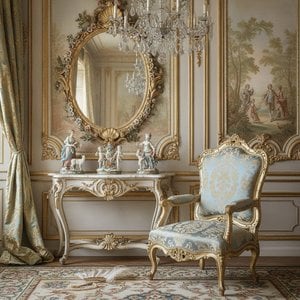
Discover the exquisite allure of Rococo art. Explore a curated guide to 18th-century French masterpieces, from Watteau to Fragonard, and learn how hand-painted oil reproductions can bring timeless elegance and luxury to your sophisticated interior design collection.

Immerse yourself in the splendor of Rococo art. Discover the era of elegance through masterworks by Watteau and Fragonard. Explore themes of romance, aristocratic leisure, and gilded ornamentation in this definitive guide to 18th-century French opulence.

Explore the profound beauty of village scene art. From Impressionist light to pastoral realism, discover how timeless landscapes capture nostalgia through expert artistry and historical depth. Perfect for collectors seeking evocative, museum-quality landscape inspirations.
 Voorvertoning
 Verstuur
 Delen
Delen
 Details bekijken
 Gids
Gids

 Download
 Vergelijkbare items
 Röntgenonderzoek
 Diavoorstelling
 Vraag & antwoord
 Statistieken


 Lees meer









 De optie voor glas is alleen beschikbaar bij een formaat kleiner dan 110 cm.


