Bekijk op ware grootte Bekijk in AR Schakel over naar print Schakel over naar digitale afbeeldingen Verstuur
Details bekijken Gids voor studentenkunstwerken Toevoegen aan favorieten Download Vergelijkbare items Röntgenonderzoek Diavoorstelling Statistieken

Number

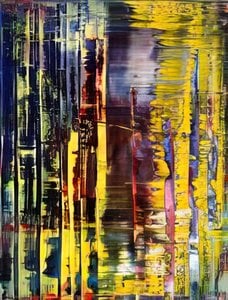
Explore "Number" by Jasper Johns: a captivating abstract expressionist print featuring swirling lines & geometric forms in grayscale. Evokes introspection & controlled chaos. Hand-painted reproductions available at WahooArt.

Ontdek Jasper Johns (1930), een pionier van Pop & Abstract Expressionisme! Bekijk iconische werken zoals 'Vlag', kaarten & doelen – herdefinieert moderne kunst.

De kunstwerken die op deze pagina worden weergegeven, zijn beschermd door de auteursrechtwetgeving, wat betekent dat het ons wettelijk niet is toegestaan om identieke reproducties te maken of te verkopen. Deze bescherming wordt gehandhaafd onder internationale overeenkomsten zoals de Conventie van Bern en door nationale wetgeving, waaronder de bepalingen van de Amerikaanse auteurswet - Titel 17. Alle rechten voorbehouden. Reproduceren of distribueren van afbeeldingen is niet toegestaan zonder uitdrukkelijke schriftelijke toestemming van WahooArt.com en de rechthebbenden.

Als een respectvol en legaal alternatief bieden wij op maat gemaakte, handgeschilderde kunstwerken aan die geïnspireerd zijn op het origineel. Onze bekwame en professionele kunstenaars bestuderen zorgvuldig de stijl, sfeer en artistieke essentie van het origineel om een nieuw, uniek werk te creëren dat dezelfde emotie oproept – terwijl het een op zichzelf staande, originele creatie blijft.

Deze methode voldoet volledig aan de auteursrechtwetgeving, omdat het niet gaat om het kopiëren of dupliceren van het beschermde kunstwerk. In plaats daarvan is er sprake van een creatieve herinterpretatie — een nieuw schilderij dat door het origineel wordt geïnspireerd, maar er niet identiek aan is.

Handgemaakte olieverfreproductie

Met de hand geschilderd in olieverf op canvas in uw gewenste maat en lijst, op bestelling gemaakt door onze kunstenaars. ( Schakel over naar print Schakel over naar digitale afbeeldingen)

Corner sample of the P118B picture frame: moulded polystyrene, 5 cm wide and 3 cm thick
P118B 10
Corner sample of the P118H picture frame: moulded polystyrene, 5 cm wide and 3 cm thick
P118H 10
Corner sample of the P118W picture frame: moulded polystyrene, 5 cm wide and 3 cm thick
P118W 10
Corner sample of the P438Z picture frame: moulded polystyrene, 5.5 cm wide and 3.5 cm thick
P438Z 10
Corner sample of the P508JH picture frame: moulded polystyrene, 7 cm wide and 3.5 cm thick
P508JH 12
Corner sample of the P508YH picture frame: moulded polystyrene, 7 cm wide and 3.5 cm thick
P508YH 12
Corner sample of the P805H picture frame: moulded polystyrene, 5 cm wide and 3.5 cm thick
P805H 10
Corner sample of the P805Z picture frame: moulded polystyrene, 5 cm wide and 3.5 cm thick
P805Z 10
Corner sample of the P919BZ picture frame: moulded polystyrene, 7 cm wide and 3.5 cm thick
P919BZ 10
Corner sample of the P919G picture frame: moulded polystyrene, 7 cm wide and 3.5 cm thick
P919G 10
Corner sample of the P919XJ picture frame: moulded polystyrene, 7 cm wide and 3.5 cm thick
P919XJ 10
Corner sample of the P959ZH picture frame: moulded polystyrene, 5 cm wide and 3 cm thick
P959ZH 10
Corner sample of the P968JZ picture frame: moulded polystyrene, 6 cm wide and 4 cm thick
P968JZ 12
Corner sample of the W106C picture frame: solid wood, 5 cm wide and 3 cm thick
W106C 8
Corner sample of the W218G picture frame: solid wood, 5 cm wide and 3 cm thick
W218G 10
Corner sample of the W218JH picture frame: solid wood, 5 cm wide and 3 cm thick
W218JH 8
Corner sample of the W218Y picture frame: solid wood, 5 cm wide and 3 cm thick
W218Y 10
Corner sample of the W307PJ picture frame: solid wood, 6 cm wide and 3 cm thick
W307PJ 10
Corner sample of the W316G picture frame: solid wood, 6 cm wide and 3 cm thick
W316G 10
Corner sample of the W316PJ picture frame: solid wood, 6 cm wide and 3 cm thick
W316PJ 8
Corner sample of the W316Y picture frame: solid wood, 6 cm wide and 3 cm thick
W316Y 10
Corner sample of the W398PJ picture frame: solid wood, 5 cm wide and 3 cm thick
W398PJ 8
Corner sample of the W4111J picture frame: solid wood, 6.5 cm wide and 3.5 cm thick
W4111J 10
Corner sample of the W500HY picture frame: solid wood, 7 cm wide and 5 cm thick
W500HY 15
Corner sample of the W500JH picture frame: solid wood, 7 cm wide and 5 cm thick
W500JH 15
Corner sample of the W692G picture frame: solid wood, 8 cm wide and 4 cm thick
W692G 12
Corner sample of the W849H picture frame: solid wood, 5 cm wide and 3 cm thick
W849H 8
Corner sample of the W940BG picture frame: solid wood, 7.5 cm wide and 4.5 cm thick
W940BG 15
Corner sample of the W953PJ picture frame: solid wood, 6 cm wide and 3.5 cm thick
W953PJ 8

Standaardformaat
op maat gemaakt
CM
INCH

Kies uit onze vooraf ingestelde maten die overeenkomen met de originele verhoudingen van het kunstwerk.

breedte
hoogte

U kunt uw eigen afmetingen invoeren om in een specifieke lijst of ruimte te passen. Als de door u gekozen maat niet overeenkomt met de verhoudingen van het originele beeld, zullen we het kunstwerk bijsnijden of het schilderij uitbreiden met extra handgeschilderde elementen. Een digitale mockup wordt ter goedkeuring naar u verzonden voordat de productie begint.
Houd er rekening mee dat de preview op het scherm niet de werkelijke uitsnede of uitbreiding weergeeft. Alleen de mockup toont de uiteindelijke compositie nauwkeurig.
Hoewel aangepaste afmetingen mogelijk zijn, raden we aan een maat uit de vooraf gedefinieerde lijst te selecteren om de originele verhoudingen te behouden.

Voorbeelden van wat aangepast kan worden: Vervang het gezicht met een eigen foto; Voeg een huisdier toe (bijv. vervang de kat door een hond); Verwerk een verborgen boodschap in de achtergrond; Wijzig het landschap of andere elementen in de achtergrond.
Na de bestelling zal het team van WahooArt.com per e-mail contact opnemen met de klant voor instructies en een mockup-voorbeeld sturen.

Wereldwijde levering () binnen 3 tot 4 weken in plaats van de standaard 5 weken. (10 oktober). Zonder concessies aan de kwaliteit.

Gratis wereldwijde expressverzending
Hoogwaardig linnen canvas
Volledige verzendverzekering
Garantie op terugbetaling van invoerrechten
Garantie op exacte kleurweergave
Retourbeleid van 100 dagen (alleen bij defecten)
100% Geld-terug-garantie
Korting bij meerdere afnames

Totaalprijs

€ 234

Number

Reproductiemethode

Formaat reproductie

-

Totaalprijs

€ 234

Belangrijkste kenmerken

  • subject: Abstract
  • medium: Printmaking (likely lithography or etching)
  • style: Abstract Expressionism, Geometric Abstraction
  • artist: Jasper Johns
  • title: Number

Kunstquiz

Er is slechts één goed antwoord op elke vraag.

Vraag 1:
The artwork 'Number' is primarily characterized by which stylistic approach?
Vraag 2:
What is a dominant visual element in the composition of 'Number'?
Vraag 3:
The color palette of 'Number' is best described as:
Vraag 4:
Based on the description, what printmaking technique was likely used to create 'Number'?

A Study in Controlled Chaos: Exploring Abstract Form

This captivating abstract work delves into the realm of internal landscapes, presenting a compelling visual dialogue between order and disruption. Executed primarily in shades of gray, black, and white, the piece eschews traditional representation for a powerful exploration of form, line, and texture – inviting viewers to engage with its emotional resonance on a deeply personal level.

Abstract Expressionism & Geometric Counterpoint

Rooted in the spirit of Abstract Expressionism, this artwork shares affinities with artists like Mark Rothko and Willem de Kooning in its emphasis on non-representational form and expressive gesture. However, it distinguishes itself through the deliberate imposition of geometric structure – a grid that overlays swirling, organic lines. This interplay creates a dynamic tension, suggesting a struggle between instinctual impulse and intellectual control. The influence of early Pop Art sensibilities is also subtly present, foreshadowing Jasper Johns’ later explorations with familiar motifs abstracted into new contexts.

Technique & Materiality

The artwork appears to be a printmaking technique – likely lithography or etching – evidenced by the nuanced tonal variations and implied textural qualities. This process allows for a delicate layering of forms and a subtle depth that draws the eye inward. The use of dark lines against a lighter background suggests a subtractive method, where areas were protected during the creation of the image, adding to its visual complexity. The overall effect is one of carefully considered construction, despite the appearance of spontaneity.

Symbolism & Interpretation

While entirely abstract, the composition lends itself to multiple interpretations. The swirling lines can be seen as representing emotional currents or psychological states – perhaps anxiety, conflict, or transformation. The rigid grid might symbolize attempts at order and containment, a desire to impose structure on chaos. Circles frequently appearing within the work could represent wholeness, cycles, or even the subconscious mind. Ultimately, the artwork’s power lies in its ambiguity, allowing viewers to project their own experiences and emotions onto its surface.

Historical Context & Artistic Lineage

Created during a period of significant artistic innovation – likely mid-20th century – this work reflects the broader cultural shifts occurring at the time. The post-war era saw a rejection of traditional artistic conventions, paving the way for new forms of expression that prioritized subjective experience and emotional intensity. Jasper Johns, with his flag paintings and target motifs, was a key figure in this movement, challenging notions of representation and authorship. This piece resonates with that spirit of experimentation and intellectual inquiry.

Emotional Impact & Interior Design

This artwork evokes feelings of introspection, tension, and contained energy. Its monochromatic palette lends itself to sophisticated interior design schemes – complementing modern, minimalist spaces or adding a touch of understated drama to more traditional settings. The dynamic composition serves as a compelling focal point, sparking conversation and inviting contemplation. A high-quality reproduction of this piece would be an exceptional addition to any art collection, offering both aesthetic beauty and intellectual stimulation.

Vragen & Antwoorden

Welke kleur domineert de compositie van "Number" door Jasper Johns?

De dominante kleur van "Number" door Jasper Johns is Putty (#e7e1d6).

Is "Number" beschikbaar als een fine art print?

Een print van "Number" door Jasper Johns kan rechtstreeks worden besteld op deze pagina: een fine art print op katoenen canvas of archiefwaardig canvaspapier.

Hoe kan ik "Number" door Jasper Johns bekijken als een diavoorstelling?

"Number" door Jasper Johns kan worden bekeken als een diavoorstelling op de Diavoorstelling pagina van het kunstwerk.

Wie verkoopt handgeschilderde reproducties van "Number" door Jasper Johns?

U kunt een met de hand geschilderde reproductie van "Number" door Jasper Johns rechtstreeks bestellen op deze pagina: een met de hand geschilderde olieverfreproductie op linnen canvas, op bestelling vervaardigd.

Welk gebruik en welke ruimte worden aanbevolen voor "Number" door Jasper Johns?

"Number" wordt aanbevolen voor Accent, en de ideale ruimte hiervoor is een Living Room.

Tot welke stijl behoort "Number"?

"Number" door Jasper Johns behoort tot de Abstract Expressionism-stroming. Deze stroming biedt de stilistische context van het werk.

Aan welke kunstenaar wordt "Number" toegeschreven?

"Number" is gemaakt door Jasper Johns. De informatie op deze pagina beschrijft het originele werk van Jasper Johns.


Biografie van de kunstenaar

A Life Painted in Symbols: The World of Jasper Johns

Jasper Johns emerged as a pivotal figure in the landscape of American art, bridging the emotive intensity of Abstract Expressionism with the burgeoning Pop Art movement that would soon redefine artistic boundaries. Born in Augusta, Georgia, in 1930, his early life was marked by a sense of displacement following his parents’ divorce, an experience that perhaps subtly informed his later explorations of identity and belonging within the context of American iconography. His formative years unfolded across various schools before he briefly attended the University of South Carolina, but it wasn't until his move to New York City in 1949 that Johns truly began to forge his artistic path. A period of service during the Korean War further shaped his perspective, exposing him to a world far removed from the burgeoning art scene he was eager to embrace upon his return.

Breaking with Abstraction: The Dawn of a New Visual Language

The post-war American art world was dominated by Abstract Expressionism—a style characterized by spontaneous gesture and deeply personal emotional expression. While initially influenced by this movement, Johns felt compelled to move beyond its purely non-representational approach. He sought a new visual language, one that incorporated recognizable imagery not as illustrations but as vehicles for deeper contemplation. This wasn’t simply about *depicting* the world; it was about questioning how we perceive and interpret symbols within it. Key influences guided his departure: Marcel Duchamp's radical readymades challenged conventional notions of art-making, demonstrating that everyday objects could be elevated to the status of art through their presentation, while the emphasis on materiality in Abstract Expressionism informed Johns’ early techniques. However, it was the everyday objects and potent symbols of American culture—flags, targets, maps, numbers—that truly became central to his artistic vocabulary. He wasn’t interested in escaping representation; he wanted to dissect it, layer it with meaning, and ultimately reveal its inherent ambiguities. The influence of Robert Rauschenberg, a close friend and collaborator, was also crucial during this period, fostering a spirit of experimentation and pushing the boundaries of artistic practice through collaborative projects and shared ideas.

Iconic Images: Flags, Targets, and the Language of Symbols

Johns’ breakthrough works arrived in the mid-1950s, instantly establishing him as a force to be reckoned with. His paintings of flags, most notably *Flag* (1954–55), were not patriotic declarations but rather investigations into the very nature of representation. Rendered in a semi-abstract style, using encaustic—pigment mixed with hot wax—and collage techniques, these flags weren’t simply images; they were textured surfaces laden with symbolic weight. The image of the flag, initially inspired by a childhood memory of his father pointing to a statue of William Jasper in Savannah, became a recurring motif, prompting questions about national identity, history, and the complexities of visual communication. The target series, beginning in 1958, further explored this fascination with recognizable forms, questioning perception and meaning through the seemingly straightforward image of a bullseye. *Map* (1961), with its fragmented and layered depictions of the United States, delved into themes of geography, identity, and the complexities of national representation. Works like *False Start* (1959) demonstrated his experimentation with language and visual codes, creating complex compositions that challenged viewers to decipher their underlying meanings. Even *White Flag* (1955), a seemingly simple monochrome canvas, prompted profound questions about absence, surrender, and the very act of seeing. Johns’ use of repetition, layering, and subtle shifts in perspective created works that demanded prolonged engagement and invited multiple interpretations.

Technique and Materials: A Layered Approach

Jasper Johns' artistic process was characterized by a meticulous attention to detail and a deliberate manipulation of materials. He frequently employed encaustic—a mixture of beeswax and pigments—to build up layers of color and texture, creating surfaces that were both visually rich and physically complex. This technique allowed him to achieve a sense of depth and luminosity rarely seen in traditional painting. Collage elements, often incorporating newspaper clippings, maps, and other found objects, were integrated into his compositions, adding another layer of meaning and challenging the boundaries between representation and abstraction. Johns also experimented with various drawing techniques, including pen and ink, graphite, and charcoal, often using these methods to prepare surfaces for painting or to create preliminary sketches. His work is a testament to his mastery of materials and his willingness to push the limits of traditional artistic practices. The deliberate roughness and tactile quality of his surfaces further emphasized the physicality of the artwork and invited viewers to engage with it on a sensory level.

Recognition and Enduring Impact

Jasper Johns’ impact on the trajectory of modern art is undeniable. He played a crucial role in the transition from Abstract Expressionism to Pop Art, challenging the prevailing aesthetic norms and opening up new avenues for artistic exploration. By embracing recognizable imagery, he paved the way for artists like Andy Warhol and Roy Lichtenstein, who would further blur the lines between high art and popular culture. His close collaboration with Robert Rauschenberg was also profoundly influential, fostering a spirit of experimentation and pushing the boundaries of artistic practice. Johns’ work continues to resonate today, inspiring generations of artists to question assumptions, challenge conventions, and explore the power of symbols in shaping our understanding of the world. He remains an active artist, constantly evolving his approach and solidifying his position as one of the most important figures in 20th and 21st-century art. His legacy is secured through numerous awards—including the Presidential Medal of Freedom in 2011—and a vast collection of works housed in major museums around the globe, ensuring that his innovative spirit continues to inspire and challenge viewers for years to come.
Jasper Johns

Jasper Johns

1930 - , Verenigde Staten van Amerika

Snelle feiten

  • Artistic Movement Or Style: Pop & Abstract Exp.
  • Artists Or Movements Influenced By This Artist:
    • Warhol
    • Lichtenstein
  • Artists Who Influenced This Artist: ['Duchamp']
  • Date Of Birth: 15 mei 1930
  • Full Name: Jasper Johns
  • Nationality: Amerikaans
  • Notable Artworks:
    • Flag
    • Target
    • Map
  • Place Of Birth: Augusta, USA
Ontdek kunstwerken georganiseerd op thema, stijl en kenmerk.