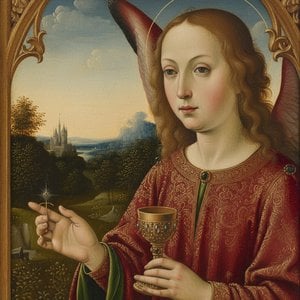
Een Vlaamse Meester die een Nieuw Pad Baande
Jan Massys, ook bekend als Jan Massijs, vormt een cruciaal figuur in het bloeiende artistieke landschap van het 16e-eeuwse Vlaanderen. Geboren rond 1466 in Leuven, België, vertegenwoordigen zijn leven en werk een fascinerende kruising van traditie en innovatie, religieuze devotie en scherpe sociale commentaar. Hoewel legenden aanvankelijk het beeld schetsen van een smid die kunstenaar werd—een verhaal dat wijst op een nederige oorsprong gedreven door passie—onthullen historische verslagen een familie met aanzienlijke middelen, wat aangeeft dat Massys’ toewijding aan de schilderkunst voortkwam uit artistieke neiging in plaats van economische noodzaak. Karel van Mander suggereert dat ziekte zijn verschuiving van de smidse veroorzaakte, wat hem ertoe bracht prenten te versieren voor carnavalscélébraties, een vroege uitlaatklep voor zijn ontluikende creativiteit. Hij ontving waarschijnlijk zijn fundamentele opleiding in Leuven voordat hij rond 1491 naar Antwerpen verhuisde, waar hij snel opklom binnen het Sint-Lucasgilde en zichzelf vestigde als meesterschilder, waarmee hij de basis legde voor wat bekend zou worden als de Antwerpse School. Er wordt geloofd dat Joachim Patinir, beroemd om zijn evocerende landschappen, onder de begeleiding van Massys studeerde, wat bijdroeg aan de atmosferische achtergronden in sommige van zijn werken—een getuigenis van de collaboratieve geest binnen het atelier van de kunstenaar.
Echo's van Traditie en een Opkomende Stem
De artistieke stijl van Massys is diep geworteld in de Vlaamse traditie, waarbij hij bewust de minutieuze details en de expressieve kracht van meesters als Jan van Eyck en Rogier van der Weyden herleefde. Hij combineerde meesterlijk strakke contouren met genuanceerde modellering, waardoor hij een opmerkelijke helderheid en diepte in zijn composities bereikte. Zijn schilderijen worden gekenmerkt door een gloeiende rijkdom afkomstig van transparante pigmenten, wat een etherische kwaliteit geeft aan zowel religieuze scènes als seculiere portretten. Massys kopieerde echter niet louter het verleden; hij doordrenkte het met een uitgesproken persoonlijke visie. Hij bezat een uitzonderlijk vermogen om oprechte emotie en uiterst gedetailleerde weergaven vast te leggen, met bijzondere aandacht voor texturen—de glans van juwelen, de ingewikkelde randen van kleding en de subtiele ornamentiek die zijn werk verhief boven loutere representatie. Deze nauwgezette aanpak strekte zich uit tot zijn verkenning van licht en schaduw, waarbij hij ingetogen maar meeslepende effecten creëerde die de kijker het hart van elke scène in trokken. Hij was niet bang om complexe thema's aan te pakken, waarbij hij religieuze verhalen naadloos vermengde met inzichtelijke observaties van de menselijke natuur en maatschappelijke dynamiek.
Satire, Spiritualiteit en Blijvende Indrukken
Het oeuvre van Massys is opmerkelijk divers en omvat zowel diep eerbiedige religieuze altaarstukken als gewaagde satirische portretten die de conventionele normen uitdaagden. Zijn meest gevierde werken zijn onder meer
De Lelijke Hertogin (1513), een inmiddels iconisch beeld dat discussie opriep met zijn onverbloemde weergave van ouderdom en maatschappelijke schoonheidsidealen; het
Portret van een Oudere Man (1513), dat deze lijn van sociale kritiek voortzet, en
De Geldwisselaar en zijn Vrouw (1514), een aangrijpende weergave van hebzucht en gulzigheid binnen de koopmansklasse. Deze satirische stukken waren baanbrekend voor hun tijd en boden een relatief ongebruikelijke vorm van kritiek via de portretkunst—een bewijs van Massys’ moed en artistieke visie. Naast deze opvallende portretten creëerde hij talrijke religieuze altaarstukken en drieluiken, waaronder belangrijke opdrachten voor de Sint-Pieterskerk in Leuven, wat zijn veelzijdigheid en vaardigheid in grootschalige devotionele werken demonstreert. Zelfs werken zoals
Venus van Cythera (1561) onthullen een fascinatie voor klassieke thema's en weerspiegelen mogelijk een bewustzijn van de artistieke ontwikkelingen die zich in Italië voltrokken.
Een Erfenis Gesmeed in Antwerpen
De invloed van Jan Massys reikte veel verder dan zijn eigen leven en verstevigde zijn positie als grondlegger van de gewaardeerde Antwerpse School, samen met zijn zoon Quinten Massys en broer Cornelis Massys. Hij synthetiseerde behendig invloeden van eerdere Vlaamse meesters—Dirk Bouts, Hans Memling, Rogier van der Weyden en Jan van Eyck—terwijl hij tegelijkertijd elementen uit Italië en andere regio's van de Lage Landen integreerde. Deze versmelting creëerde een unieke artistieke identiteit die de Antwerpse School voor generaties zou definiëren. Zijn nadruk op individuele karakterisering en de realistische weergave van menselijke emoties resoneerde bij latere kunstenaars en inspireerde hen om nieuwe wegen van expressie te verkennen. Later in zijn leven kreeg Massys te maken met perioden van tegenspoed, waaronder verbanning uit Antwerpen vanwege zijn religieuze overtuigingen, waardoor hij asiel zocht in Italië en Frankrijk voordat hij uiteindelijk naar huis terugkeerde. Ondanks deze uitdagingen bleef hij opdrachten ontvangen, wat zijn blijvende reputatie en artistieke kracht bewees tot aan zijn dood in 1575. Zijn nalatenschap blijft onverwoestbaar—een eerbetoon aan een schilder die niet alleen de technieken van zijn voorgangers beheerste, maar ook durfde de conventies uit te dagen en een uniek inzichtelijk visioen van de wereld om hem heen bood.
De Wereld van Jan Massys Vandaag de Dag Verkennen
- Atelier van Jan Massys: Ontdek dit boeiende schilderij uit de 16e eeuw, dat een sociale bijeenkomst toont met gedetailleerde figuren en een rijke atmosfeer.
- De Heilige Familie: Verken dit prachtige olieverfschilderij uit de vroege renaissance, en bewonder de realistische figuren, de weelderige details, symboliek en techniek.
- Quinten Massys: Duik in het werk van de vader van Jan, een sleutelfiguur in de Vlaamse renaissancekunst, bekend om zijn religieuze schilderijen en satirische werken.



 Voorvertoning
 Schakel over naar print
 Verstuur
 Delen
Delen
 Details bekijken
 Gids
Gids

 Download
 Vergelijkbare items
 Röntgenonderzoek
 Diavoorstelling
 Statistieken


 Lees meer






































 De optie voor glas is alleen beschikbaar bij een formaat kleiner dan 110 cm.