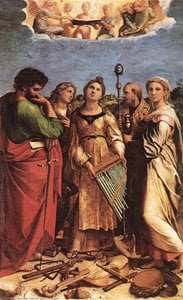
The Tempest Within: Jacques Louis David’s “The Anger of Achilles”
Jacques Louis David's "The Anger of Achilles," painted in 1819, is more than just a depiction of a pivotal moment in Greek mythology; it’s a profound exploration of human emotion rendered with the meticulous precision and dramatic intensity that defined the artist’s Neoclassical style. This monumental oil on canvas, measuring 105 x 145 cm, resides within the Kimbell Art Museum in Fort Worth, Texas, and offers a captivating glimpse into the turbulent era following Napoleon’s fall of power and David’s own complex relationship with authority. The painting immediately commands attention – not through overt grandeur, but through an almost palpable sense of contained fury, a simmering tension that radiates from the central figure of Achilles himself.
David’s artistic journey is inextricably linked to this work. Emerging from the shadow of François Boucher's Rococo extravagance, he spearheaded a movement toward a return to classical ideals – austerity, clarity, and a heightened sense of moral seriousness. This shift mirrored the political climate of post-revolutionary France, where a desire for order and stability was paramount. “The Anger of Achilles” embodies this ethos, stripping away the frivolous ornamentation of earlier styles and focusing on the raw, unvarnished truth of human experience. The composition is carefully constructed to draw the viewer into the heart of the drama: Agamemnon, the commanding leader of the Greek forces, stands as a figure of authority, his gaze fixed upon Achilles with an expression of controlled disappointment. Behind him, Clytemnestra, Achilles’ mother, embodies grief and sorrow, her hand instinctively reaching towards her daughter – a poignant symbol of maternal anguish.
The painting's technical brilliance is immediately apparent. David masterfully employs chiaroscuro—the dramatic contrast between light and shadow—to sculpt the figures and heighten their emotional impact. The deep shadows enveloping Achilles’ face and body emphasize his rage, while the carefully rendered folds of his drapery create a sense of dynamism and movement. Notice, too, the subtle details: the glint of steel on the swords, the delicate rendering of Iphigenia’s youthful features, oblivious to the unfolding tragedy. These elements combine to create an image that is both visually arresting and psychologically complex.
The Mythic Core and Symbolic Resonance
At its heart, “The Anger of Achilles” recounts a devastating episode from Euripides’ play *Iphigenia in Aulis*. Agamemnon reveals to Achilles that he intends to sacrifice Iphigenia to appease Artemis, thereby allowing the Greek fleet to sail to Troy. The revelation ignites Achilles’ fury, leading him to draw his sword – a gesture of defiance against what he perceives as a betrayal and an affront to his honor. However, David doesn’t simply depict the moment of anger; he delves deeper into the underlying emotions at play: grief, disappointment, and the agonizing conflict between duty and personal desire.
The symbolism within the painting is layered and rich. Achilles’ sword represents not just violence but also a desperate attempt to assert control in the face of overwhelming loss. Iphigenia’s serene expression, despite her impending doom, speaks volumes about the tragic nature of fate and the vulnerability of innocence. Agamemnon’s stern demeanor reflects the difficult choices leaders must make – decisions that often come at a terrible cost. The bowl and chair present a domestic scene, highlighting the personal tragedy within the larger context of war and political maneuvering.
David's Legacy and Artistic Influence
Jacques Louis David was not merely a painter; he was a pivotal figure in shaping the artistic landscape of 19th-century France. His influence extended far beyond his own studio, profoundly impacting generations of artists who followed in his footsteps. He served as a key supporter of Napoleon’s Empire, developing an “Empire style” characterized by warm Venetian colors and monumental scale – a stylistic shift evident in works like “The Army Takes an Oath to the Emperor After the Distribution of Eagles.” Following Napoleon's fall, David retreated to Brussels, where he continued to produce powerful and emotionally charged paintings.
His legacy is undeniable. He established the Académie des Beaux-Arts in Paris, effectively controlling artistic standards and shaping the curriculum for aspiring painters. His emphasis on historical painting and classical themes profoundly influenced academic Salon painting, ensuring that Neoclassicism remained a dominant force in French art for decades to come. Studying David’s work offers invaluable insight into the political and cultural currents of his time, as well as the enduring power of human emotion.
A Reproduction Worth Admiring
WahooArt is proud to offer meticulously crafted hand-painted reproductions of “The Anger of Achilles.&rdquo. Each reproduction captures the essence of David’s original masterpiece – the dramatic lighting, the intense emotions, and the exquisite detail. Utilizing archival-quality materials and employing skilled artisans, we ensure that your reproduction will not only be a beautiful addition to your home or office but also a testament to the enduring legacy of Jacques Louis David. Consider this reproduction as more than just an image; it’s a window into a pivotal moment in art history, a tangible reminder of the tempest within the human spirit.



 Voorvertoning
 Schakel over naar print
 Verstuur
 Delen
Delen
 Details bekijken

 Download
 Vergelijkbare items
 Röntgenonderzoek
 Diavoorstelling
 Statistieken


 Lees meer