Biografie van de kunstenaar
Thomas Hudson: The Master of Domestic Detail
Thomas Hudson, a name synonymous with the intimate and meticulously rendered portraits of 18th-century London, was far more than just a painter; he was a chronicler of his time, capturing the essence of domestic life within the confines of elegant interiors. Born in Devon in 1701, Hudson’s journey from a rural upbringing to becoming one of the most sought-after artists in England is a fascinating tale of ambition, apprenticeship, and ultimately, unparalleled success. His career unfolded against the backdrop of a rapidly changing society, marked by the rise of portraiture as a fashionable pastime and the increasing influence of grand patrons like Reynolds and later, the Royal Family.
Hudson’s early artistic training began under Jonathan Richardson the Elder, a prominent painter and art theorist in London. Richardson, however, initially discouraged Hudson's pursuit of painting, believing it an unsuitable profession for a young man of his social standing. Despite this resistance, Hudson persisted, eventually marrying Richardson’s daughter – a testament to his unwavering dedication to his craft. This early connection with Richardson proved invaluable, exposing him not only to the technical aspects of painting but also to the intellectual discourse surrounding art at the time. He spent several years studying in London and later traveled extensively throughout the Low Countries and Italy, absorbing influences from diverse artistic traditions. These journeys were crucial in shaping his style, introducing him to new techniques and broadening his understanding of composition and color.
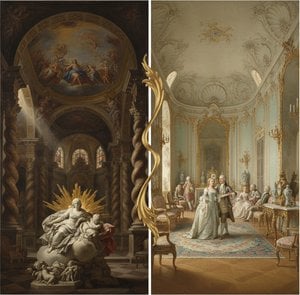
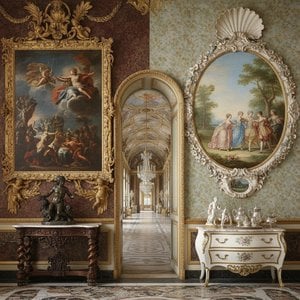
Hudson’s prolific output during the 1740s and 1750s established him as the leading portraitist of his era. He didn't simply paint likenesses; he meticulously constructed scenes that conveyed a sense of character, personality, and social standing. His subjects were invariably wealthy Londoners – merchants, lawyers, politicians, and members of the gentry – posed in their richly furnished homes. These interiors weren’t mere backdrops but active participants in the narrative, revealing details about the family's wealth, status, and tastes through carefully chosen furniture, tapestries, and domestic objects. Hudson’s skill lay not just in his ability to capture a likeness, but in his remarkable eye for detail and his talent for creating believable, immersive environments. He employed a team of assistants, notably Joseph Van Aken, a specialist drapery painter, who was responsible for the elaborate fabrics and furnishings that defined his compositions. The collaboration with Van Aken allowed Hudson to focus on the overall design and execution, while ensuring the visual richness and accuracy of the interiors. His students included Joshua Reynolds, Joseph Wright, and Peter Toms, demonstrating his significant influence on subsequent generations of artists.
The Technique of Domestic Realism
Hudson’s distinctive style is characterized by a remarkable level of realism and attention to detail. He was a master of light and shadow, skillfully using chiaroscuro to create depth and drama within the interiors. His brushwork is generally smooth and understated, prioritizing accuracy over expressive brushstrokes. He paid meticulous attention to the textures of fabrics – velvet, silk, brocade – rendering them with astonishing realism. The furniture in his paintings is not merely decorative; it’s carefully chosen to reflect the subject's social status and personal taste. Hudson’s use of color is restrained but effective, creating a harmonious and balanced composition. He avoided dramatic contrasts or flamboyant displays of wealth, instead opting for a subtle elegance that conveyed a sense of understated refinement. His compositions are often symmetrical and balanced, reflecting the classical ideals of harmony and proportion.
Hudson’s Legacy and Historical Significance
Despite his immense success, Hudson remained remarkably grounded in his approach to painting. He was known for his good temper and amiable disposition, earning him a devoted following among his patrons. His work offers an invaluable glimpse into the lives of 18th-century Londoners, providing insights into their social customs, material culture, and artistic tastes. His paintings are not simply portraits; they’re windows into a bygone era. Hudson's influence extended beyond his own lifetime, shaping the development of portraiture in England for decades to come. His meticulous attention to detail and his ability to capture the essence of domestic life set him apart from his contemporaries and established him as one of the most important artists of the 18th century. His paintings are now housed in major museums across the United Kingdom, including the National Portrait Gallery, the National Maritime Museum, Tate, Barnstaple Guildhall, and the Bristol City Museum and Art Gallery, ensuring that his remarkable legacy continues to be appreciated by generations of art lovers.
Key Works
* *Portrait of Samuel Scott*, 1733
* *James Thomson*, 1735
* *Portrait of William III on Horseback*, 1744
* *Ascension*, 1752 (Venice)
* *Portrait of Louis XIV*, 1701



 Voorvertoning
 Bestel handgeschilderde reproductie
 Verstuur
 Delen
Delen
 Details bekijken

 Download
 Vergelijkbare items
 Röntgenonderzoek
 Diavoorstelling
 Statistieken

 Lees meer






































 De optie voor glas is alleen beschikbaar bij een formaat kleiner dan 110 cm.