


 Oil On CanvasWallArtMannerism
 1566Renaissance
 261.0 x 136.0 cm
 Scuola Grande di San Rocco
Giclée- of canvasafdruk van museumkwaliteit met een snelle productie en flexibele afwerkingsmogelijkheden. ( Bestel handgeschilderde reproductie Koop afbeelding)





























Kies uit onze vooraf ingestelde maten die overeenkomen met de originele verhoudingen van het kunstwerk.

U kunt uw eigen afmetingen opgeven om in een specifieke lijst of ruimte te passen. Als de door u gekozen maat niet overeenkomt met de proporties van het originele kunstwerk, zullen wij de afbeelding bijsnijden of uitbreiden met een gespiegelde of effen rand. Een digitaal mockup wordt ter goedkeuring naar u verzonden voordat de productie begint.
Houd er rekening mee dat de preview op het scherm de werkelijke bijsneding of uitbreiding niet weergeeft. Alleen de mockup toont de uiteindelijke compositie nauwkeurig.
Hoewel aangepaste maten beschikbaar zijn, raden wij aan een afmeting uit de vooraf bepaalde lijst te kiezen om de originele proporties te behouden.
Wereldwijde levering () binnen 2 weken in plaats van de standaard 4/5 weken. (7 september)


Prophet
Afmetingen reproductie
In the quiet intensity of Jacopo Tintoretto’s “Prophet,” painted in 1566, we are invited into a moment of profound spiritual introspection. This monumental canvas, stretching over two and a half meters in height, does far more than present a portrait; it captures the very essence of a soul caught in the throes of divine contemplation. The subject, a bearded man draped in a deep blue robe, stands beside an architectural archway, his gaze cast downward toward a book held firmly in his hand. There is a heavy, palpable stillness to the scene, yet beneath this surface lies a restless energy characteristic of the Venetian Golden Age. As the light spills from an unseen source, it illuminates the rugged textures of his skin and the heavy folds of his garments, pulling the viewer into a private, sacred dialogue between man and the divine.
To behold this work is to witness the mastery of chiaroscuro, the dramatic interplay of light and shadow that would become a cornerstone of the Venetian Baroque. Tintoretto, often called il furioso for his energetic approach, eschews the polished, porcelain-like finishes of his contemporaries in favor of a more visceral technique. Through the use of rapid glazing—applying thin, translucent layers of pigment over opaque underlayers—he achieves an extraordinary luminosity. The light does not merely sit upon the surface; it seems to emanate from within the fabric and the flesh itself. This technique creates an illusionistic depth that makes the prophet’s presence feel almost sculptural, as if he might step out from the shadows of the archway and into our own space.
The historical backdrop of this masterpiece is as turbulent and rich as the paint itself. Created during the height of the Catholic Counter-Reformation, “Prophet” reflects a period when art was tasked with reasserting the power of faith through emotional resonance and dramatic grandeur. Tintoretto’s approach to disegno—the foundation of drawing and anatomical accuracy—ensures that despite the expressive, sometimes rapid brushstrokes, the figure possesses a commanding physical weight. This tension between meticulous anatomical detail and painterly spontaneity mirrors the broader humanist struggles of the era: the attempt to reconcile the tangible, human form with the intangible mysteries of spiritual truth.
For the discerning collector or interior designer, this painting offers more than just aesthetic beauty; it provides a focal point of intellectual and emotional gravity. The deep blues and earthy tones, punctuated by sudden highlights, allow the piece to anchor a room with a sense of history and prestige. Whether placed in a contemporary gallery setting or a classic study, the “Prophet” serves as a testament to the enduring power of human curiosity and the search for meaning. It is a work that does not merely decorate a wall but transforms an environment, inviting all who encounter it to pause, reflect, and succumb to the magnificent drama of the Venetian masters.


1518 - 1594 , Italië
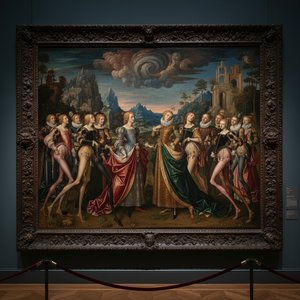
Explore the dramatic evolution of Northern Mannerism. Discover how masters like Bosch and Grünewald transitioned from Renaissance harmony to profound, elegant distortion through an expert analysis of symbolism, emotional intensity, and artistic innovation.

Embark on a journey through the Venetian Renaissance. Discover how masters like Giorgione and Titian revolutionized art through luminous color and light. Explore the profound legacy of the Venetian School and its enduring influence on the world of fine art.

Embark on a visual journey through art history's most powerful masterpieces. Explore the dramatic interplay of light and shadow in Baroque classics, from Guercino to Giordano, and discover how these breathtaking works of chiaroscuro continue to inspire collectors worldwide.

Explore the profound mastery of Caravaggio's tenebrism. Discover how his dramatic use of chiaroscuro revolutionized Baroque art through intense emotion and realism. An expert guide for classic art enthusiasts seeking to understand the power of shadow in historical masterpieces.

 Voorvertoning
 Verstuur
 Delen
Delen
 Details bekijken

 Download
 Vergelijkbare items
 Röntgenonderzoek
 Diavoorstelling
 Lees meer







 De optie voor glas is alleen beschikbaar bij een formaat kleiner dan 110 cm.


