


Giclée- of canvasafdruk van museumkwaliteit met een snelle productie en flexibele afwerkingsmogelijkheden. ( Bestel handgeschilderde reproductie Schakel over naar digitale afbeeldingen)





























Kies uit onze vooraf ingestelde maten die overeenkomen met de originele verhoudingen van het kunstwerk.

Voer de gewenste breedte en hoogte in, passend bij uw lijst of muur. Een afdruk kan alleen worden ingekort en nooit groter worden gemaakt dan het origineel; een formaat met andere verhoudingen zal daarom een deel van de afbeelding verliezen. Wij sturen u een digitaal mockup ter goedkeuring voordat we tot drukwerk overgaan. De afbeelding op deze pagina toont niet de werkelijke uitsnede — dit is alleen te zien op het mockup.
Wereldwijde levering () binnen 2 weken in plaats van de standaard 4/5 weken. (22 november)
Autumn
Afmetingen reproductie
Jacob Philipp Hackert's "Autumn," painted in 1784, isn’t merely a depiction of a rural scene; it’s an immersive experience—a carefully constructed tableau designed to evoke the quiet beauty and poignant melancholy of the season. This oil on canvas masterpiece, currently residing within the Wallraf-Richartz-Museum in Cologne, Germany, offers a glimpse into the world of late 18th-century pastoral life through the discerning eye of a German Romantic landscape painter. Hackert, deeply influenced by the Italianate traditions he encountered during his extensive travels, masterfully blends observation with artistic interpretation, resulting in an image that resonates far beyond its simple subject matter.
The painting immediately draws the viewer into a tranquil valley bathed in the muted hues characteristic of autumn. A small group of figures—a farmer tending to a cart laden with produce, a young woman near a cow – engage in everyday activities, their presence subtly integrated within the landscape rather than dominating it. Their attire, reflecting the fashions of the time, adds an authentic layer of historical context, transporting us back to a world where rural life was inextricably linked to the rhythms of nature and the cycles of harvest. The composition is carefully balanced, utilizing diagonal lines created by the wagon and the figures to lead the eye through the scene, while vertical elements—the trees—provide stability and grounding.
Hackert’s technical skill is evident in his masterful use of color and brushwork. He eschews bright, vibrant tones in favor of a palette dominated by earthy browns, deep greens, and warm yellows – colors that perfectly capture the essence of autumn foliage. The application of paint is deliberately soft and blended, creating a sense of atmospheric depth and luminosity. Notice how he employs subtle gradations of tone to suggest the play of light and shadow across the landscape, imbuing the scene with a palpable sense of realism. The artist’s technique is characterized by delicate lines and meticulous attention to detail, particularly in the rendering of the trees—each leaf painstakingly depicted to convey its individual texture and form.
"Autumn," like much of Hackert's work, carries a rich layer of symbolic meaning. The painting speaks not only to the beauty of the season but also to themes of transience, mortality, and the interconnectedness of humanity and nature. The harvest scene itself represents abundance and gratitude, while the figures engaged in their daily tasks embody the virtues of hard work and simplicity. Hackert’s Romantic sensibility is evident in his emphasis on emotional experience and his celebration of the natural world—values that were central to the movement's aesthetic principles. The painting can be interpreted as a meditation on the cyclical nature of life, mirroring the shedding of leaves and the preparation for winter.
The original "Autumn" is a treasured work of art, but its beauty can now be experienced in your own home through meticulously crafted oil painting reproductions. Available through /art/list/?Filter=8Y3CGQ-Jacob-Philipp-Hackert-Autumn, these reproductions capture the essence of Hackert’s vision with exceptional fidelity. Utilizing the highest quality materials and employing traditional techniques, each reproduction faithfully recreates the painting's atmospheric depth, nuanced color palette, and delicate brushwork. Whether you are an art enthusiast, a collector seeking to expand your collection, or simply someone looking for a stunning piece of wall décor, a "Autumn" reproduction offers a beautiful and enduring tribute to one of Germany’s most celebrated landscape painters. For further insights into Jacob Philipp Hackert's life and work, visit https://en.wikipedia.org/wiki/Jacob_Philipp_Hackert.
In "Autumn" versterken Earthy kleuren een Tranquil gevoel.
De Röntgenanalyse-pagina van "Autumn" door Jacob Philipp Hackert is een interactieve viewer waarmee u door elf optische lagen van het kunstwerk kunt glijden, inclusief een weergave in röntgenstijl.
Gezien de datering uit 1784, valt "Autumn" binnen de Late Period van Jacob Philipp Hackert.


1737 - 1807 , Duitsland

Journey through the vibrant soul of abstraction with our curated guide to the top 25 Wassily Kandinsky masterpieces. Explore the stories behind his iconic colors and shapes. Find museum-quality reproductions and decor inspiration. Discover all masterpieces on WahooArt.com.

Explore the mastery of autumn landscapes through impasto and light. Discover the seasonal soul of art with our expert guide.

Explore the ethereal beauty of Impressionist landscapes. Discover how masters like Monet and Renoir captured light and atmosphere through revolutionary plein air techniques and vibrant brushstrokes in this expert guide to art history's most luminous movement.

Master the art of curation with our expert guide to collecting high-end stylistic reproductions. Discover how hand-painted oil masterpieces and bespoke commissions bring historical prestige and unparalleled texture to luxury interiors and professional design projects.
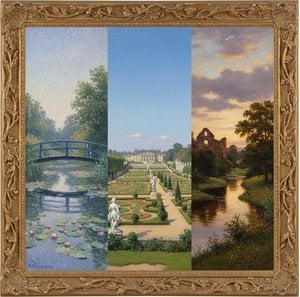
Embark on a visual journey through the serene beauty of gardens and parks in fine art. Discover how master artists capture nature's tranquility through impressionistic blooms and classical landscapes to bring timeless elegance into your home collection.
 Voorvertoning
 Verstuur
 Delen
Delen
 Details bekijken
 Gids
Gids

 Download
 Vergelijkbare items
 Röntgenonderzoek
 Diavoorstelling
 Vraag & antwoord
 Statistieken


 Lees meer









 De optie voor glas is alleen beschikbaar bij een formaat kleiner dan 110 cm.


