x
VoorvertoningVoorvertoning Bekijk in ARBekijk in AR Bestel print Bestel printBestel handgeschilderde reproductie Bestel handgeschilderde reproductie VerstuurVerstuur
Details bekijkenDetails bekijken Toevoegen aan favorieten Toevoegen aan favorieten DownloadDownload Vergelijkbare itemsVergelijkbare items RöntgenonderzoekRöntgenonderzoek DiavoorstellingDiavoorstelling

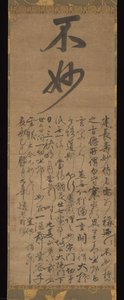
Not Clever

  • Creatiedatum1425
  • Afmetingen92.0 x 36.0 cm

Discover ichidon shōzui, a renowned Muromachi period Japanese artist known for exquisite ink on paper works. Trained in Kikuchi Yosai style, he captures traditional themes with masterful brushwork and cultural significance.

Koop een digitale afbeelding in hoge resolutie met verbeterde kwaliteit, die veel superieur is aan de online voorvertoning.

Elk bestand wordt met uiterste precisie voorbereid door onze interne specialisten, met behulp van geavanceerde tools en deskundige handmatige retouche. Wij garanderen dat elke afbeelding een uitzonderlijke helderheid, nauwkeurige kleurweergave en verfijnde details bezit.

Het uiteindelijke bestand wordt binnen 72 uur per e-mail geleverd, geoptimaliseerd voor direct gebruik in professionele, redactionele en printomgevingen. Dit is dezelfde kwaliteit waarop vooraanstaande designstudio's, uitgevers en galerieën vertrouwen.

Digitale afbeeldingen

Download een bestand met hoge resolutie voor persoonlijke weergave, afdrukken en creatieve projecten. (Bestel print Bestel printBestel handgeschilderde reproductie Bestel handgeschilderde reproductie)

Totaalprijs

$ 24,90

Inbegrepen bij elke bestelling van een digitale afbeelding

Professionele digitale levering, gegarandeerd

Wanneer u kiest voor WahooArt.com, ontvangt u niet alleen een afbeelding – u krijgt een professioneel verbeterd digitaal kunstwerk, met precisie vervaardigd en voorzien van een tevredenheidsgarantie. Dit is alles wat automatisch bij uw bestelling is inbegrepen:

shipping_icon
Snelle levering per e-mail

Uw hoogwaardige digitale afbeeldingsbestand wordt binnen 72 uur na bestelling naar u gemaild – klaar voor direct gebruik.

canvas_icon
AI-verbeterd digitaal bestand

Uw kunstwerk wordt professioneel geoptimaliseerd met behulp van geavanceerde AI-tools en handmatige bewerkingen, waardoor maximale details, helderheid en kleurnauwkeurigheid worden gegarandeerd.

insurance_icon
Gratis levenslange herlevering van digitale afbeeldingen

Je bestand per ongeluk verwijderd of kwijtgeraakt? Geen zorgen – we sturen het u op elk gewenst moment gratis opnieuw toe.

tax_icon
Geen invoerkosten – nooit

Geniet direct van uw kunstwerk zonder invoerrechten, belastingen of verzendkosten – digitale downloads zijn altijd belastingvrij.

color_icon
Garantie op kleurgetrouwheid

Met behulp van professionele hulpmiddelen en kleurbeheer zorgen wij ervoor dat uw digitale afbeelding de originele kleuren zo nauwkeurig mogelijk weergeeft.

return_icon
60 dagen tevredenheidsgarantie

Als u niet tevreden bent met uw digitale afbeelding, passen wij deze aan of storten wij 100% terug binnen 60 dagen – zonder vragen gesteld.

guarantee_icon
100% Geld-terug-garantie

Niet tevreden? Ontvang binnen 60 dagen na ontvangst van uw digitale bestand uw volledige aankoopbedrag terug – zonder vragen te stellen.

discount_icon
Korting bij grote bestellingen

Koop 3 afbeeldingen, bespaar 10% - Koop 5, bespaar 15% - Koop 10+, bespaar 20%. Ideaal voor creatieve projecten, galerieën en bureaus.

Two brusquely brushed large characters reading Fumyō 不妙, or “Not Clever”—extracted from the text below—are placed above a transcription of a missive in smaller but equally dynamic Chinese characters. The use of the phrase Fumyō (Chinese: Bumiao)—with its entirely negative connotations of “not clever,” “unremarkable,” or even “no good,”—strikes the viewer as odd at first glance, especially for a calligraphy brushed by an eminent Zen master. But upon reading the missive below, it becomes clear that it was written to pointedly criticize Monk Jūmyō Jisha 壽妙侍者 from Kenchōji Temple in Kamakura, whose name, rather grandiosely, includes the character 妙, which suggests something or someone clever, remarkable, mysterious, or sublime. In short, Ichidon is stating that Jūmyō is anything but clever or remarkable, and unworthy to use that character in his name. Ichidon cites various Buddhist sources to make the point about proper moral and spiritual behavior. The monk-calligrapher Ichidon brushed certain characters that ended with a sweeping stroke to the left with special exuberance. Note especially how the final stroke of the character myō 妙 – meaning both “cleverness” or “mysterious” depending on the context was stretched out extra long, to give a visual rhythm and excitement. This work is an especially fine example of a bokuseki, a calligraphy by a Zen monk of the medieval period. The brusque, rule-breaking calligraphy style conveys a message of spiritual transcendence or enlightenment so central to the Zen experience, and the brush writing style is meant to convey that message on a visual level.The monk Ichidon Shōzui trained in Rinzai Zen at Hōunji Temple in Hitachi, Ibaraki prefecture, under the prominent master Fukuan Sōki 復庵宗己 (1280–1358), who had trained in China and who had achieved a wide following in Japan. Shōzui achieved fame in his own right, and subsequently served as head abbot at prominent Rinzai sect temples such as Engakuji in Kamakura and at Nanzenji in Kyoto. He also used the name Kyūka Sanjin 九華山人, referred to in the signature here. Shōzui, who earned a reputation as a master of Chinese prose and poetry, also wrote an inscription on a precious painting of White-Robed Kannon by the Chinese artist Mokuan Reien.

Kunstenaarsbiografie

Ichidon Shōzui (1394–1428): A Master of Zen Brushwork

Ichidon Shōzui, born around 1394 in Hitachi Prefecture, Ibaraki, Japan, stands as a pivotal figure within the Muromachi period’s artistic landscape—a time marked by profound cultural transformation and burgeoning Zen Buddhism. His legacy resides primarily in his exceptional ink paintings on paper, particularly “Not Clever,” which exemplifies the stylistic innovations of Kikuchi Yosai and embodies the core tenets of Zen aesthetics. Little is known about Shōzui's early life beyond his training under Fukuan Sōki at Hōunji Temple, a formative experience that instilled in him the disciplined rigor characteristic of Rinzai Zen practice. This dedication to meditation profoundly shaped his artistic vision—a vision rooted in spontaneity and aimed at capturing the essence of enlightenment itself.
  • Training & Patronage: Shōzui’s apprenticeship under Fukuan Sōki provided him with invaluable instruction in calligraphy and Zen philosophy, establishing a connection to influential figures who championed artistic excellence within the context of Buddhist ideals.
  • Style & Technique: Shōzui's distinctive style—often termed bokuseki—characterized by bold brushstrokes and deliberate asymmetry—was a conscious rejection of prevailing conventions. He sought to convey spiritual transcendence through visual form, prioritizing expressive energy over meticulous detail.

The Significance of “Not Clever”

“Not Clever,” created around 1425, is arguably Shōzui’s most celebrated work and serves as a compelling illustration of his artistic philosophy. The composition—featuring two large characters reading 不妙 (Fumyō)—represents a pointed critique of Monk Jūmyō Jisha, whose name deliberately incorporates the character 妙 (“marvelous”), symbolizing enlightenment. This juxtaposition underscores Shōzui’s belief that true wisdom transcends superficial brilliance and demands an honest confrontation with one's own limitations—a concept central to Zen meditation. The brushwork itself is masterful: a sweeping stroke of ink on paper conveys rhythm and dynamism, reflecting the artist’s intention to capture not merely visual beauty but also the profound spiritual experience associated with Zen practice.
  • Symbolism & Critique: The deliberate use of Fumyō—a term laden with negative connotations—highlights Shōzui's critique of conventional notions of achievement and virtue.
  • Zen Aesthetics: The bokuseki style embodies the Zen ideal of spontaneity and effortless expression, prioritizing intuitive understanding over intellectual analysis.

Influence & Legacy

Ichidon Shōzui’s work exerted considerable influence on subsequent generations of Japanese artists, establishing a precedent for stylistic innovation within Rinzai Zen calligraphy. His embrace of bold brushstrokes and asymmetrical compositions challenged established artistic norms—promoting a visual language that prioritized spiritual depth over decorative embellishment. Furthermore, his inscription on Mokuan Reien's painting exemplifies the broader cultural context of Muromachi art—a period characterized by patronage from powerful samurai clans and a fervent devotion to Buddhist principles. Shōzui’s legacy continues to inspire artists today who strive to capture the elusive essence of enlightenment through artistic expression.

Further Exploration

To delve deeper into Ichidon Shōzui's artistic contributions, consider examining his oeuvre alongside works by other prominent Zen masters of the Muromachi period—particularly Kikuchi Yosai—whose stylistic innovations profoundly shaped Japanese calligraphy and visual culture. Research resources available at The Metropolitan Museum of Art offer invaluable insights into Shōzui’s life and work, furthering our understanding of this remarkable artist's enduring impact on Japanese art history.

Belangrijkste feiten

  • Artistic Movement Or Style: Kikuchi Yosai Style
  • Artists Who Influenced This Artist: ['Kikuchi Yosai']
  • Date Of Birth: Living
  • Full Name: Ichidon Shōzui
  • Nationality: Japanese
  • Notable Artworks: ['Not Clever']
  • Place Of Birth: Japan