


Giclée- of canvasafdruk van museumkwaliteit met een snelle productie en flexibele afwerkingsmogelijkheden. ( Bestel handgeschilderde reproductie Schakel over naar digitale afbeeldingen)





























Kies uit onze vooraf ingestelde maten die overeenkomen met de originele verhoudingen van het kunstwerk.

Voer de gewenste breedte en hoogte in, passend bij uw lijst of muur. Een afdruk kan alleen worden ingekort en nooit groter worden gemaakt dan het origineel; een formaat met andere verhoudingen zal daarom een deel van de afbeelding verliezen. Wij sturen u een digitaal mockup ter goedkeuring voordat we tot drukwerk overgaan. De afbeelding op deze pagina toont niet de werkelijke uitsnede — dit is alleen te zien op het mockup.
Wereldwijde levering () binnen 2 weken in plaats van de standaard 4/5 weken. (8 november)
Washerwomen
Afmetingen reproductie
Hubert Robert's "Washerwomen," painted in 1796, is more than just a depiction of a daily scene; it’s a carefully constructed tableau brimming with the romanticism and artistic sensibilities of late 18th-century France. The painting transports us to a sun-drenched courtyard within a bustling Parisian city – a world rendered with an almost dreamlike quality through Robert's masterful use of light, color, and perspective. It’s a piece that speaks volumes about the era’s fascination with ruins, memory, and the beauty found in the commonplace.
Robert, born in Paris in 1733, was a painter deeply influenced by the Baroque tradition, particularly the works of Claude Lorrain and Andrea Pozzo. However, he quickly developed his own distinctive style, often referred to as “capriccio” – a term derived from Italian meaning ‘whim’ or ‘fancy.’ These landscapes weren't intended to be realistic representations but rather imaginative constructions that blended elements of history, mythology, and the natural world. "Washerwomen" exemplifies this approach perfectly, seamlessly integrating architectural fragments, classical statues, and a vibrant urban backdrop.
The painting’s core lies in Robert's manipulation of space and perspective. He employs a technique known as *foreshortening* to create the illusion of depth, drawing the viewer into the scene with remarkable accuracy. The arches and columns of the background buildings seem to recede infinitely, while the figures in the foreground appear remarkably close, almost inviting us to step into their world. This masterful use of perspective isn’t merely technical; it serves a deeper symbolic purpose – evoking a sense of timelessness and the enduring power of memory.
Robert was particularly drawn to ruins, viewing them as potent symbols of both loss and regeneration. He didn't simply depict decaying structures; he reimagined them, breathing new life into their weathered facades and transforming them into picturesque settings for his fantastical compositions. In “Washerwomen,” the crumbling architecture isn’t presented as a lament for the past but rather as a backdrop to an idyllic scene of everyday life – suggesting that beauty can be found even in decay and that memory can transform the past into something vibrant and enduring.
The painting's palette is dominated by warm, earthy tones—ochres, browns, and siennas—creating a sense of warmth and intimacy. These muted colors are punctuated by splashes of brighter hues – the blues of the sky, the pinks and yellows of the flowers, and the vibrant reds of the women’s clothing. Robert's attention to detail is astonishing; every cobblestone, every leaf, every fold in the fabric seems meticulously rendered. This level of precision contributes significantly to the painting’s overall realism and invites us to linger over its intricate details.
The figures themselves are depicted with a remarkable sense of naturalism. The women engaged in their laundry work—washing clothes at a fountain, carrying baskets—are not idealized representations but rather believable characters caught in a moment of quiet activity. Their gestures and expressions convey a sense of dignity and resilience, reflecting the strength and spirit of the Parisian working class.
"Washerwomen" is more than just a pretty picture; it’s a poignant meditation on beauty, memory, and the passage of time. Robert's ability to capture the essence of a fleeting moment—a scene from everyday life transformed into an enduring work of art—is truly remarkable. The painting resonates with us today because it speaks to universal themes: the connection between humanity and nature, the importance of preserving memories, and the beauty that can be found in even the most humble of scenes.
Today, reproductions of “Washerwomen” continue to captivate art lovers and interior designers alike. Its evocative atmosphere and masterful technique make it a timeless addition to any collection or space—a reminder of the artistic brilliance of Hubert Robert and his enduring legacy as one of France’s most celebrated landscape painters.
"Washerwomen" door Hubert Robert combineert de Acrylic On Canvas-techniek met de Romanticism-stijl. Techniek en stroming beschrijven de vervaardiging en de stijl van het werk.
De kleurharmonie van "Washerwomen" wordt beschreven als Strong Color Unity.
Gezien de datering uit 1796, valt "Washerwomen" binnen de Mature Period van Hubert Robert.

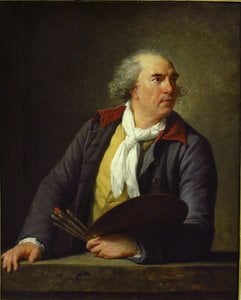
1733 - 1808 , Frankrijk

Ontdek de 10 meest iconische meesterwerken van de Romantiek! Reis door de tijd met Caspar David Friedrich, Turner & Delacroix. Laat je inspireren en vind museumkwaliteit kunst reproducties voor een sfeervol interieur op WahooArt.com.

Explore the rich history of landscape art with WahooArt. Discover renowned artists, movements like Impressionism & Romanticism, and expert guidance for collecting timeless pieces. Find your perfect serene escape today!

Ontdek de 10 meest iconische Rococo meesterwerken! Duik in de wereld van Fragonard, Boucher & Watteau. Leer over lieflijkheid, pastelkleuren en aristocratie. Museumkwaliteit kunst reproducties op WahooArt.com.

Explore the captivating world of Hubert Robert, master of Romantic landscape painting & 'capriccio' ruins. Discover his historical context, artistic innovations, and collecting insights with WahooArt.

Ontdek de 25 mooiste schilderijen van John Constable, meester van de Engelse Romantiek. Van idyllische landschappen tot iconische Hay Wain – bewonder zijn techniek en emotie. Museumkwaliteit reproducties & decoratie op WahooArt.com.
 Voorvertoning
 Verstuur
 Delen
Delen
 Details bekijken
 Gids
Gids

 Download
 Vergelijkbare items
 Röntgenonderzoek
 Diavoorstelling
 Vraag & antwoord
 Statistieken


 Lees meer









 De optie voor glas is alleen beschikbaar bij een formaat kleiner dan 110 cm.


