Bekijk op ware grootte Bekijk in AR Koop handgeschilderd kunstwerk Schakel over naar digitale afbeeldingen Verstuur
Details bekijken Gids Toevoegen aan favorieten Download Vergelijkbare items Röntgenonderzoek Diavoorstelling Statistieken

Fontein onder een peristyle

Ontdek Hubert Robert’s "Fontein onder een peristyle", een prachtige Barok/Neo-classicistische schilderkunst van Romeinse ruïnes & figuren. Laat je meevoeren door zijn dramatische lichtinval en klassieke schoonheid!

Hubert Robert (1733-1808): Een Franse schilder van sfeervolle landschappen & 'capriccio' ruïnes, die geschiedenis, verval en fantasie combineren. Ontdek zijn kunst!

Giclée / Kunstafdrukken

Giclée- of canvasafdruk van museumkwaliteit met een snelle productie en flexibele afwerkingsmogelijkheden. ( Koop handgeschilderd kunstwerk Schakel over naar digitale afbeeldingen)

P118B $10
P118H $10
P118W $10
P438Z $10
P508JH $12
P508YH $12
P805H $10
P805Z $10
P919BZ $10
P919G $10
P919XJ $10
P959ZH $10
P968JZ $12
W106C $8
W218G $10
W218JH $8
W218Y $10
W307PJ $10
W316G $10
W316PJ $8
W316Y $10
W398PJ $8
W4111J $10
W500HY $15
W500JH $15
W692G $12
W849H $8
W940BG $15
W953PJ $8

Standaardformaat
op maat gemaakt
CM
INCH

Kies uit onze vooraf ingestelde maten die overeenkomen met de originele verhoudingen van het kunstwerk.

breedte
hoogte

U kunt uw eigen afmetingen opgeven om in een specifieke lijst of ruimte te passen. Als de door u gekozen maat niet overeenkomt met de proporties van het originele kunstwerk, zullen wij de afbeelding bijsnijden of uitbreiden met een gespiegelde of effen rand. Een digitaal mockup wordt ter goedkeuring naar u verzonden voordat de productie begint.
Houd er rekening mee dat de preview op het scherm de werkelijke bijsneding of uitbreiding niet weergeeft. Alleen de mockup toont de uiteindelijke compositie nauwkeurig.
Hoewel aangepaste maten beschikbaar zijn, raden wij aan een afmeting uit de vooraf bepaalde lijst te kiezen om de originele proporties te behouden.

Wereldwijde levering () binnen 2 weken in plaats van de standaard 4/5 weken. (23 september)

why_choose_icon
Gratis wereldwijde expressverzending
why_choose_icon
Hoogwaardig linnen canvas
why_choose_icon
Volledige verzendverzekering
why_choose_icon
Garantie op terugbetaling van invoerrechten
why_choose_icon
Garantie op exacte kleurweergave
why_choose_icon
Retourbeleid van 100 dagen (alleen bij defecten)
why_choose_icon
100% Geld-terug-garantie
why_choose_icon
Korting bij meerdere afnames

Totaalprijs

$ 69

reproduction

Fontein onder een peristyle

Giclée / Kunstafdrukken

Formaat reproductie

-

Totaalprijs

$ 69

Belangrijkste kenmerken

  • Medium: huile sur toile
  • Subject or theme: Roman ruins & Landscape
  • Year: 1803
  • Title: FONTAINE SOUS UN PORTIQUE
  • Influences: Classical Art
  • Artist: Hubert Robert
  • Notable elements or techniques: Perspective, Dramatic lighting

Kunstquiz

Er is slechts één goed antwoord op elke vraag.

Vraag 1:
What artistic style is predominantly associated with Hubert Robert’s "FONTAINE SOUS UN PORTIQUE"?
Vraag 2:
The painting depicts a scene primarily featuring:
Vraag 3:
What is the dominant color palette used in "FONTAINE SOUS UN PORTIQUE"?
Vraag 4:
Robert employed what technique to create depth within the architectural space?
Vraag 5:
The painting’s mood can best be described as:

FONTAINE SOUS UN PORTIQUE: Een Symfonie van Licht en Ruimte

Deze prachtige huile op doek reproductie van Hubert Robert’s “FONTAINE SOUS UN PORTIQUE” biedt een fascinerende kijk op het kunstenaarschap van de Romantiek en een diepgaande waardering voor klassieke schoonheid. Het werk, geschreven rond 1803, vangt een majestueuze scène binnen een imposante Romeinse arcade – een plek waar licht en ruimte samensmelten tot een bijna surrealistische ervaring. Robert’s kunstenaarschap staat bekend om zijn vermogen om vervallen grandeur te oproepen, een thema dat centraal staat in deze iconische compositie.
  • Beschrijving: De afbeelding laat een binnenruimte zien die dominiert door een prachtige fontein en een uitgebreide tuin, omgeven door hoog oprijzende kolommen en elegante bogen. Een groep figuren zijn aanwezig – sommigen zitten rustig neer terwijl anderen de fontein bewonderen en het uitzicht over het landschap volgen. De perspectieflijn creëert een gevoel van diepte dat de aandacht naar de achtergrond lokt, waardoor een gevoel van ruimte en beweging wordt gecreëerd.
  • Stijl: Robert’s stijl is duidelijk gebaseerd op zowel Barok als Neoclassicisme, waarbij hij elementen uit beide stromingen combineert om een unieke visuele taal te vormen. De dramatische belichting speelt een cruciale rol bij het vormgeven van de scène en benadrukt de complexe vormen binnenin de architectuur.
  • Techniek: Robert gebruikte een combinatie van zorgvuldige penseelstreken en technische innovaties om een gevoel van tekstuur en licht te creëren dat essentieel is voor het succes van zijn werk. De kunstenaar beheerst het gebruik van lijnen om de kolommen, bogen en balustrades te definiëren, terwijl hij geometrische vormen gebruikt om de structuur van de ruimte weer te geven.

Een Historische Context: Het Laatste Koninkrijk en de Romantiek

“FONTAINE SOUS UN PORTIQUE” werd geschreven tijdens het Laatste Koninkrijk in Frankrijk, een periode gekenmerkt door zowel politieke instabiliteit als een groeiende interesse voor kunst en wetenschap. Robert’s werk is een directe reactie op de stijl van zijn tijdgenoten en draagt bij aan de ontwikkeling van de Romantiek – een beweging die waarde hecht aan emotie, schoonheid en het verkennen van het natuurlijke wereldbeeld. De kunstenaar liet zich inspireren door de grandeur van oude Romeinse ruïnes en gebruikte deze als symbool voor zowel verval als eeuwigheid.

Symbolisme en Emotionele Impact

De fontein zelf dient als een belangrijke symbolische verwijzing naar het idee van schoonheid, natuurlijke harmonie en zelfs een hint naar het verlatenheid van de wereld. De kunstenaar heeft een gevoel voor licht en kleur gebruikt om een warme en nostalgische atmosfeer te creëren die bijdraagt aan het emotionele gewicht van het werk. Het beeld roept vragen op over tijd, schoonheid en het belang van het bewonderen van natuurlijke omgevingen – thema’s die resoneren met een publiek dat gevoelig is voor kunst en geschiedenis. Een prachtige reproductie kan een prachtige aanvulling zijn op elke ruimte en een bron van inspiratie bieden voor iedereen die waarde hecht aan klassieke schoonheid en artistieke innovatie.

Biografie van de kunstenaar

Hubert Robert: A Painter of Ruins and Visions

Hubert Robert, a name inextricably linked to the evocative beauty of ruins and the romantic allure of bygone eras, stands as a singular figure in 18th-century French art. Born in Paris in 1733, his life unfolded against a backdrop of profound artistic transformation—a journey from the ornate elegance of the Rococo to the nascent spirit of Neoclassicism, all while navigating the tumultuous currents of the French Revolution. Robert’s genius wasn't merely in replicating decay; it resided in crafting meticulously detailed visions that resonated with both a poignant nostalgia for the past and an anticipation of the future—a delicate balance between observation and imaginative reconstruction. His formative years were spent within the structured environment of artistic training, initially under the tutelage of the sculptor Michel-Ange Slodtz, who recognized Robert’s innate talent but wisely steered him towards painting, sensing a deeper calling in capturing light, atmosphere, and the subtle poetry inherent in form.

Roman Reveries: Shaping an Artistic Identity

The defining moment in Robert's artistic development arrived with his extended sojourn to Rome between 1754 and 1765. Accompanying Étienne-François de Choiseul, he immersed himself completely within the ancient city’s captivating world—a realm steeped in history, architectural grandeur, and a palpable sense of timelessness. This wasn't simply a matter of documenting what he saw; it was an act of profound interpretation, reimagining Rome through his own artistic lens. He spent countless hours sketching the crumbling temples, majestic arches, and overgrown gardens of the Eternal City, absorbing its essence with an almost obsessive intensity. His work during this period is profoundly influenced by Giovanni Paolo Panini, whose meticulous depictions of Roman ruins served as a crucial foundation. However, Robert quickly transcended mere imitation, developing his own distinctive style characterized by an unparalleled level of detail, masterful atmospheric perspective, and a remarkable sensitivity to the interplay of light and shadow—qualities that elevated his *capriccio* compositions – fanciful views juxtaposing classical ruins with contemporary life – into something truly exceptional. His sketchbook pages from this period are invaluable windows into his creative process, revealing not just drawings but also a deep understanding of architectural nuance and landscape composition.

Parisian Acclaim and Royal Patronage

Robert’s return to Paris in 1765 marked a significant turning point in his career trajectory. He swiftly gained recognition within the established artistic circles, securing admission to the Académie Royale de Peinture et de Sculpture with “The Port of Rome, Ornamented with Different Monuments of Architecture, Ancient and Modern.” This painting, showcasing his newfound mastery of capturing atmosphere and detail, immediately captivated audiences. His subsequent exhibitions at the Salon – the official art exhibition of the French Academy – garnered widespread acclaim, drawing considerable attention to his evocative depictions of ruins and picturesque landscapes. The critic Denis Diderot, a leading figure of the Enlightenment, famously lauded Robert’s ability to transport viewers to another time and place, recognizing in his work a profound connection between history, memory, and artistic vision. This success swiftly led to royal patronage; he was commissioned to design decorative projects for various palaces and estates, and later appointed as “Designer of the King's Gardens” – a prestigious position reflecting his growing influence within the court. He became a highly sought-after artist, not only for his easel paintings but also for his innovative designs for gardens and palatial interiors—demonstrating a remarkable versatility and an understanding of how art could enhance and elevate the spaces around it.

Revolution, Resilience, and Lasting Legacy

The French Revolution presented Robert with unprecedented challenges. As the political landscape shifted dramatically, many artists struggled to navigate the turbulent times. However, Robert demonstrated remarkable resilience, continuing to paint prolifically despite the upheaval. He even experienced a harrowing period of imprisonment during the Reign of Terror, an ordeal that profoundly impacted his work and ultimately fueled a series of drawings documenting his confinement—testaments to both his artistic spirit and his enduring commitment to truth. Following the Revolution, Robert was appointed curator of the newly established Muséum Central des Arts – later known as the Louvre – a testament to his expertise and dedication to preserving France’s cultural heritage. He played a crucial role in organizing and cataloging the museum's vast collection, ensuring that its artistic treasures were safeguarded for future generations. Hubert Robert died in Paris in 1808, leaving behind an extraordinary body of work—a legacy that continues to captivate and inspire with its evocative beauty, technical mastery, and profound understanding of the relationship between art, history, and memory.
  • Key Influences: Giovanni Paolo Panini, Piranesi, the architectural landscape of Rome.
  • Major Themes: Ruins, landscapes, *capriccio* paintings, historical memory, the passage of time.
  • Artistic Style: Meticulous detail, atmospheric perspective, evocative lighting, blending observation with imagination.

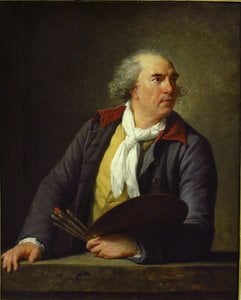
Hubert Robert

Hubert Robert

1733 - 1808 , Frankrijk

Snelle feiten

  • Artistic Movement Or Style: Romantiek, Neoklassiek
  • Artists Or Movements Influenced By This Artist: ['Romantiek']
  • Artists Who Influenced This Artist:
    • Giovanni Panini
    • Piranesi
  • Date Of Birth: 22 mei 1733
  • Date Of Death: 15 april 1808
  • Full Name: Hubert Robert
  • Nationality: Frans
  • Notable Artworks:
    • De Haven van Rome
    • Vlucht van Galatea
  • Place Of Birth: Parijs, Frankrijk
Ontdek kunstwerken georganiseerd op thema, stijl en kenmerk.