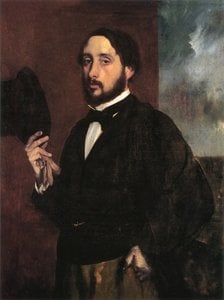
Een Leven Gedoemd aan Beweging
Edgar Degas, geboren Hilaire-Germain-Edgar De Gas in Parijs in 1834, was een kunstenaar van fascinerende tegenstellingen. Hoewel vaak ingelokt bij de Impressionisten – Monet, Renoir en anderen die het schilderen in het late negentiende eeuw revolutioneerden – weigerde hij deze aanduiding te accepteren, en identificeerde zichzelf liever als een realist. Deze toewijding was gebaseerd op zijn minutieuze observatie van de wereld om hem heen en een toewijding aan het onthouden ervan met onverbogen eerlijkheid. Degas’ vroege leven was comfortabel bourgeois; zijn vader was een bankier, en zijn moeder kwam uit een Creoolse familie in New Orleans. Deze achtergrond gaf hem toegang tot onderwijs en artistieke training, hoewel hij vaak klagde over academische beperkingen. Hij meldde zich aanvankelijk aan bij het Lycée Louis-le-Grand, maar zijn echte opleiding begon toen hij begon met kopiëren van werken in de Louvre, waardoor hij zijn vaardigheden verfijnde en een levenslange passie voor klassieke kunst ontbrandde. Echter, Degas’ pad was niet één van strikte traditie; het werd gekenmerkt door voortdurende twijfel en herziening van artistische normen. Hij bezat een onafhankelijk geest die zijn hele carrière zou definiëren.
Buiten de Impressionisme: Een Unieke Artistieke Visie
Terwijl tijdgenoten zoals Monet de vluchtige effecten van licht buiten opvolgden, werkte Degas grotendeels binnen de grenzen van zijn studio, zorgvuldig scènes construeerde uit observatie en geheugen. Zijn onderwerpkeuze was beslist modern – een afwijking van de historische of mythologische thema’s die door velen in de academische schilderkunst werden verfijnd. Hij vond inspiratie in het alledaagse leven van Parijzenaars: wasserettes, cabaretdanssters, hoedenmakers en, meest beroemd, dansers. Het is deze fascinatie voor ballet die veel van zijn oeuvre definieert. Degas schilderde niet alleen prachtige ballerina’s; hij ving de slopende realiteit van hun beroep vast – de eindeloze repetities, de fysieke inspanningen, de vluchtige momenten van gratie in een wereld van hard werken. Zijn composities zijn vaak onconventioneel, figuren op onverwachte manieren in beeld brengen en asymmetrische arrangementen gebruiken die een gevoel van dynamiek en directheid creëren. Hij was een meester in het vastleggen van beweging, niet door vervaagde lijnen of wazige effecten, maar door nauwkeurige observatie en zorgvuldige weergave van vorm. *Dancer, A Group of Dancers* en *Women Combing Their Hair* zijn voorbeelden van deze toewijding aan het portretteren van de menselijke figuur in beweging en de complexiteit van het moderne leven onthullen. Hij was niet geïnteresseerd in oppervlakkige schoonheid; hij zocht naar de waarheid onder het oppervlak.
Invloeden en Artistieke Ontwikkeling
Degas’ artistieke reis werd gevormd door een diverse reeks invloeden. Zijn vroege opleiding benadrukte klassieke principes, met name het werk van Jean-Auguste-Dominique Ingres, wiens nadruk op vakmanschap en nauwkeurige vorm een blijvende indruk achterliet. Echter, Degas bewonderde ook de Realisten, zoals Gustave Courbet, die academische conventies uitdaagden en het portretteren van hedendaags leven promootten. Een cruciale gebeurtenis in zijn ontwikkeling was zijn associatie met Camille Pissarro, een toonaangevende Impressionist die hem introduceerde bij andere kunstenaars en hem aanmoedigde om te experimenteren met nieuwe technieken. Hij werd gefascineerd door Japanse prints –
Ukiyo-e – die invloed hadden op zijn gebruik van asymmetrische composities, platte perspectieven en gedurfde patronen. Hij omarmde ook fotografie, erkende het potentieel ervan als hulpmiddel voor het bestuderen van beweging en het vastleggen van vluchtige momenten in de tijd. Deze bereidheid om verschillende invloeden in zijn werk te integreren is wat hem onderscheidt en bijdraagt aan de unieke karakter van zijn kunst. Hij durfde niet te twijfelen aan het combineren van verschillende bronnen, waardoor iets radicaals ontstond.
Belangrijke Prestaties
Edgar Degas stierf in Parijs in 1917, achterlatend een oeuvre dat de aandacht en inspiratie van het publiek tot op de dag van vandaag blijft trekken. Zijn innovatieve benadering van compositie, zijn meesterlijke vakmanschap en zijn onverbogen portretteren van het moderne leven hebben een diepgaande impact gehad op het verloop van kunstgeschiedenis. Hij heeft de weg geëffend voor toekomstige generaties kunstenaars die wilden breken met traditionele conventies en nieuwe manieren om de wereld om hen heen te vertegenwoordigen. Zijn invloed is zichtbaar in het werk van Pablo Picasso en Henri Matisse, onder meer. Musea over de hele wereld – waaronder het Musée d'Orsay en het Musée de l’Orangerie in Parijs – huisvesten significante collecties van zijn schilderijen, pastels, beelden en grafische werken, waardoor zijn nalatenschap voor generaties lang zal voortduren. Degas was niet alleen een schilder van dansers of paardenkoersen; hij was een scherp observator van de menselijke natuur, een meester in vorm en beweging en een ware innovator die de mogelijkheden van kunst herdefinieerde.
- Een Meester van Lijn: Degas’ uitzonderlijke vakmanschap onderscheidde hem van zijn tijdgenoten.
- Modern Leven als Onderwerp: Hij richtte zich op hedendaagse Parijse scènes, waarbij hij afweek van de traditie.
- Invloed op Toekomstige Kunstenaars: Zijn werk had een diepgaande impact op Picasso en Matisse.



 Bekijk op ware grootte
 Koop handgeschilderd kunstwerk
 Verstuur
 Delen
Delen
 Details bekijken
 Gids
Gids

 Download
 Vergelijkbare items
 Röntgenonderzoek
 Diavoorstelling
 Statistieken


 Lees meer






































 De optie voor glas is alleen beschikbaar bij een formaat kleiner dan 110 cm.