Bekijk op ware grootte Bekijk in AR Schakel over naar print Koop handgeschilderd kunstwerk Verstuur
Details bekijken Gids voor studentenkunstwerken Toevoegen aan favorieten Download Vergelijkbare items Röntgenonderzoek Diavoorstelling Statistieken

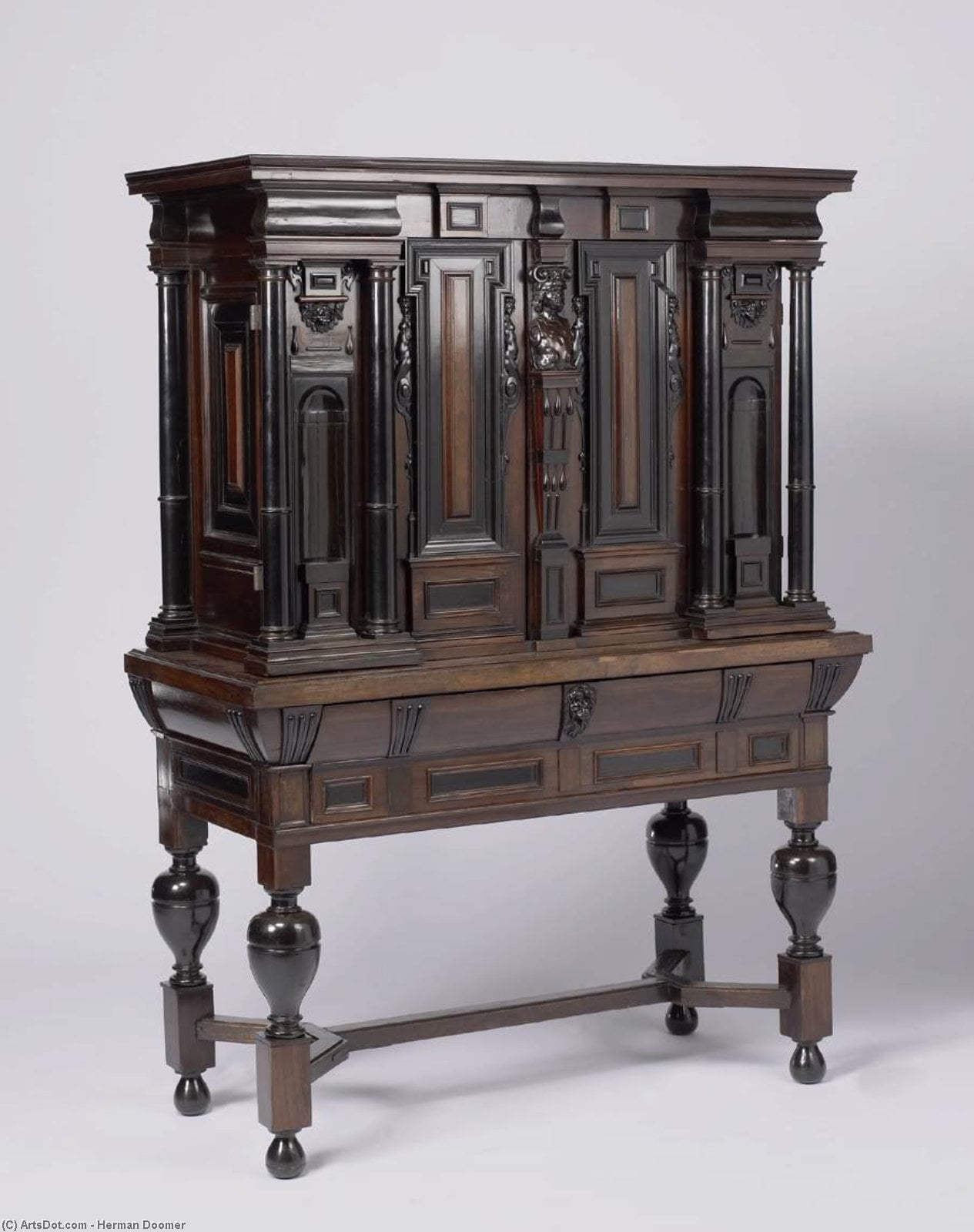
Cabinet table

Marvel at the intricate beauty of 'Cabinet Table' (1635) by Herman Doomer – a stunning German Baroque masterpiece showcasing elaborate wood carvings and masterful craftsmanship from the early 17th century.

A prominent Dutch Golden Age craftsman known for his exquisite ebony-veneer furniture and the celebrated Cupboard (Interior), discover the intricate artistry that defined an era of opulent craftsmanship.

Koop een digitale afbeelding in hoge resolutie met verbeterde kwaliteit, die veel superieur is aan de online voorvertoning.

Elk bestand wordt met uiterste precisie voorbereid door onze interne specialisten, met behulp van geavanceerde tools en deskundige handmatige retouche. Wij garanderen dat elke afbeelding een uitzonderlijke helderheid, nauwkeurige kleurweergave en verfijnde details bezit.

Het uiteindelijke bestand wordt binnen 72 uur per e-mail geleverd, geoptimaliseerd voor direct gebruik in professionele, redactionele en printomgevingen. Dit is dezelfde kwaliteit waarop vooraanstaande designstudio's, uitgevers en galerieën vertrouwen.

Digitale afbeeldingen

Download een bestand met hoge resolutie voor persoonlijke weergave, afdrukken en creatieve projecten. ( Schakel over naar print Koop handgeschilderd kunstwerk)

Totaalbedrag

€ 21,88

Inbegrepen bij elke bestelling van een digitale afbeelding

Professionele digitale levering, gegarandeerd

Wanneer u kiest voor WahooArt.com, ontvangt u niet alleen een afbeelding – u krijgt een professioneel verbeterd digitaal kunstwerk, met precisie vervaardigd en voorzien van een tevredenheidsgarantie. Dit is alles wat automatisch bij uw bestelling is inbegrepen:

Directe levering per e-mail

Uw hoogwaardige digitale afbeeldingsbestand wordt binnen 72 uur na bestelling naar u gemaild – klaar voor direct gebruik.

AI-geoptimaliseerd digitaal bestand

Uw kunstwerk wordt professioneel geoptimaliseerd met behulp van geavanceerde AI-tools en handmatige bewerkingen, waardoor maximale details, helderheid en kleurnauwkeurigheid worden gegarandeerd.

Gratis levenslange herlevering

Je bestand per ongeluk verwijderd of kwijtgeraakt? Geen zorgen – we sturen het u op elk gewenst moment gratis opnieuw toe.

Geen invoerkosten – nooit

Geniet direct van uw kunstwerk zonder invoerrechten, belastingen of verzendkosten – digitale downloads zijn altijd belastingvrij.

Garantie op kleurgetrouwheid

Met behulp van professionele hulpmiddelen en kleurbeheer zorgen wij ervoor dat uw digitale afbeelding de originele kleuren zo nauwkeurig mogelijk weergeeft.

100 dagen tevredenheidsgarantie

Als u niet tevreden bent met uw digitale afbeelding, passen wij deze aan of storten wij 100% terug binnen 100 dagen - zonder vragen te stellen.

100% Geld-terug-garantie

Niet tevreden? Ontvang een volledige terugbetaling binnen 100 dagen na ontvangst van uw digitale bestand – zonder vragen te stellen.

Korting bij grote bestellingen

Koop 3 afbeeldingen, bespaar 10% - Koop 5, bespaar 15% - Koop 10+, bespaar 20%. Ideaal voor creatieve projecten, galerieën en bureaus.

Belangrijkste kenmerken

  • Artist: herman doomer
  • Influences: Caravaggio
  • Year: 1635
  • Dimensions: 176 x 130 cm
  • Medium: Wood carving

Kunstquiz

Er is slechts één goed antwoord op elke vraag.

Vraag 1:
What is the primary material used to create this cabinet table?
Vraag 2:
The date provided (1635) refers to:
Vraag 3:
What type of decorative elements are prominently featured on the doors and drawers of the cabinet?
Vraag 4:
The style of the image suggests it is primarily intended for:
Vraag 5:
The presence of ball-and-claw feet on the table legs is characteristic of:

A Glimpse into the Dutch Golden Age: The Cabinet Table by Herman Doomer

The image before us presents more than just a piece of furniture; it’s a portal into 17th-century Germany, a tangible echo of a period defined by both artistic flourishing and profound social upheaval. This imposing cabinet table, attributed to the hand of Herman Doomer, offers a captivating study in craftsmanship, symbolism, and the evolving aesthetics of the Dutch Golden Age. Doomer’s work, though relatively obscure today, reflects a fascinating confluence of influences – the meticulous detail of Flemish masters, the burgeoning naturalism of Caravaggio, and the distinctly German tradition of intricate wood carving.

The table itself is a testament to the skill of its creator. Constructed from dark-stained oak, it exudes an air of quiet authority, its substantial size suggesting a piece intended for a prominent location within a wealthy household. The multiple doors and drawers are not merely functional; they’re meticulously sculpted with a profusion of floral motifs – roses, lilies, and forget-me-nots – interwoven with scenes depicting figures engaged in everyday life. These aren't idealized portraits but rather glimpses into the realities of the time: a farmer tending his fields, a woman gathering herbs, and even hints of mythological creatures subtly integrated into the decorative scheme. The level of detail is astonishing; one can almost feel the texture of the petals or discern the individual strands of hair on the carved figures.

The Shadowed Influence of Caravaggio

While Doomer’s style ultimately leans towards the restrained elegance favored in Dutch interiors, a clear influence from Michelangelo Merisi da Caravaggio is discernible. Like Caravaggio, Doomer masterfully employs dramatic chiaroscuro – the interplay of light and shadow – to draw attention to specific elements within the carving. Notice how the light catches on the folds of fabric or highlights the intricate details of a face, creating a sense of depth and immediacy. This technique, borrowed from the Italian painter’s signature style, elevates the cabinet table beyond mere decoration, imbuing it with a palpable sense of drama and emotional resonance. The use of strong contrasts also serves to emphasize the richness and texture of the wood itself.

A Window into 17th-Century German Life

The date – 1635 – places this cabinet table firmly within the tumultuous period following the Thirty Years’ War. Germany, ravaged by conflict and political fragmentation, experienced a remarkable cultural resurgence during this era, often referred to as the Dutch Golden Age's sister movement. Furniture from this time reflects both the desire for opulent display and a subtle resistance to the devastation of war – a celebration of beauty amidst hardship. The scenes depicted on the cabinet table offer glimpses into the lives of ordinary people, reminding us that even in times of conflict, life continued, marked by routines, traditions, and a deep connection to the natural world.

Symbolism and the Language of Form

Beyond its decorative elements, the cabinet table is rich with symbolic meaning. The abundance of floral motifs speaks to themes of fertility, prosperity, and the cyclical nature of life. The figures depicted – farmers, women, mythical creatures – represent a complex interplay between earthly concerns and spiritual aspirations. The turned legs and ball-and-claw feet, a common feature in traditional German furniture design, ground the piece firmly in its regional context while adding an element of visual stability and elegance. The overall composition suggests a harmonious balance between order and chaos, restraint and exuberance – reflecting the complexities of the era in which it was created.

A Timeless Piece for the Connoisseur

Reproductions of this cabinet table offer a remarkable opportunity to bring a touch of 17th-century German artistry into any interior space. The intricate carvings, combined with the rich dark wood finish, create a statement piece that is both visually stunning and historically significant. Whether displayed in a grand hall or a more intimate setting, this cabinet table serves as a reminder of the enduring power of craftsmanship and the captivating beauty of a bygone era. Its presence evokes a sense of quiet contemplation, inviting viewers to reflect on the stories embedded within its intricate details.

Vragen & Antwoorden

Wat zijn het formaat en de afmetingen van "Cabinet table"?

Het formaat van "Cabinet table" is Portrait en het origineel heeft de afmetingen 176 x 130 cm. Beide zijn nuttig bij het plannen van een reproductie.

Voor welke kamer wordt "Cabinet table" door Herman Doomer aanbevolen?

"Cabinet table" door Herman Doomer wordt aanbevolen voor een Living Room. Deze suggestie is gebaseerd op het onderwerp, de kleuren en de sfeer van het werk.

Wie is de maker van "Cabinet table" en bij welke stroming hoort dit werk?

"Cabinet table" werd gecreëerd door Herman Doomer in de Baroque Painting-stijl. De kunstenaar en de stroming bepalen de traditie van het werk.


Biografie van de kunstenaar

The Artisan of the Golden Age

While history often reserves its most luminous spotlights for the painters who captured the light of the Dutch Golden Age, the story of Herman Doomer offers a profound glimpse into the skilled hands that framed and built that very era. Born in Anrath, near Venlo, Doomer was not a visual artist in the traditional sense, but rather a master craftsman whose life was defined by the tactile beauty of ebony and wood. As a successful furniture maker and framemaker, his work provided the physical structure for the burgeoning culture of 17th-century Amsterdam. He operated a prosperous business specializing in ebony-veneer furniture and intricate frames, navigating the bustling streets of the Kalverstraat, Gasthuismolensteeg, and Hartenstraat with the confidence of a man at the heart of a global trading hub.

Craftsmanship and Connection

The legacy of Herman Doomer is inextricably linked to the artistic giants of his time. His mastery of materials like ebony and colored baleen allowed him to contribute to the aesthetic opulence of the Dutch Republic, creating pieces that reflected the wealth and taste of a new middle class. His professional network was deeply embedded in the highest circles of Amsterdam's creative community; he was known to collaborate with figures such as Pieter Quast and Johannes Lutma. Perhaps most significantly, his role as a supplier of frames placed him in direct contact with Rembrandt van Rijn. This connection resulted in one of the most enduring portraits of the era, where Rembrandt captured Doomer not merely as a subject, but as a dignified professional, immortalizing the quiet strength of the craftsman behind the canvas.

A Lasting Material Legacy

Though his name may not be found on the signatures of canvases, Doomer’s influence persists through the enduring physical objects he created. His work, such as the remarkable Cupboard (Interior) housed in the Rijksmuseum, serves as a window into the lavish tastes and meticulous artistry of the period. These pieces were more than mere utility; they were embodiments of Dutch innovation and skill. Through his specialized trade, Doomer helped shape the visual environment of the 17th century, leaving behind a material history that continues to speak of an age defined by prosperity, intricate detail, and an unparalleled devotion to the beauty of fine craftsmanship.
Herman Doomer

Herman Doomer

1595 - 1650