Maurice Prendergast: A Mosaic of Modern Life
Born in St. John’s, Newfoundland, on October 10, 1858, Maurice Brazil Prendergast was an American artist whose distinctive style—characterized by vibrant color palettes, fragmented forms, and a captivating depiction of modern urban life—cemented his place as a pivotal figure within the broader landscape of Post-Impressionism. His journey from a childhood spent amidst the rugged beauty of the Canadian wilderness to the bustling artistic circles of Paris and Boston reveals a fascinating evolution shaped by diverse influences and a deeply personal vision. Prendergast’s career, though often overshadowed during his lifetime, now stands as a testament to his unique ability to capture the energy and fragmented rhythms of early 20th-century America.
Early life in Newfoundland profoundly impacted Prendergast's artistic sensibilities. The stark contrasts of light and shadow, the dramatic textures of the landscape, and the vibrant hues of indigenous crafts undoubtedly informed his nascent understanding of color and form. Following his family’s relocation to Boston, he apprenticed himself to a commercial artist, an experience that instilled in him a keen eye for pattern and design—a skill he would later translate into his celebrated mosaics of urban scenes. This early exposure to the visual language of advertising subtly shaped his approach to composition and color, laying the groundwork for his distinctive artistic style.
Prendergast’s time in Paris proved transformative. Studying at the Académie Colarossi and the Académie Julian, he immersed himself in the vibrant artistic currents of the era, encountering and engaging with a diverse array of artists and movements. He found inspiration in the works of Impressionists like Childe Hassam, whose use of light and color resonated deeply with Prendergast’s own aesthetic sensibilities. Crucially, his association with Walter Sickert and Aubrey Beardsley introduced him to the avant-garde circles of Paris, exposing him to new ideas about form, composition, and the representation of modern life. These encounters significantly broadened his artistic horizons and contributed to the development of his signature style.
The Language of Fragments
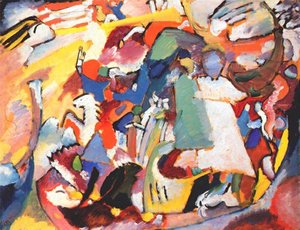
Prendergast’s artistic language is immediately recognizable for its fragmented approach to depicting urban scenes. Rather than striving for a realistic or unified portrayal, he meticulously dissected reality into individual elements—buildings, figures, vehicles—and reassembled them in vibrant mosaics of color and form. This technique wasn't simply a stylistic choice; it reflected Prendergast’s fascination with the dynamism and complexity of modern life. He sought to capture not just what *looked* like a city street but also the feeling of being immersed within its chaotic energy.
His use of color was equally deliberate and evocative. Employing bold, saturated hues—often juxtaposed in unexpected ways—Prendergast created a sense of visual excitement and immediacy. He avoided subtle gradations and muted tones, instead favoring flat planes of color that seemed to shimmer and vibrate with energy. This approach, reminiscent of the work of Paul Gauguin and Van Gogh, contributed significantly to the emotional impact of his paintings.
Furthermore, Prendergast’s technique involved a meticulous layering process, often applying multiple layers of paint to achieve the desired effects. He frequently employed a dry brush technique, creating textured surfaces that resembled mosaics—a visual metaphor for the fragmented nature of modern experience. This painstaking attention to detail and his willingness to experiment with different materials and techniques set him apart from many of his contemporaries.
Connections and Influences
While often associated with Post-Impressionism, Prendergast’s work also reveals connections to other artistic movements of the era, including the Ashcan School. His depiction of urban life—particularly in scenes of New York City—bears a resemblance to the gritty realism championed by artists like Robert Henri and John Sloan. However, Prendergast's distinctive style and his focus on color and pattern distinguish him from the more straightforward social commentary of the Ashcan School.
His artistic circle included figures such as James Morrice, who introduced him to avant-garde circles in Paris, and he maintained close relationships with artists like Walter Sickert and Aubrey Beardsley. These connections exposed Prendergast to new ideas about form, composition, and the representation of modern life, further shaping his artistic development.
Legacy and Recognition
Despite achieving some recognition during his lifetime, Maurice Prendergast’s work remained largely obscure until the mid-20th century. Today, he is increasingly recognized as a significant figure in American art history—a pioneer of modernism whose unique style and evocative depictions of urban life continue to captivate viewers. His paintings offer a compelling glimpse into the energy and fragmentation of early 20th-century America, reflecting both the beauty and the chaos of a rapidly changing world.
His work is held in numerous collections, including the Metropolitan Museum of Art in New York City and the Smithsonian American Art Museum. Prendergast’s legacy endures as a testament to his artistic vision and his enduring ability to capture the essence of modern life through the language of fragments and vibrant color.



 Bekijk op ware grootte
 Schakel over naar print
 Verstuur
 Delen
Delen
 Details bekijken
 Gids
Gids

 Download
 Vergelijkbare items
 Röntgenonderzoek
 Diavoorstelling
 Statistieken


 Lees meer