VoorvertoningVoorvertoning Bekijk in ARBekijk in AR Bestel handgeschilderde reproductie Bestel handgeschilderde reproductieSwitch to Digital Image Switch to Digital Image VerstuurVerstuur
Details bekijkenDetails bekijken Toevoegen aan favorieten Toevoegen aan favorieten DownloadDownload Vergelijkbare itemsVergelijkbare items RöntgenonderzoekRöntgenonderzoek DiavoorstellingDiavoorstelling StatsStats

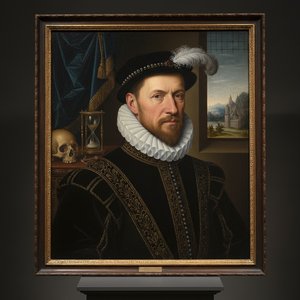
untitled (6611)

Holbein's artistic journey began in his father’s workshop and spanned Basel to the English court. He skillfully blended Gothic traditions with Italian Renaissance ideals, resulting in a distinctive visual language characterized by detail and psychological depth.

Hans Holbein der Jüngere (1497-1543): Een Renaissance meester van realistisch portretkunst, beroemd om koningen zoals Hendrik VIII en gedetailleerde kunstwerken die een tijdperk definiëren.

Giclée / Kunstafdrukken

Giclée- of canvasafdruk van museumkwaliteit met een snelle productie en flexibele afwerkingsmogelijkheden. (Bestel handgeschilderde reproductie Bestel handgeschilderde reproductieSwitch to Digital Image Switch to Digital Image)

P118B $10
P118H $10
P118W $10
P438Z $10
P508JH $12
P508YH $12
P805H $10
P805Z $10
P919BZ $10
P919G $10
P919XJ $10
P959ZH $10
P968JZ $12
W106C $8
W218G $10
W218JH $8
W218Y $10
W307PJ $10
W316G $10
W316PJ $8
W316Y $10
W398PJ $8
W4111J $10
W500HY $15
W500JH $15
W692G $12
W849H $8
W940BG $15
W953PJ $8

Standaardformaat
op maat gemaakt
CM
INCH

Kies uit onze vooraf ingestelde maten die overeenkomen met de originele verhoudingen van het kunstwerk.

breedte
hoogte

U kunt uw eigen afmetingen opgeven om in een specifieke lijst of ruimte te passen. Als de door u gekozen maat niet overeenkomt met de proporties van het originele kunstwerk, zullen wij de afbeelding bijsnijden of uitbreiden met een gespiegelde of effen rand. Een digitaal mockup wordt ter goedkeuring naar u verzonden voordat de productie begint.
Houd er rekening mee dat de preview op het scherm de werkelijke bijsneding of uitbreiding niet weergeeft. Alleen de mockup toont de uiteindelijke compositie nauwkeurig.
Hoewel aangepaste maten beschikbaar zijn, raden wij aan een afmeting uit de vooraf bepaalde lijst te kiezen om de originele proporties te behouden.

Wereldwijde levering () binnen 2 weken in plaats van de standaard 4/5 weken. (8 september)

why_choose_icon
Gratis wereldwijde expressverzending
why_choose_icon
Hoogwaardig linnen canvas
why_choose_icon
Volledige verzendverzekering
why_choose_icon
Garantie op terugbetaling van invoerrechten
why_choose_icon
Garantie op exacte kleurweergave
why_choose_icon
Retourbeleid van 100 dagen (alleen bij defecten)
why_choose_icon
100% Geld-terug-garantie
why_choose_icon
Korting bij meerdere afnames

Totaalprijs

$ 69

reproduction

untitled (6611)

Giclée / Kunstafdrukken

Afmetingen reproductie

-

Eindtotaal

$ 69

Snelle feiten

  • Medium: Painting
  • Movement: Northern Renaissance
  • Notable elements or techniques: Detailed portraiture; Psychological realism
  • Artist: Hans Holbein the Younger
  • Title: untitled (6611)
  • Influences: Late Gothic

Kunstquiz

Er is slechts één goed antwoord op elke vraag.

Vraag 1:
What artistic movement is Hans Holbein the Younger primarily associated with?
Vraag 2:
The painting depicts a man wearing what distinctive outfit?
Vraag 3:
What is the dominant color in the background of the portrait?
Vraag 4:
Hans Holbein the Younger's father was known for his skill in what artistic medium?
Vraag 5:
Holbein’s portraits are characterized by their remarkable attention to detail and psychological insight. Which of the following best describes this approach?

A Vision in Crimson: The Enduring Allure of Holbein’s Precision

To encounter an untitled portrait by Hans Holbein the Younger is to step into a realm where the boundary between reality and representation dissolves under the weight of meticulous observation. In this enigmatic masterpiece, the artist captures more than just a likeness; he preserves a moment of profound psychological presence. The subject, a man of unmistakable distinction, is presented in a striking crimson tunic, its vibrant hue anchored by crisp white trim that commands the viewer's immediate attention. A subtle yet significant chain encircles his neck, serving as a quiet testament to his social standing and perhaps hinting at the worldly possessions or spiritual commitments that defined his era. Against a serene, verdant backdrop, the figure exudes a sense of composed confidence, his gaze steady and his posture anchored by the masterful composition that Holbein so expertly crafted.

The true magic of this work lies in its technical execution, a hallmark of the Northern Renaissance. Utilizing oil paint on panel, Holbein achieved a level of luminosity and tonal nuance that remains breathtaking even centuries later. Through the delicate application of layers, he mastered the art of chiaroscuro, allowing light to dance across the subject's features and create a dramatic interplay of shadow that lends the portrait its expressive, three-dimensional power. Every anatomical detail—from the subtle musculature of the face to the precise texture of the beard—is rendered with an almost supernatural accuracy. This dedication to realism does not merely document a person; it breathes life into them, inviting the observer to contemplate the humanity behind the paint.

<

Historical Resonance and Timeless Elegance

Born in the artistic hub of Augsburg, Holbein was a product of a lineage of masters, having honed his skills within the workshop of his father, Hans Holbein the Elder. This upbringing instilled in him a reverence for detail that would eventually make him the preeminent portraitist of the 16th-century English court. This particular piece reflects the humanist ideals of his time—a period where the celebration of individual character and the precise observation of the natural world became paramount. The painting serves as a bridge between the late Gothic tradition and the burgeoning intellectualism of the Renaissance, offering a window into a world of stability, grandeur, and refined taste.

For the discerning collector or interior designer, this artwork offers much more than mere decoration; it provides a focal point of historical depth and sophisticated beauty. The bold contrast between the warm reds and the cool greens creates a visual harmony that can anchor a room, whether placed in a contemporary gallery setting or a classic, traditional study. Owning a high-quality reproduction of such a masterpiece allows one to surround themselves with the quiet dignity of the Renaissance, bringing an atmosphere of intellectual curiosity and timeless elegance into any modern space. It is an invitation to pause, to look closer, and to find inspiration in the enduring legacy of one of history's greatest observers.


Biografie van de kunstenaar

A Life Etched in Detail: The World of Hans Holbein the Younger

Born around 1497 in Augsburg, Germany, Hans Holbein the Younger emerged as a defining figure of the Northern Renaissance—a master portraitist whose work continues to resonate with breathtaking realism and psychological depth. His upbringing within an artistically gifted family laid the foundation for his exceptional talent; his father, Hans Holbein the Elder, was a respected painter and printmaker who instilled in young Hans a meticulous approach to observation and technique. This early training wasn’t merely about mastering brushstrokes or mixing pigments—it was about learning to *see*, to capture not just likeness but the very essence of a subject. Holbein's initial artistic explorations occurred within his father’s workshop, where he honed his skills before embarking on a journey that would lead him through Switzerland and ultimately to the heart of the English court.

From Basel to the Tudor Court: A Rising Star

After completing his apprenticeship, Holbein traveled extensively throughout Switzerland, establishing himself as an independent artist with a growing reputation. He spent several formative years in Basel, creating not only striking portraits but also religious works and intricate woodcut designs—most notably the haunting series depicting the *Dance of Death*. These early pieces reveal a burgeoning mastery of composition and a developing fascination with capturing the complexities of human emotion. His father’s influence was paramount; Holbein inherited his meticulous attention to detail and unwavering dedication to artistic excellence. The Basel workshop fostered an environment where observation reigned supreme—a crucial element in Holbein's subsequent artistic endeavors. He skillfully blended German artistic traditions with influences from Italy, absorbing techniques that would elevate his work to unparalleled heights. It was in 1526 that fate intervened, drawing Holbein towards England, an event that would irrevocably alter his artistic trajectory. He arrived bearing a letter of introduction from Erasmus, the renowned humanist scholar, which opened doors to the influential circles of English society. His talent quickly captivated prominent figures like Sir Thomas More, who became both a patron and a subject for several compelling portraits. This connection proved pivotal, leading to Holbein’s appointment as a court painter to King Henry VIII in 1536—a position he held, with some interruptions, until his untimely death in 1543. The patronage of More provided invaluable insight into the intellectual climate of the time and fueled Holbein's artistic ambition.

The Art of Perception: Style and Masterpieces

Holbein’s artistic style is characterized by an extraordinary commitment to realism, achieved through painstaking attention to detail in rendering textures, fabrics, and the subtle nuances of facial features. He didn’t simply *paint* portraits; he meticulously constructed them, layer upon layer, capturing not just physical appearances but also the personality and inner life of his sitters. His innovative compositions further enhanced the impact of his work, often employing symbolic objects or backgrounds to convey deeper meaning. The Ambassadors (1533) stands as a testament to this approach—a complex and symbolically rich double portrait showcasing both Holbein’s technical brilliance and intellectual depth. The anamorphic skull subtly embedded within the painting serves as a stark *memento mori*, reminding viewers of the inevitability of death. He meticulously studied anatomy, mastering techniques that allowed him to depict human figures with unprecedented accuracy—a hallmark of his distinctive style. His numerous portraits of Henry VIII established a lasting image of Tudor power, while his depiction of Erasmus of Rotterdam captures the scholar’s profound intellectual gravitas. Other notable works include the stunning *Portrait of Nikolaus Kratzer* (1528), a masterpiece of realism and scientific detail—a reflection of Holbein's fascination with observation and experimentation.
  • His depictions of Henry VIII became iconic representations of royal power.
  • His portraiture provides a window into the lives of prominent humanists like Erasmus and More.
  • His innovative use of symbolism adds layers of meaning to his work, inviting viewers to contemplate deeper themes.
Holbein’s legacy is profound; His meticulous attention to detail revolutionized portrait painting—setting a new standard for realism and psychological insight. He remains one of the most admired and studied painters of the Renaissance—a master whose work continues to inspire and enthrall. He didn't merely record appearances—he captured moments in time, preserving them for posterity. His artistic journey was shaped by influences from Albrecht Dürer and Italian Renaissance artists, demonstrating his adaptability and intellectual curiosity.

Hans Holbein de Jongere

Hans Holbein de Jongere

1497 - 1543 , Duitsland

Belangrijkste feiten

  • Artistic Movement Or Style: Noordelijke Renaissance
  • Artists Or Movements Influenced By This Artist: ['Latere portretschilders']
  • Artists Who Influenced This Artist: ['Albrecht Dürer']
  • Date Of Birth: c. 1497
  • Date Of Death: October or November 1543
  • Full Name: Hans Holbein der Jüngere
  • Nationality: Duits en Zwitserland
  • Notable Artworks:
    • De Ambassadeurs
    • Portret van Hendrik VIII
    • Portret van Erasmus
  • Place Of Birth: Augsburg, Duitsland
Ontdek kunstwerken georganiseerd op thema, stijl en kenmerk.