Bekijk op ware grootte Bekijk in AR Schakel over naar print Koop handgeschilderd kunstwerk Verstuur
Details bekijken Gids Toevoegen aan favorieten Download Vergelijkbare items Röntgenonderzoek Diavoorstelling Statistieken

untitled (5751)

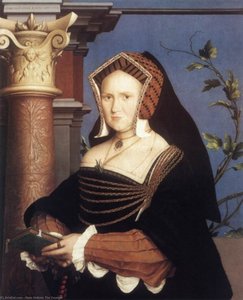
Witness the masterful portraiture of Hans Holbein the Younger! This iconic painting, likely depicting royalty, showcases his unparalleled realism and psychological depth – a cornerstone of the Northern Renaissance. Explore a timeless masterpiece!

Hans Holbein der Jüngere (1497-1543): Een Renaissance meester van realistisch portretkunst, beroemd om koningen zoals Hendrik VIII en gedetailleerde kunstwerken die een tijdperk definiëren.

Koop een digitale afbeelding in hoge resolutie met verbeterde kwaliteit, die veel superieur is aan de online voorvertoning.

Elk bestand wordt met uiterste precisie voorbereid door onze interne specialisten, met behulp van geavanceerde tools en deskundige handmatige retouche. Wij garanderen dat elke afbeelding een uitzonderlijke helderheid, nauwkeurige kleurweergave en verfijnde details bezit.

Het uiteindelijke bestand wordt binnen 72 uur per e-mail geleverd, geoptimaliseerd voor direct gebruik in professionele, redactionele en printomgevingen. Dit is dezelfde kwaliteit waarop vooraanstaande designstudio's, uitgevers en galerieën vertrouwen.

Digitale afbeeldingen

Download een bestand met hoge resolutie voor persoonlijke weergave, afdrukken en creatieve projecten. ( Schakel over naar print Koop handgeschilderd kunstwerk)

Totaalbedrag

$ 24,90

Inbegrepen bij elke bestelling van een digitale afbeelding

Professionele digitale levering, gegarandeerd

Wanneer u kiest voor WahooArt.com, ontvangt u niet alleen een afbeelding – u krijgt een professioneel verbeterd digitaal kunstwerk, met precisie vervaardigd en voorzien van een tevredenheidsgarantie. Dit is alles wat automatisch bij uw bestelling is inbegrepen:

shipping_icon
Directe levering per e-mail

Uw hoogwaardige digitale afbeeldingsbestand wordt binnen 72 uur na bestelling naar u gemaild – klaar voor direct gebruik.

canvas_icon
AI-geoptimaliseerd digitaal bestand

Uw kunstwerk wordt professioneel geoptimaliseerd met behulp van geavanceerde AI-tools en handmatige bewerkingen, waardoor maximale details, helderheid en kleurnauwkeurigheid worden gegarandeerd.

insurance_icon
Gratis levenslange herlevering

Je bestand per ongeluk verwijderd of kwijtgeraakt? Geen zorgen – we sturen het u op elk gewenst moment gratis opnieuw toe.

tax_icon
Geen invoerkosten – nooit

Geniet direct van uw kunstwerk zonder invoerrechten, belastingen of verzendkosten – digitale downloads zijn altijd belastingvrij.

color_icon
Garantie op kleurgetrouwheid

Met behulp van professionele hulpmiddelen en kleurbeheer zorgen wij ervoor dat uw digitale afbeelding de originele kleuren zo nauwkeurig mogelijk weergeeft.

return_icon
100 dagen tevredenheidsgarantie

Als u niet tevreden bent met uw digitale afbeelding, passen wij deze aan of storten wij 100% terug binnen 100 dagen - zonder vragen te stellen.

guarantee_icon
100% Geld-terug-garantie

Niet tevreden? Ontvang een volledige terugbetaling binnen 100 dagen na ontvangst van uw digitale bestand – zonder vragen te stellen.

discount_icon
Korting bij grote bestellingen

Koop 3 afbeeldingen, bespaar 10% - Koop 5, bespaar 15% - Koop 10+, bespaar 20%. Ideaal voor creatieve projecten, galerieën en bureaus.

Belangrijkste kenmerken

  • Location: Private Collection
  • Medium: Painting
  • Artistic style: Portraiture, Religious
  • Subject or theme: Religious scene
  • Notable elements or techniques: Realistic detail
  • Movement: Northern Renaissance

Kunstquiz

Er is slechts één goed antwoord op elke vraag.

Vraag 1:
What is the primary subject depicted in "untitled (5751)"?
Vraag 2:
The description mentions a distinctive red ribbon around one figure's neck. What does this likely symbolize?
Vraag 3:
Hans Holbein the Younger is best known for which artistic style?
Vraag 4:
According to the provided information, in what city was Hans Holbein the Younger born?
Vraag 5:
The description highlights a ‘carpeted floor and an ornate design’ in the background. What does this suggest about the setting?

The Ambassadors: A Window into Tudor Ambition

Hans Holbein the Younger’s “The Ambassadors,” painted in 1533 during the artist's second and most significant period in England, is far more than a mere portrait of two men. It’s a meticulously constructed tableau – a visual embodiment of humanist ideals, intellectual ambition, and the precarious political landscape of Henry VIII’s court. The painting, currently residing within the National Gallery in London, continues to captivate viewers with its astonishing detail and subtle layers of meaning, offering a rare glimpse into the mindset of a pivotal era.

  • Subject & Composition: The central figures are Jean de Dinteville, the French ambassador to England, and Charles Brandon, 1st Duke of Suffolk, a prominent member of Henry VIII’s court. They stand shoulder-to-shoulder, engaged in what appears to be a scholarly discussion, yet their postures subtly reveal an underlying tension – a reflection of the complex diplomatic relations between England and France at the time. The composition is remarkably balanced, drawing the eye across the meticulously rendered details.
  • Technique & Materials: Holbein’s mastery of oil paint is immediately apparent. He employed a glazing technique, layering thin washes of color to achieve an unparalleled luminosity and depth of tone. The textures – from the velvet of the cushions to the sheen of the silver – are rendered with astonishing realism. Note the use of black chalk for the detailed drawing under the paint layers, a common practice in Holbein’s work that adds to the painting's richness and longevity.

Symbolism Woven into the Scene

“The Ambassadors” is saturated with symbolism, reflecting the intellectual currents of the Renaissance and the specific concerns of Tudor England. The objects scattered across the table are not merely decorative; they carry profound significance. The globe represents the world’s knowledge and ambition, while the celestial sphere symbolizes divine order and human aspiration. The musical instruments – a lute, a recorder, and a viola da gamba – represent the pursuit of artistic excellence and intellectual refinement. The presence of the book, open to a passage from Euclid's *Elements*, underscores the importance of mathematics and reason in understanding the universe.

  • The Skull: Perhaps the most unsettling element is the small skull resting on the table. It serves as a stark reminder of mortality – a subtle yet powerful commentary on the fleeting nature of earthly achievements and the vanity of human ambition.
  • The Dutch Delftware: The distinctive blue and white Delftware vases are not just decorative items; they represent the burgeoning trade between England and the Netherlands, highlighting the economic opportunities available during this period.

A Portrait of a Court – And Its Uncertainties

Beyond its individual portraits, “The Ambassadors” offers a valuable insight into the atmosphere of Henry VIII’s court. The painting reflects the era's fascination with humanism, classical learning, and worldly pursuits. However, beneath this veneer of sophistication lies an undercurrent of uncertainty – symbolized by the skull and the tense expressions of the figures. Holbein was acutely aware of the political machinations surrounding him, and his work subtly acknowledges the dangers inherent in navigating the treacherous waters of courtly life.

Painted during a period of immense change—the break with Rome, the dissolution of monasteries, and the expansion of England’s influence on the world stage— “The Ambassadors” stands as a powerful testament to the ambition, intellect, and anxieties of a nation at a critical juncture in its history. It is a masterpiece that continues to challenge and inspire viewers centuries later.


Biografie van de kunstenaar

A Life Etched in Detail: The World of Hans Holbein the Younger

Born around 1497 in Augsburg, Germany, Hans Holbein the Younger emerged as a defining figure of the Northern Renaissance—a master portraitist whose work continues to resonate with breathtaking realism and psychological depth. His upbringing within an artistically gifted family laid the foundation for his exceptional talent; his father, Hans Holbein the Elder, was a respected painter and printmaker who instilled in young Hans a meticulous approach to observation and technique. This early training wasn’t merely about mastering brushstrokes or mixing pigments—it was about learning to *see*, to capture not just likeness but the very essence of a subject. Holbein's initial artistic explorations occurred within his father’s workshop, where he honed his skills before embarking on a journey that would lead him through Switzerland and ultimately to the heart of the English court.

From Basel to the Tudor Court: A Rising Star

After completing his apprenticeship, Holbein traveled extensively throughout Switzerland, establishing himself as an independent artist with a growing reputation. He spent several formative years in Basel, creating not only striking portraits but also religious works and intricate woodcut designs—most notably the haunting series depicting the *Dance of Death*. These early pieces reveal a burgeoning mastery of composition and a developing fascination with capturing the complexities of human emotion. His father’s influence was paramount; Holbein inherited his meticulous attention to detail and unwavering dedication to artistic excellence. The Basel workshop fostered an environment where observation reigned supreme—a crucial element in Holbein's subsequent artistic endeavors. He skillfully blended German artistic traditions with influences from Italy, absorbing techniques that would elevate his work to unparalleled heights. It was in 1526 that fate intervened, drawing Holbein towards England, an event that would irrevocably alter his artistic trajectory. He arrived bearing a letter of introduction from Erasmus, the renowned humanist scholar, which opened doors to the influential circles of English society. His talent quickly captivated prominent figures like Sir Thomas More, who became both a patron and a subject for several compelling portraits. This connection proved pivotal, leading to Holbein’s appointment as a court painter to King Henry VIII in 1536—a position he held, with some interruptions, until his untimely death in 1543. The patronage of More provided invaluable insight into the intellectual climate of the time and fueled Holbein's artistic ambition.

The Art of Perception: Style and Masterpieces

Holbein’s artistic style is characterized by an extraordinary commitment to realism, achieved through painstaking attention to detail in rendering textures, fabrics, and the subtle nuances of facial features. He didn’t simply *paint* portraits; he meticulously constructed them, layer upon layer, capturing not just physical appearances but also the personality and inner life of his sitters. His innovative compositions further enhanced the impact of his work, often employing symbolic objects or backgrounds to convey deeper meaning. The Ambassadors (1533) stands as a testament to this approach—a complex and symbolically rich double portrait showcasing both Holbein’s technical brilliance and intellectual depth. The anamorphic skull subtly embedded within the painting serves as a stark *memento mori*, reminding viewers of the inevitability of death. He meticulously studied anatomy, mastering techniques that allowed him to depict human figures with unprecedented accuracy—a hallmark of his distinctive style. His numerous portraits of Henry VIII established a lasting image of Tudor power, while his depiction of Erasmus of Rotterdam captures the scholar’s profound intellectual gravitas. Other notable works include the stunning *Portrait of Nikolaus Kratzer* (1528), a masterpiece of realism and scientific detail—a reflection of Holbein's fascination with observation and experimentation.
  • His depictions of Henry VIII became iconic representations of royal power.
  • His portraiture provides a window into the lives of prominent humanists like Erasmus and More.
  • His innovative use of symbolism adds layers of meaning to his work, inviting viewers to contemplate deeper themes.
Holbein’s legacy is profound; His meticulous attention to detail revolutionized portrait painting—setting a new standard for realism and psychological insight. He remains one of the most admired and studied painters of the Renaissance—a master whose work continues to inspire and enthrall. He didn't merely record appearances—he captured moments in time, preserving them for posterity. His artistic journey was shaped by influences from Albrecht Dürer and Italian Renaissance artists, demonstrating his adaptability and intellectual curiosity.

Hans Holbein de Jongere

Hans Holbein de Jongere

1497 - 1543 , Duitsland

Kerngegevens

  • Artistic Movement Or Style: Noordelijke Renaissance
  • Artists Or Movements Influenced By This Artist: ['Latere portretschilders']
  • Artists Who Influenced This Artist: ['Albrecht Dürer']
  • Date Of Birth: c. 1497
  • Date Of Death: October or November 1543
  • Full Name: Hans Holbein der Jüngere
  • Nationality: Duits en Zwitserland
  • Notable Artworks:
    • De Ambassadeurs
    • Portret van Hendrik VIII
    • Portret van Erasmus
  • Place Of Birth: Augsburg, Duitsland