Bekijk op ware grootte Bekijk in AR Koop handgeschilderd kunstwerk Schakel over naar digitale afbeeldingen Verstuur
Details bekijken Gids voor studentenkunstwerken Toevoegen aan favorieten Download Vergelijkbare items Röntgenonderzoek Diavoorstelling Statistieken

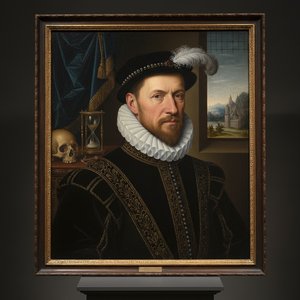
untitled (5500)

Hans Holbein's "Untitled (5500)" depicts Jesus and his disciples sharing a meal, rich with symbolism & detail. Explore the masterpiece’s religious & humanist themes through stunning realism.

Hans Holbein de Jonge (1497-1543): Meester van de Noordelijke Renaissance in realistische portretkunst, beroemd om zijn schilderijen van Tudor-koninklijken zoals Hendrik VIII en zijn verfijnde details.

Giclée / Kunstafdrukken

Giclée- of canvasafdruk van museumkwaliteit met een snelle productie en flexibele afwerkingsmogelijkheden. ( Koop handgeschilderd kunstwerk Schakel over naar digitale afbeeldingen)

Corner sample of the P118B picture frame: gegoten polystyreen, 5 cm wide and 3 cm thick
P118B €10
Corner sample of the P118H picture frame: gegoten polystyreen, 5 cm wide and 3 cm thick
P118H €10
Corner sample of the P118W picture frame: gegoten polystyreen, 5 cm wide and 3 cm thick
P118W €10
Corner sample of the P438Z picture frame: gegoten polystyreen, 5.5 cm wide and 3.5 cm thick
P438Z €10
Corner sample of the P508JH picture frame: gegoten polystyreen, 7 cm wide and 3.5 cm thick
P508JH €12
Corner sample of the P508YH picture frame: gegoten polystyreen, 7 cm wide and 3.5 cm thick
P508YH €12
Corner sample of the P805H picture frame: gegoten polystyreen, 5 cm wide and 3.5 cm thick
P805H €10
Corner sample of the P805Z picture frame: gegoten polystyreen, 5 cm wide and 3.5 cm thick
P805Z €10
Corner sample of the P919BZ picture frame: gegoten polystyreen, 7 cm wide and 3.5 cm thick
P919BZ €10
Corner sample of the P919G picture frame: gegoten polystyreen, 7 cm wide and 3.5 cm thick
P919G €10
Corner sample of the P919XJ picture frame: gegoten polystyreen, 7 cm wide and 3.5 cm thick
P919XJ €10
Corner sample of the P959ZH picture frame: gegoten polystyreen, 5 cm wide and 3 cm thick
P959ZH €10
Corner sample of the P968JZ picture frame: gegoten polystyreen, 6 cm wide and 4 cm thick
P968JZ €12
Corner sample of the W106C picture frame: massief hout, 5 cm wide and 3 cm thick
W106C €8
Corner sample of the W218G picture frame: massief hout, 5 cm wide and 3 cm thick
W218G €10
Corner sample of the W218JH picture frame: massief hout, 5 cm wide and 3 cm thick
W218JH €8
Corner sample of the W218Y picture frame: massief hout, 5 cm wide and 3 cm thick
W218Y €10
Corner sample of the W307PJ picture frame: massief hout, 6 cm wide and 3 cm thick
W307PJ €10
Corner sample of the W316G picture frame: massief hout, 6 cm wide and 3 cm thick
W316G €10
Corner sample of the W316PJ picture frame: massief hout, 6 cm wide and 3 cm thick
W316PJ €8
Corner sample of the W316Y picture frame: massief hout, 6 cm wide and 3 cm thick
W316Y €10
Corner sample of the W398PJ picture frame: massief hout, 5 cm wide and 3 cm thick
W398PJ €8
Corner sample of the W4111J picture frame: massief hout, 6.5 cm wide and 3.5 cm thick
W4111J €10
Corner sample of the W500HY picture frame: massief hout, 7 cm wide and 5 cm thick
W500HY €15
Corner sample of the W500JH picture frame: massief hout, 7 cm wide and 5 cm thick
W500JH €15
Corner sample of the W692G picture frame: massief hout, 8 cm wide and 4 cm thick
W692G €12
Corner sample of the W849H picture frame: massief hout, 5 cm wide and 3 cm thick
W849H €8
Corner sample of the W940BG picture frame: massief hout, 7.5 cm wide and 4.5 cm thick
W940BG €15
Corner sample of the W953PJ picture frame: massief hout, 6 cm wide and 3.5 cm thick
W953PJ €8

Standaardformaat
op maat gemaakt
CM
INCH

Kies uit onze vooraf ingestelde maten die overeenkomen met de originele verhoudingen van het kunstwerk.

breedte
hoogte

Voer de breedte en de hoogte in die u nodig heeft, passend bij uw lijst of uw muur. Een afdruk kan alleen worden ingekort, nooit groter worden gemaakt dan het origineel, waardoor een formaat met een andere verhouding een deel van de afbeelding verliest. Wij sturen u een digitaal mockup ter goedkeuring voordat we iets drukken. De afbeelding op deze pagina toont niet de werkelijke uitsnede — dit is alleen te zien op het mockup.

Wereldwijde levering () binnen 2 weken in plaats van de standaard 4/5 weken. (24 oktober)

Gratis wereldwijde expressverzending
Hoogwaardig linnen canvas
Volledige verzendverzekering
Garantie op terugbetaling van invoerrechten
Garantie op exacte kleurweergave
Retourbeleid van 100 dagen (alleen bij defecten)
100% Geld-terug-garantie
Korting bij meerdere afnames

Totaalprijs

€ 61

untitled (5500)

Giclée / Kunstafdrukken

Formaat reproductie

-

Totaalprijs

€ 61

Belangrijkste kenmerken

  • Subject or theme: Religious scene, feast
  • Title: untitled (5500)
  • Medium: Oil on panel
  • Artistic style: Realistic portraiture

Kunstquiz

Er is slechts één goed antwoord op elke vraag.

Vraag 1:
What is the primary subject depicted in ‘untitled (5500)’?
Vraag 2:
According to the description, how many people are depicted in the painting?
Vraag 3:
What is a prominent feature on the dining table that suggests symbolic meaning?
Vraag 4:
Hans Holbein the Younger is known for his expertise in which artistic style?
Vraag 5:
The inclusion of the anamorphic skull in ‘untitled (5500)’ most likely represents:

A Window into Tudor Intrigue: Hans Holbein’s “Untitled (5500)”

Hans Holbein the Younger's "Untitled (5500)" is not merely a group portrait; it’s a meticulously crafted tableau of power, faith, and subtle symbolism—a frozen moment within the opulent world of 16th-century England. This remarkable painting, depicting Jesus surrounded by his disciples at a shared meal, transcends simple representation to offer a profound glimpse into the political and religious currents of its time. The sheer scale of the composition – an unknown size but undoubtedly commanding – immediately draws the viewer in, inviting them to become part of this intimate scene. Holbein’s mastery is evident not just in his astonishingly realistic depiction of each figure, but also in the way he uses light and shadow to create a palpable sense of depth and atmosphere, reminiscent of the masterful works of Jan van Eyck.

The painting unfolds around a richly appointed dining table, laden with bowls, knives, and various instruments of learning – a deliberate arrangement that speaks volumes about the intellectual climate of the Tudor court. Three bowls are strategically placed, hinting at shared sustenance and fellowship, while the knife suggests both practicality and perhaps, a subtle undercurrent of tension. The figures themselves are rendered with an almost unsettling level of detail; each face is etched with individual character, reflecting not just likeness but also personality and status. The seated disciples, ranging from the youthful to the seasoned, embody a diverse group united by their devotion to Jesus. Notably, Jesus himself is positioned at the head of the table, asserting his central role within this community.

Renaissance Realism and Psychological Depth

Holbein’s artistic genius lies in his ability to capture not just outward appearances but also the inner lives of his subjects. This painting exemplifies his signature style – a blend of meticulous observation and psychological insight. He was renowned for his portraits, particularly those commissioned by Henry VIII and Anne Boleyn, and this work demonstrates his skill at conveying character through subtle gestures, expressions, and clothing choices. The use of oil paints allowed him to achieve an unprecedented level of detail and luminosity, capturing the textures of fabrics, the sheen of metal, and the nuances of skin tones with remarkable accuracy.

The technical brilliance is further enhanced by Holbein’s innovative approach to perspective and composition. He masterfully employs atmospheric perspective – creating a sense of distance through variations in color and detail – to draw the viewer's eye into the scene. The arrangement of figures around the table, with Jesus at its center, establishes a clear hierarchy while simultaneously fostering a feeling of intimacy and shared experience. It’s a carefully orchestrated visual narrative that invites contemplation.

Symbolism and Historical Context

Beyond its aesthetic qualities, “Untitled (5500)” is rich in symbolic meaning. The inclusion of scientific instruments – globes, sundials, and quadrants – reflects the burgeoning interest in astronomy and navigation during the Renaissance, a period marked by both exploration and intellectual curiosity. The reference to Rome through the Cosmati pavement pattern, likely incorporated as a gift for Anne Boleyn, subtly alludes to the political tensions between England and the Papal States. The lute with its broken string is a potent symbol of discord, perhaps representing the religious divisions that were fracturing Europe at the time.

The presence of Martin Luther’s hymnbook, open on facing pages referencing Law and Grace, adds another layer of complexity to the painting's interpretation. It suggests a dialogue between faith and reason, tradition and reform – themes that were central to the Protestant Reformation. Even the seemingly simple act of sharing a meal becomes imbued with significance, representing not just sustenance but also fellowship, community, and spiritual nourishment.

A Timeless Masterpiece: Reproduction Possibilities

WahooArt offers meticulously crafted hand-painted reproductions of Hans Holbein’s “Untitled (5500),” allowing you to bring this extraordinary artwork into your home or office. Our skilled artisans replicate Holbein's intricate details, vibrant colors, and atmospheric depth with unparalleled precision. Whether you are an art collector, a design enthusiast, or simply someone who appreciates the beauty of Renaissance art, our reproduction provides a stunning and authentic representation of this iconic masterpiece. Explore the available sizes and canvas options to find the perfect way to experience the power and allure of “Untitled (5500).”

Vragen & Antwoorden

Hoe verbindt "untitled (5500)" door Hans Holbein De Jonge Northern Renaissance met het geboorteland van de kunstenaar?

"untitled (5500)" verbindt de Northern Renaissance-stroming met Duitsland via de geboorteplaats van de maker.

In welke oriëntatie staat "untitled (5500)" door Hans Holbein De Jonge?

"untitled (5500)" door Hans Holbein De Jonge heeft een Portrait-formaat. Het formaat beschrijft de verhoudingen van de compositie.

Welke kleurverzadiging heeft "untitled (5500)" door Hans Holbein De Jonge?

"untitled (5500)" door Hans Holbein De Jonge is vastgelegd met een Subtle Color verzadiging.


Biografie van de kunstenaar

Een leven in detail: De wereld van Hans Holbein de Jonge

Rond 1497 geboren in het bruisende artistieke centrum van Augsburg, Duitsland, groeide Hans Holbein de Jonge uit tot een bepalende figuur van de Noordelijke Renaissance—een meester-portretschilder wiens werk nog steeds resoneert met adembenemend realisme en psychologische diepgang. Zijn opvoeding binnen een artistiek begaafde familie legde de basis voor zijn uitzonderlijke talent; zijn vader, Hans Holbein de Oude, was een gerespecteerd schilder en graveur die in de jonge Hans een minutieuze benadering van observatie en techniek plantte. Deze vroege training ging niet enkel over het beheersen van penseelstreken of het mengen van pigmenten—het ging om het leren *zien*, om niet alleen de gelijkenis maar de essentie van een onderwerp vast te leggen. Holbeins eerste artistieke verkenningen vonden plaats in de werkplaats van zijn vader, waar hij zijn vaardigheden aanscherpte voordat hij aan een reis begon die hem via Zwitserland uiteindelijk naar het hart van het Engelse hof zou leiden.

Van Basel naar het Tudor-hof: Een opkomende ster

Na het voltooien van zijn leertijd reisde Holbein uitgebreid door Zwitserland, waar hij zichzelf vestigde als een onafhankelijk kunstenaar met een groeiende reputatie. Hij bracht enkele vormende jaren door in Basel, waar hij niet alleen indrukweedende portretten schilderde, maar ook religieuze werken en complexe houtsneden creëerde—met name de aangrijpende serie die de Dodendans uitbeeldde. Deze vroege werken onthullen een ontluikend meesterschap in compositie en een groeiende fascinatie voor het vastleggen van de complexiteit van menselijke emoties. In 1526 greep het lot in en trok Holbein naar Engeland, een gebeurtenis die zijn artistieke traject onherroepelijk zou veranderen. Hij arriveerde met een aanbevelingsbrief van Erasmus, de beroemde humanistische geleerde, wat de deuren opende naar de invloedrijke kringen van de Engelse samenleving. Zijn talent wist al snel prominente figuren te boeien zoals Sir Thomas More, die zowel een beschermheer als een model werd voor verschillende meeslepende portretten. Deze connectie bleek cruciaal en leidde tot Holbeins benoeming tot hofschilder van koning Hendrik VIII in 1536—een positie die hij, met enkele onderbrekingen, bekleedde tot zijn voortijdige dood in 1543.

De kunst van de waarneming: Stijl en meesterwerken

Holbeins artistieke stijl wordt gekenmerkt door een buitengewone toewijding aan het realisme, bereikt door een nauwgezette aandacht voor detail in de weergave van texturen, stoffen en de subtiele nuances van gelaatstrekken. Hij *schilderde* niet simpelweg portretten; hij construeerde ze minutieus, laag voor laag, waarbij hij niet alleen het uiterlijk maar ook de persoonlijkheid en het innerlijke leven van zijn modellen vastlegende. Zijn innovatieve composities versterkten het effect van zijn werk verder, waarbij hij vaak symbolische objecten of achtergronden gebruikte om een diepere betekenis over te brengen. De Ambassadeurs (1533) staat als een testament voor deze aanpak—een complex en symbolisch rijk dubbelportret dat zowel Holbeins technische briljantie als intellectuele diepgang toont. De anamorfe schedel die subtiel in het schilderij is verwerkt, dient als een rauwe memento mori, die de kijker herinnert aan de onvermijdelijkheid van de dood. Zijn talrijke portretten van Hendrik VIII vestigden een blijvend beeld van de Tudor-macht, terwijl zijn weergave van Erasmus van Rotterdam de diepe intellectuele gravitas van de geleerde vastlegt. Andere opmerkelijke werken zijn het prachtige Portret van Nikolaus Kratzer (1528), een meesterwerk van realisme en wetenschappelijke precisie.

Erfenis en invloed: Een blijvende indruk

Holbeins artistieke reis werd gevormd door een samensmelting van invloeden, waarbij de precisie van Duitse artistieke tradities werd vermengd met de compositieprincipes van de Italiaanse Renaissance. Hij bewonderde het werk van Albrecht Dürer en andere Duitse meesters, terwijl hij tijdens zijn reizen ook de Italiaanse kunst bestudeerde, waarbij hij hun technieken absorbeerde en integreerde in zijn eigen unieke stijl. Zijn nalatenschap is diepgaand; Holbeins portretten zetten een nieuwe standaard voor realisme en psychologisch inzicht in de portretkunst, wat generaties kunstenaars die hem volgden beïnvloedde. Zijn afbeeldingen van sleutelfiguren uit de Tudor-periode bieden onschatbare inzichten in het leven en de persoonlijkheden van degenen die de Engelse geschiedenis vormgaven. Hij legde niet enkel uiterlijkheden vast—hij ving momenten in de tijd en bewaarde ze voor het nageslacht. Zijn werk dient als een krachtig getuigenis van de blijvende kracht van kunst om het verleden te documenteren, te interpreteren en te verlichten.

Een laatste penseelstreek: Historisch belang

Hans Holbein de Jonge stierf in 1543 in Londen, waarbij hij een oeuvre achterliet dat publiek eeuwen later nog steeds weet te fascineren. Zijn portretten zijn meer dan slechts mooie afbeeldingen; het zijn historische documenten die blikken werpen op de politieke intriges, religieuze omwentelingen en culturele verschuivingen van het Tudor-tijdperk.

  • Zijn afbeeldingen van Hendrik VIII werden iconische representaties van koninklijke macht.
  • Zijn portretkunst biedt een venster op het leven van prominente humanisten zoals Erasmus en More.
  • Zijn innovatieve gebruik van symboliek voegt lagen van betekenis toe aan zijn werk, waardoor de kijker wordt uitgenodigd om over diepere thema's na te denken.
Holbeins kunstenaarschap overstijgt louter technische vaardigheid; het is een belichaming van intellectuele nieuwsgierigheid, artistieke innovatie en een diep begrip van de menselijke conditie. Hij blijft een van de meest bewonderde en bestudeerde schilders van de Renaissance—een meester wiens nalatenschap blijft inspireren en betoveren.
Hans Holbein De Jonge

Hans Holbein De Jonge

1497 - 1543 , Duitsland

Snelle feiten

  • Artistic Movement Or Style: Noordelijke Renaissance
  • Artists Or Movements Influenced By This Artist: ['Latere portretschilders']
  • Artists Who Influenced This Artist: ['Albrecht Dürer']
  • Date Of Birth: c. 1497
  • Date Of Death: October or November 1543
  • Full Name: Hans Holbein der Jüngere
  • Nationality: Duits en Zwitserland
  • Notable Artworks:
    • De Ambassadeurs
    • Portret van Hendrik VIII
    • Portret van Erasmus
  • Place Of Birth: Augsburg, Duitsland
Ontdek kunstwerken georganiseerd op thema, stijl en kenmerk.