GRATIS KUNSTADVIES

x
Print kopen Print kopenKoop afbeelding in hoge resolutie Koop afbeelding in hoge resolutie VerstuurVerstuur
DetailsDetails Toevoegen aan favorieten Toevoegen aan favorieten DownloadDownload Vergelijkbare werkenVergelijkbare werken RöntgenfotoRöntgenfoto DiavoorstellingDiavoorstelling

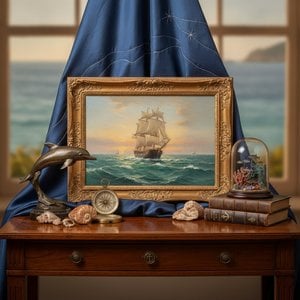
Outgoing ship

Admire Hans Holbein’s ‘Outgoing Ship,’ a detailed 16th-century engraving showcasing maritime life & Renaissance artistry. Explore its realism, intricate lines & dramatic lighting.

Hans Holbein der Jüngere (1497-1543): Een Renaissance meester van realistisch portretkunst, beroemd om koningen zoals Hendrik VIII en gedetailleerde kunstwerken die een tijdperk definiëren.

Handgemaakte olieverfreproductie

Met de hand geschilderd in olieverf op canvas in uw gewenste maat en lijst, op bestelling gemaakt door onze kunstenaars.

Standard
custom
CM
INCH

Kies uit onze vooraf ingestelde maten die overeenkomen met de originele verhoudingen van het kunstwerk.

breedte
hoogte

U kunt uw eigen afmetingen invoeren om in een specifieke lijst of ruimte te passen. Als de door u gekozen maat niet overeenkomt met de verhoudingen van het originele beeld, zullen we het kunstwerk bijsnijden of het schilderij uitbreiden met extra handgeschilderde elementen. Een digitale mockup wordt ter goedkeuring naar u verzonden voordat de productie begint.
Houd er rekening mee dat de preview op het scherm niet de werkelijke uitsnede of uitbreiding weergeeft. Alleen de mockup toont de uiteindelijke compositie nauwkeurig.
Hoewel aangepaste afmetingen mogelijk zijn, raden we aan een maat uit de vooraf gedefinieerde lijst te selecteren om de originele verhoudingen te behouden.

Voorbeelden van aanpassingen: Vervang het gezicht met een eigen foto; Voeg een huisdier toe (bijv. vervang de kat door een hond); Verwerk een verborgen boodschap in de achtergrond; Wijzig het landschap of andere elementen in de achtergrond.
Na de bestelling zal het team van WahooArt.com per e-mail contact opnemen voor instructies en een mockup-voorbeeld sturen.

Wereldwijde levering () binnen 3/4 weken in plaats van de standaard 5 weken. (2 juli). Geen concessies aan de kwaliteit.

why_choose_icon
Gratis wereldwijde expressverzending
why_choose_icon
Hoogwaardig linnen canvas
why_choose_icon
Volledige verzendverzekering
why_choose_icon
Garantie op terugbetaling van invoerrechten
why_choose_icon
Garantie op exacte kleurweergave
why_choose_icon
60 dagen retourbeleid (alleen bij defecten)
why_choose_icon
100% Geld-terug-garantie
why_choose_icon
Korting bij meerdere afnames

Totaalprijs

-

reproduction

Outgoing ship

Techniek reproductie

Afmetingen reproductie

-

Eindtotaal

-

Snelle feiten

  • Year: 1532–1533
  • Artist: Hans Holbein the Younger
  • Title: Outgoing ship
  • Medium: Engraving on paper
  • Movement: Northern Renaissance
  • Notable elements or techniques: Detailed line work, hatching & crosshatching
  • Influences: Renaissance humanism

Kunstquiz

Er is slechts één correct antwoord op elke vraag.

Vraag 1:
What artistic style is Hans Holbein the Younger’s ‘Outgoing Ship’ primarily characterized by?
Vraag 2:
The engraving technique employed in ‘Outgoing Ship’ relies heavily on what visual element to create depth and texture?
Vraag 3:
What is a symbolic representation conveyed by the depiction of turbulent waters in ‘Outgoing Ship’?
Vraag 4:
Which historical period does ‘Outgoing Ship’ exemplify?
Vraag 5:
The engraver utilized what tool to achieve the intricate details and tonal values seen in ‘Outgoing Ship’?

Beschrijving kunstwerk

A Masterpiece of Northern Renaissance Detail: Hans Holbein’s ‘Outgoing Ship’

Hans Holbein the Younger's “Outgoing Ship,” completed in 1532-33, stands as a testament to the artistic fervor and intellectual curiosity that characterized the Northern Renaissance. More than just a depiction of maritime activity—it’s an exquisitely rendered exploration of human experience within a dramatic historical setting.

  • Subject Matter: The engraving captures a bustling scene aboard a sailing vessel, portraying sailors diligently working on deck and passengers observing the turbulent sea conditions. This wasn't merely about capturing a visual record; Holbein aimed to convey the spirit of exploration and trade during his era.
  • Style & Technique: Executed in meticulous detail using engraving—a technique known for its ability to achieve remarkable tonal accuracy—the artwork exemplifies Northern Renaissance realism. Lines are painstakingly etched to create depth and texture, mirroring the ruggedness of weathered wood and the billowing fabric of sails.

The artist’s masterful use of hatching and cross-hatching contributes significantly to the engraving's textural richness, convincingly simulating the grain of timber and the folds of clothing. Lighting plays a crucial role, emphasizing volume and movement through stark contrasts between light and shadow—a technique that powerfully communicates the drama unfolding on the ship.

  • Historical Context: Created during Holbein’s time in England – a period marked by religious upheaval under Henry VIII – “Outgoing Ship” reflects the anxieties and aspirations of its age. It speaks to the ambition of seafaring nations and the humanist ideals championed by figures like Erasmus, whose influence extended far beyond Basel.
  • Symbolism: Beyond its immediate visual appeal, the engraving carries symbolic weight. The ship represents not only navigation but also courage, resilience, and the pursuit of knowledge—themes central to Renaissance thought.

Holbein’s unwavering commitment to realism is evident in every line of his etching, resulting in a portrait that transcends mere representation. It's an artwork that invites contemplation on human endeavor and captures the essence of a pivotal moment in European history. Like Ellis Waterhouse noted, Holbein’s “portraiture remains unsurpassed for sureness and economy of statement, penetration into character, and a combined richness and purity of style.”

Vergelijkbare kunstwerken


Biografie van de kunstenaar

A Life Etched in Detail: The World of Hans Holbein the Younger

Born around 1497 in Augsburg, Germany, Hans Holbein the Younger emerged as a defining figure of the Northern Renaissance—a master portraitist whose work continues to resonate with breathtaking realism and psychological depth. His upbringing within an artistically gifted family laid the foundation for his exceptional talent; his father, Hans Holbein the Elder, was a respected painter and printmaker who instilled in young Hans a meticulous approach to observation and technique. This early training wasn’t merely about mastering brushstrokes or mixing pigments—it was about learning to *see*, to capture not just likeness but the very essence of a subject. Holbein's initial artistic explorations occurred within his father’s workshop, where he honed his skills before embarking on a journey that would lead him through Switzerland and ultimately to the heart of the English court.

From Basel to the Tudor Court: A Rising Star

After completing his apprenticeship, Holbein traveled extensively throughout Switzerland, establishing himself as an independent artist with a growing reputation. He spent several formative years in Basel, creating not only striking portraits but also religious works and intricate woodcut designs—most notably the haunting series depicting the *Dance of Death*. These early pieces reveal a burgeoning mastery of composition and a developing fascination with capturing the complexities of human emotion. His father’s influence was paramount; Holbein inherited his meticulous attention to detail and unwavering dedication to artistic excellence. The Basel workshop fostered an environment where observation reigned supreme—a crucial element in Holbein's subsequent artistic endeavors. He skillfully blended German artistic traditions with influences from Italy, absorbing techniques that would elevate his work to unparalleled heights. It was in 1526 that fate intervened, drawing Holbein towards England, an event that would irrevocably alter his artistic trajectory. He arrived bearing a letter of introduction from Erasmus, the renowned humanist scholar, which opened doors to the influential circles of English society. His talent quickly captivated prominent figures like Sir Thomas More, who became both a patron and a subject for several compelling portraits. This connection proved pivotal, leading to Holbein’s appointment as a court painter to King Henry VIII in 1536—a position he held, with some interruptions, until his untimely death in 1543. The patronage of More provided invaluable insight into the intellectual climate of the time and fueled Holbein's artistic ambition.

The Art of Perception: Style and Masterpieces

Holbein’s artistic style is characterized by an extraordinary commitment to realism, achieved through painstaking attention to detail in rendering textures, fabrics, and the subtle nuances of facial features. He didn’t simply *paint* portraits; he meticulously constructed them, layer upon layer, capturing not just physical appearances but also the personality and inner life of his sitters. His innovative compositions further enhanced the impact of his work, often employing symbolic objects or backgrounds to convey deeper meaning. The Ambassadors (1533) stands as a testament to this approach—a complex and symbolically rich double portrait showcasing both Holbein’s technical brilliance and intellectual depth. The anamorphic skull subtly embedded within the painting serves as a stark *memento mori*, reminding viewers of the inevitability of death. He meticulously studied anatomy, mastering techniques that allowed him to depict human figures with unprecedented accuracy—a hallmark of his distinctive style. His numerous portraits of Henry VIII established a lasting image of Tudor power, while his depiction of Erasmus of Rotterdam captures the scholar’s profound intellectual gravitas. Other notable works include the stunning *Portrait of Nikolaus Kratzer* (1528), a masterpiece of realism and scientific detail—a reflection of Holbein's fascination with observation and experimentation.
  • His depictions of Henry VIII became iconic representations of royal power.
  • His portraiture provides a window into the lives of prominent humanists like Erasmus and More.
  • His innovative use of symbolism adds layers of meaning to his work, inviting viewers to contemplate deeper themes.
Holbein’s legacy is profound; His meticulous attention to detail revolutionized portrait painting—setting a new standard for realism and psychological insight. He remains one of the most admired and studied painters of the Renaissance—a master whose work continues to inspire and enthrall. He didn't merely record appearances—he captured moments in time, preserving them for posterity. His artistic journey was shaped by influences from Albrecht Dürer and Italian Renaissance artists, demonstrating his adaptability and intellectual curiosity.

Hans Holbein de Jongere

Hans Holbein de Jongere

1497 - 1543 , Duitsland

Belangrijkste feiten

  • Artistic Movement Or Style: Noordelijke Renaissance
  • Artists Or Movements Influenced By This Artist: ['Latere portretschilders']
  • Artists Who Influenced This Artist: ['Albrecht Dürer']
  • Date Of Birth: c. 1497
  • Date Of Death: October or November 1543
  • Full Name: Hans Holbein der Jüngere
  • Nationality: Duits en Zwitserland
  • Notable Artworks:
    • De Ambassadeurs
    • Portret van Hendrik VIII
    • Portret van Erasmus
  • Place Of Birth: Augsburg, Duitsland
Ontdek kunstwerken georganiseerd op thema's, stijlen en kenmerken.