Voorvertoning Bekijk in AR Bestel handgeschilderde reproductie Schakel over naar digitale afbeelding Verstuur
Details bekijken Toevoegen aan favorieten Download Vergelijkbare items Röntgenonderzoek Diavoorstelling Statistieken

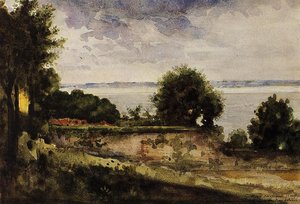
Poney ou Cavalier écossais

Discover 'Scottish Horseman' by Gustave Moreau, a captivating Symbolist painting of a rider and his steed amidst a dramatic sky. Explore the mystical world of Moreau at WahooArt.

Ontdek Gustave Moreau's droomachtige Symbolisme! Zijn mythologische & religieuze schilderijen, beïnvloed door Matisse & Rouault, vertellen verhalen vol mysterie en schoonheid.

Giclée / Kunstafdrukken

Giclée- of canvasafdruk van museumkwaliteit met een snelle productie en flexibele afwerkingsmogelijkheden. ( Bestel handgeschilderde reproductie Schakel over naar digitale afbeelding)

P118B $10
P118H $10
P118W $10
P438Z $10
P508JH $12
P508YH $12
P805H $10
P805Z $10
P919BZ $10
P919G $10
P919XJ $10
P959ZH $10
P968JZ $12
W106C $8
W218G $10
W218JH $8
W218Y $10
W307PJ $10
W316G $10
W316PJ $8
W316Y $10
W398PJ $8
W4111J $10
W500HY $15
W500JH $15
W692G $12
W849H $8
W940BG $15
W953PJ $8

Standaardformaat
op maat gemaakt
CM
INCH

Kies uit onze vooraf ingestelde maten die overeenkomen met de originele verhoudingen van het kunstwerk.

breedte
hoogte

U kunt uw eigen afmetingen opgeven om in een specifieke lijst of ruimte te passen. Als de door u gekozen maat niet overeenkomt met de proporties van het originele kunstwerk, zullen wij de afbeelding bijsnijden of uitbreiden met een gespiegelde of effen rand. Een digitaal mockup wordt ter goedkeuring naar u verzonden voordat de productie begint.
Houd er rekening mee dat de preview op het scherm de werkelijke bijsneding of uitbreiding niet weergeeft. Alleen de mockup toont de uiteindelijke compositie nauwkeurig.
Hoewel aangepaste maten beschikbaar zijn, raden wij aan een afmeting uit de vooraf bepaalde lijst te kiezen om de originele proporties te behouden.

Wereldwijde levering () binnen 2 weken in plaats van de standaard 4/5 weken. (16 september)

why_choose_icon
Gratis wereldwijde expressverzending
why_choose_icon
Hoogwaardig linnen canvas
why_choose_icon
Volledige verzendverzekering
why_choose_icon
Garantie op terugbetaling van invoerrechten
why_choose_icon
Garantie op exacte kleurweergave
why_choose_icon
Retourbeleid van 100 dagen (alleen bij defecten)
why_choose_icon
100% Geld-terug-garantie
why_choose_icon
Korting bij meerdere afnames

Totaalprijs

$ 69

reproduction

Poney ou Cavalier écossais

Giclée / Kunstafdrukken

Afmetingen reproductie

-

Eindtotaal

$ 69

Snelle feiten

  • Movement: Symbolism
  • Title: Poney ou Cavalier écossais
  • Location: Musée Gustave Moreau
  • Artistic style: Allegorical, Mythological
  • Subject or theme: Horseman in a field
  • Artist: Gustave Moreau

Kunstquiz

Er is slechts één goed antwoord op elke vraag.

Vraag 1:
Gustave Moreau is most closely associated with which artistic movement?
Vraag 2:
What is the primary subject matter depicted in 'Poney ou Cavalier écossais'?
Vraag 3:
According to the provided information, what influenced Moreau's early artistic style?
Vraag 4:
What is notable about the Musée Gustave Moreau?
Vraag 5:
The Wikipedia article mentions that 'Scottish Horseman' was inspired by a work of which artist?

A Highland Encounter: Unveiling Gustave Moreau’s “Poney ou Cavalier écossais”

Gustave Moreau's “Poney ou Cavalier écossais” (Scottish Horseman) is not merely a depiction of a man and his mount; it’s a window into the artist’s deeply imaginative world, a realm where mythology, literature, and personal symbolism converge. Painted sometime in the 1870s, this work stands as a fascinating bridge between Moreau's earlier Romantic inclinations and the burgeoning Symbolist movement he would come to define. The painting presents a solitary rider traversing an expansive field beneath a dramatic, cloud-strewn sky. The figure, cloaked and hatted, is poised with an arm raised—a gesture that feels less about control of the animal and more akin to a reaching towards something unseen, perhaps a spiritual aspiration or a forgotten legend. The horse itself dominates the composition, its powerful form rendered with meticulous detail, suggesting both strength and a wild, untamed spirit.

Echoes of Romanticism and the Birth of Symbolism

Moreau’s artistic journey was profoundly shaped by his admiration for Eugène Delacroix, whose vibrant colors and exotic subjects resonated deeply within him. The influence is palpable in “Poney ou Cavalier écossais,” particularly in the dynamic interplay between light and shadow and the emotional intensity conveyed through the landscape. However, Moreau wasn’t simply imitating; he was evolving beyond the purely representational. The painting isn't a straightforward portrayal of Scottish life but rather an evocation of its atmosphere—a sense of rugged beauty, ancient history, and perhaps even melancholy. This shift towards subjective experience is a hallmark of Symbolism, which rejected Realism and Impressionism’s focus on objective observation in favor of exploring inner worlds and spiritual truths. The inclusion of birds scattered throughout the scene adds to this ethereal quality, hinting at freedom and transcendence.

A Tapestry of Myth and Meaning

While seemingly straightforward in its subject matter, “Poney ou Cavalier écossais” is steeped in layers of potential symbolism. The Scottish Highlands themselves held a romantic allure for many 19th-century artists and writers, representing a land of untamed nature and ancient traditions. The horse, a recurring motif in Moreau’s work, often embodies primal energy and instinctual power. The rider's raised arm could be interpreted as an invocation—a plea to the forces of nature or the spirits of the past. It is also worth noting that Moreau was deeply fascinated by literature, particularly works like Sir Walter Scott’s novels which romanticized Scottish history and folklore. The painting may therefore allude to specific narratives or characters from these tales, inviting viewers to engage in their own imaginative interpretations. The work's ambiguity is intentional; Moreau sought not to dictate meaning but to evoke emotion and stimulate contemplation.

Moreau’s Technique: A Master of Detail

Moreau’s meticulous technique is evident in every brushstroke of “Poney ou Cavalier écossais.” He employed a painstaking approach, building up layers of paint to create rich textures and luminous effects. The rendering of the horse's coat, for example, demonstrates his mastery of light and shadow, capturing both its muscularity and its sheen. The atmospheric perspective—the way in which colors fade and details soften with distance—creates a sense of depth and vastness. Moreau’s dedication to detail wasn’t merely about technical skill; it was integral to his symbolic vision. By imbuing every element of the painting with significance, he transformed a simple scene into a complex and evocative work of art. Today, the original resides within the Musée Gustave Moreau in Paris, a testament to his enduring legacy as one of Symbolism’s most important figures.


Biografie van de kunstenaar

A Dream Weaver of Symbolism: The Life and Art of Gustave Moreau

Gustave Moreau, een naam die synoniem staat voor de etherische schoonheid en de betekenisvolle diepten van symbolistische schilderkunst, kwam in de 19e eeuwse Parijs als een unieke artistieke stem tot bloei. Geboren in 1826 in een burgerlijke familie – zijn vader een architect en archivaris – was Moreau’s vroege leven doordrenkt met intellectuele nieuwsgierigheid en esthetische gevoeligheid. Vanaf jonge leeftijd toonde hij een opmerkelijk talent voor tekenen, gekneed door traditionele academische training aan de École des Beaux-Arts onder figuren als François-Édouard Picot. Echter, Moreau’s artistieke pad zou aanzienlijk afwijken van de heersende Realistische en Impressionistische stromingen van zijn tijd. Hij was niet geïnteresseerd in het vastleggen van vluchtige momenten of objectieve realiteit; in plaats daarvan zocht hij naar het ontsluiten van de verborgen rijkdommen van mythologie, religie en de menselijke psyche door middel van een diep persoonlijke en symbolische visuele taal. Zijn reis was één van interne exploratie, waarbij subjectieve emoties en spirituele verlangens werden vertaald naar doeken met obsessieve aandacht voor detail en een levendige, vaak opulence palet.

The Forge of Imagination: Influences and Artistic Development

Moreau’s artistieke ontwikkeling werd niet in een vacuüm geboren. Hoewel hij de dominante trends van zijn tijd afwees, haalde hij inspiratie uit diverse bronnen. De dramatische toepassing van kleur en exotisch onderwerpmateriaal gevonden in het werk van Eugène Delacroix wekte bij hem een diepe passie voor narratieve schilderkunst, doordrenkt met emotionele intensiteit. Hij verreefde ook de meesters van de Renaissance zoals Michelangelo en Leonardo da Vinci, bewonderend hun beheersing van compositie, anatomie en psychologische inzicht. Toch was Moreau niet simpelweg een imitator van deze kunstenaars; hij synthetiseerde hun invloeden tot iets radicaal nieuws. Zijn reizen naar Italië in de jaren 1850 droegen bij aan zijn ontwikkeling, waardoor hij werd ondergedompeld in de kunst van het oude en de Renaissance, wat een schat aan motieven en stijlelementen opleverde die zijn toekomstige werken zouden bevolken. Hij kopieerde zorgvuldig Oude werken, niet als oefening in replicatie, maar om hun technieken te absorberen en hun geheimen te ontsluiten. Deze toewijding aan vakmanschap, gecombineerd met zijn groeiende interesse in mythologie en literatuur, legde de basis voor zijn unieke artistieke visie.

A World of Symbols: Themes and Techniques

Moreau’s schilderijen zijn niet simpelweg illustraties van mythen of bijbelse verhalen; ze zijn complexe allegorieën die contemplatie en interpretatie uitnodigen. Hij duikte in verhalen zoals die van Salome, Orpheus, Jupiter en Semele, niet om ze letterlijk te vertellen, maar om hun onderliggende psychologische en spirituele waarheden te verkennen. Zijn doeken zitten vol symbolische beelden – slangen die verlangen vertegenwoordigen, juwelen die aardse verlangens symboliseren, en figuren die abstracte concepten zoals verdriet, verlies of redding uitbeelden. Hij creëerde meesterlijk een dromerige sfeer door middel van ingewikkelde details, rijke texturen en een vaak misleidende juxtapositie van licht en schaduw. Moreau’s techniek kenmerkte zich door zorgvuldige laag op laag aanbrengen van verf, waardoor oppervlakken schitteren met iriserende kleuren en een gevoel van bovennatuurlijke schoonheid oproepen. Zijn gebruik van bladgoud versterkte dit effect, waardoor zijn werken een Byzantijnse kwaliteit kregen die hun spirituele dimensie onderstreepte. Hij was niet geïnteresseerd in het vastleggen van realistische texturen of perspectieven; hij hechtte de voorkeur aan de expressieve kracht van kleur en vorm om stemming en betekenis over te brengen.

Notable Works and Legacy

Moreau’s oeuvre is remarkably diverse, encompassing a wide range of subjects and styles. Some of his most celebrated works include *Salome Dancing before Herod*, a dramatic depiction of the biblical tale that became synonymous with his artistic vision; *Jupiter and Semele*, a powerful allegory exploring themes of divine power and mortal vulnerability; *Orpheus*, a series of paintings capturing the tragic figure’s lament and musical prowess; *The Apparition*, showcasing his ability to create ethereal and otherworldly scenes, and *Desdemona*, a poignant portrayal of Shakespeare's doomed heroine. Beyond these individual works, Moreau’s influence extended far beyond his own lifetime. He played a pivotal role in shaping the Symbolist movement, encouraging artists to embrace imagination, symbolism, and individual expression. His legacy continues to inspire artists today, reminding us of the power of art to transcend the boundaries of reality. The Musée Gustave Moreau, housed in his former studio and home in Paris, stands as a testament to his enduring impact—a sanctuary where visitors can immerse themselves in the captivating world of this extraordinary artist.

Historical Significance

Gustave Moreau’s work emerged during a period of significant artistic and intellectual change in Europe. The rise of Symbolism coincided with growing interest in psychology, mythology, and the occult, reflecting a broader cultural shift away from rationalism and towards subjective experience. Moreau's exploration of the subconscious mind and his use of dreamlike imagery resonated deeply with audiences seeking alternative forms of expression. His rejection of academic conventions and his embrace of personal symbolism paved the way for subsequent artistic movements, including Art Nouveau and Expressionism. Moreau’s influence can be seen in the works of numerous artists who followed him, solidifying his place as a pivotal figure in the history of modern art.
Gustave Moreau

Gustave Moreau

1826 - 1898 , Frankrijk

Belangrijkste feiten

  • Artistic Movement Or Style: Symbolisme
  • Artists Or Movements Influenced By This Artist:
    • Matisse
    • Rouault
  • Artists Who Influenced This Artist:
    • Delacroix
    • Michelangelo
  • Date Of Birth: 6 april 1826
  • Date Of Death: 18 april 1898
  • Full Name: Gustave Moreau
  • Nationality: Frans
  • Notable Artworks:
    • Salome
    • Jupiter
    • Orpheus
  • Place Of Birth: Parijs, Frankrijk
Ontdek kunstwerken georganiseerd op thema, stijl en kenmerk.