


Giclée- of canvasafdruk van museumkwaliteit met een snelle productie en flexibele afwerkingsmogelijkheden. ( Bestel handgeschilderde reproductie Koop afbeelding)





























Kies uit onze vooraf ingestelde maten die overeenkomen met de originele verhoudingen van het kunstwerk.

U kunt uw eigen afmetingen opgeven om in een specifieke lijst of ruimte te passen. Als de door u gekozen maat niet overeenkomt met de proporties van het originele kunstwerk, zullen wij de afbeelding bijsnijden of uitbreiden met een gespiegelde of effen rand. Een digitaal mockup wordt ter goedkeuring naar u verzonden voordat de productie begint.
Houd er rekening mee dat de preview op het scherm de werkelijke bijsneding of uitbreiding niet weergeeft. Alleen de mockup toont de uiteindelijke compositie nauwkeurig.
Hoewel aangepaste maten beschikbaar zijn, raden wij aan een afmeting uit de vooraf bepaalde lijst te kiezen om de originele proporties te behouden.
Wereldwijde levering () binnen 2 weken in plaats van de standaard 4/5 weken. (6 september)


untitled
Afmetingen reproductie
The image before us – simply titled "untitled" – is not merely a painting; it's an excavation of human connection, rendered with the unflinching honesty that defined the career of Gustave Courbet. Executed around 1867, this work represents a pivotal moment in the artist’s trajectory, solidifying his commitment to depicting contemporary life without romantic embellishment or idealized beauty. It’s a scene stripped bare, revealing a profound vulnerability and an exploration of intimacy that continues to resonate with viewers today.
Courbet's technique is immediately striking. He employs a thick, impasto application of paint – visible brushstrokes layered upon each other – creating a tactile surface that demands attention. The colors are muted, dominated by earthy tones of ochre, brown, and grey, reflecting the natural light filtering through the room. This deliberate lack of vibrant hues amplifies the painting’s emotional weight, forcing us to focus on the figures themselves and the subtle nuances of their interaction. The precision in rendering the textures – the softness of the bed linens, the sheen of the polished wood – speaks to Courbet's meticulous observation and his desire to capture reality with uncompromising accuracy.
To fully appreciate “untitled,” it’s crucial to understand the historical context in which it was created. Courbet emerged as a leading figure in the Realist movement, rejecting the prevailing artistic trends of Romanticism and Academic painting. He sought to depict the lives of ordinary people – laborers, peasants, and urban dwellers – with the same seriousness and attention to detail that had previously been reserved for historical or mythological subjects. This was a radical departure from convention, challenging the established hierarchy of art and demanding a new role for the artist as an observer and recorder of his time.
The painting’s subject matter itself – two nude women in a domestic setting – was considered scandalous at the time. Courbet wasn't interested in portraying idealized beauty or mythological narratives; he wanted to show human beings as they truly were, flaws and all. This commitment to realism extended beyond mere physical representation; it encompassed an exploration of social and emotional truths.
While seemingly straightforward, “untitled” is rich in symbolic potential. The positioning of the women – one asleep, the other awake and gazing at her – suggests a quiet intimacy, perhaps even a nascent love. The scattered objects – the vases, the clock – contribute to the sense of domesticity and add layers of meaning. The clock, particularly, is a potent symbol of time’s passage and the fleeting nature of human experience. It subtly underscores the vulnerability inherent in this intimate moment.
Furthermore, the lack of explicit narrative allows for individual interpretation. The viewer becomes an active participant in constructing the story, projecting their own emotions and experiences onto the scene. This ambiguity is a hallmark of Courbet’s work – he doesn't spoon-feed the audience; instead, he invites them to engage with the painting on a deeply personal level.
"Untitled" transcends its historical context to offer a timeless meditation on human connection. The raw emotion conveyed through Courbet’s masterful technique – his bold brushstrokes, his careful attention to detail – creates an image that is both unsettling and profoundly moving. It's a painting that confronts us with the complexities of desire, vulnerability, and intimacy, reminding us of our shared humanity. This piece remains a powerful testament to Courbet’s revolutionary vision and his enduring legacy as one of art history’s most important figures.


1819 - 1877 , Frankrijk
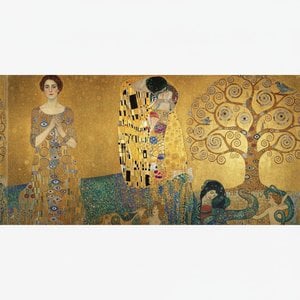
Ontdek de top 25 meesterwerken van Gustav Klimt! Van 'De Kus' tot iconische portretten, duik in zijn gouden fase & symbolisme. Vind museumkwaliteit Klimt reproducties en inspiratie voor uw interieur op WahooArt.com.

Explore the revolutionary art of Gustave Courbet, pioneer of Realism. Discover his iconic paintings, social commentary, and lasting impact on 19th-century French art history. Expert analysis & insights.

Explore 10 defining masterpieces of Romantic Realism! Discover Courbet, Millet & Daumier's powerful paintings—capturing emotion and social realities. Find museum-quality reproductions for your home at WahooArt.com.

Ontdek de 10 meest iconische meesterwerken van het Realisme! Van Courbet tot Millet, leer over de kunstenaars, technieken & impact. Vind museumkwaliteit reproducties voor uw interieur op WahooArt.com. Exploreer de collectie online!

Ontdek de 10 meest iconische realistische kunstwerken! Van Courbet tot Millet, leer over meesterlijke technieken & verhalen achter deze tijdloze schilderijen. Vind museumkwaliteit reproducties voor jouw interieur op WahooArt.com.

 Voorvertoning
 Verstuur
 Delen
Delen
 Details bekijken

 Download
 Vergelijkbare items
 Röntgenonderzoek
 Diavoorstelling

 Lees meer







 De optie voor glas is alleen beschikbaar bij een formaat kleiner dan 110 cm.


