Bekijk op ware grootte Bekijk in AR Schakel over naar print Koop handgeschilderd kunstwerk Verstuur
Details bekijken Gids voor studentenkunstwerken Toevoegen aan favorieten Download Vergelijkbare items Röntgenonderzoek Diavoorstelling Statistieken

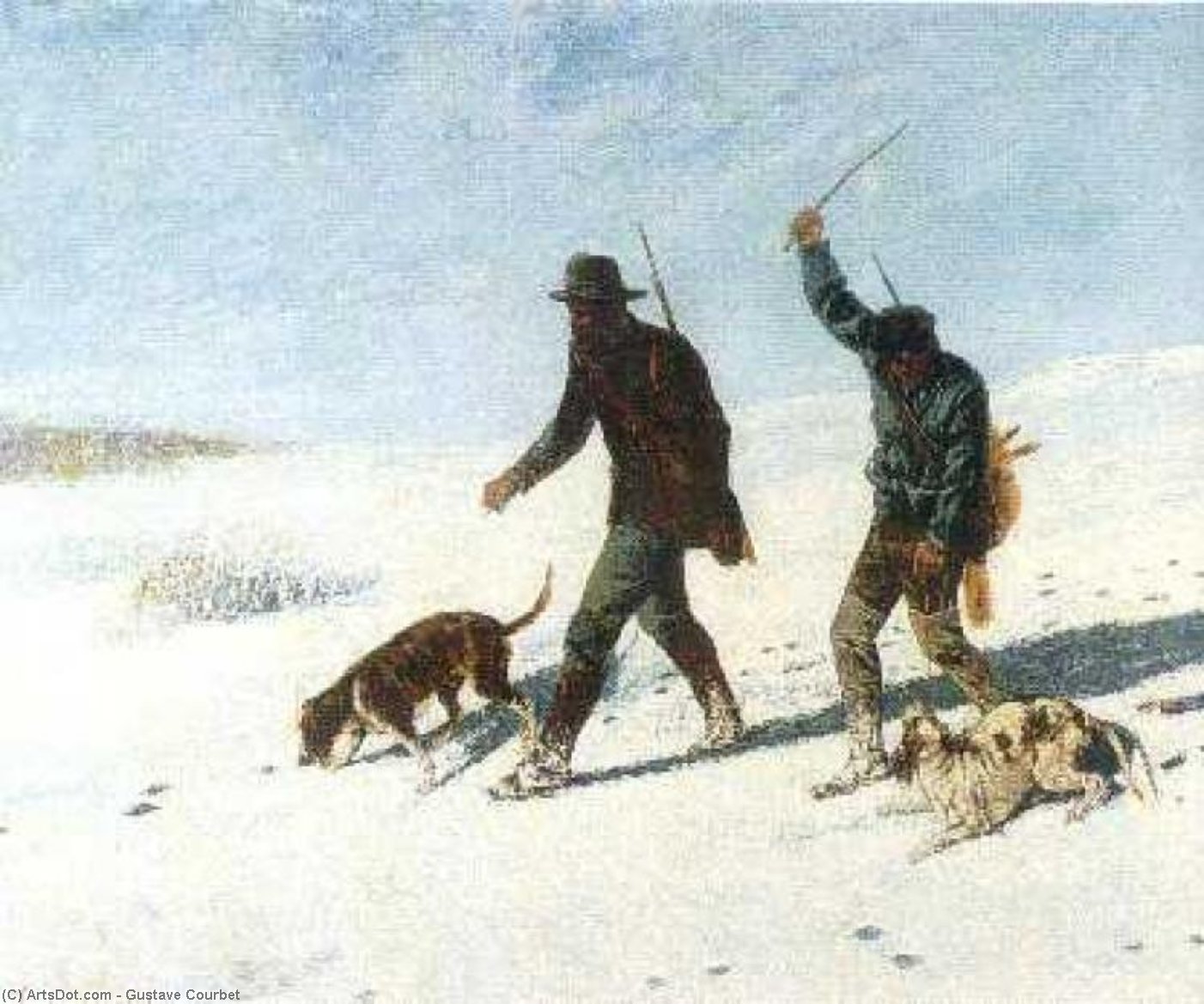
Bracconieri sulla neve

Delve into Gustave Courbet’s masterpiece ‘Bracconieri sulla neve,’ capturing rural life and hunting traditions with meticulous detail. Explore Realism's bold vision at WahooArt.

Gustave Courbet (1819-1877): Een baanbrekende kunstenaar die Realisme nastreefde en een kritische blik op de samenleving bood, zoals zichtbaar in 'Een Begrafenis te Ornans'. Ontdek zijn invloedrijke stijl!

Koop een digitale afbeelding in hoge resolutie met verbeterde kwaliteit, die veel superieur is aan de online voorvertoning.

Elk bestand wordt met uiterste precisie voorbereid door onze interne specialisten, met behulp van geavanceerde tools en deskundige handmatige retouche. Wij garanderen dat elke afbeelding een uitzonderlijke helderheid, nauwkeurige kleurweergave en verfijnde details bezit.

Het uiteindelijke bestand wordt binnen 72 uur per e-mail geleverd, geoptimaliseerd voor direct gebruik in professionele, redactionele en printomgevingen. Dit is dezelfde kwaliteit waarop vooraanstaande designstudio's, uitgevers en galerieën vertrouwen.

Digitale afbeeldingen

Download een bestand met hoge resolutie voor persoonlijke weergave, afdrukken en creatieve projecten. ( Schakel over naar print Koop handgeschilderd kunstwerk)

Totaalbedrag

$ 24,90

Inbegrepen bij elke bestelling van een digitale afbeelding

Professionele digitale levering, gegarandeerd

Wanneer u kiest voor WahooArt.com, ontvangt u niet alleen een afbeelding – u krijgt een professioneel verbeterd digitaal kunstwerk, met precisie vervaardigd en voorzien van een tevredenheidsgarantie. Dit is alles wat automatisch bij uw bestelling is inbegrepen:

shipping_icon
Directe levering per e-mail

Uw hoogwaardige digitale afbeeldingsbestand wordt binnen 72 uur na bestelling naar u gemaild – klaar voor direct gebruik.

canvas_icon
AI-geoptimaliseerd digitaal bestand

Uw kunstwerk wordt professioneel geoptimaliseerd met behulp van geavanceerde AI-tools en handmatige bewerkingen, waardoor maximale details, helderheid en kleurnauwkeurigheid worden gegarandeerd.

insurance_icon
Gratis levenslange herlevering

Je bestand per ongeluk verwijderd of kwijtgeraakt? Geen zorgen – we sturen het u op elk gewenst moment gratis opnieuw toe.

tax_icon
Geen invoerkosten – nooit

Geniet direct van uw kunstwerk zonder invoerrechten, belastingen of verzendkosten – digitale downloads zijn altijd belastingvrij.

color_icon
Garantie op kleurgetrouwheid

Met behulp van professionele hulpmiddelen en kleurbeheer zorgen wij ervoor dat uw digitale afbeelding de originele kleuren zo nauwkeurig mogelijk weergeeft.

return_icon
100 dagen tevredenheidsgarantie

Als u niet tevreden bent met uw digitale afbeelding, passen wij deze aan of storten wij 100% terug binnen 100 dagen - zonder vragen te stellen.

guarantee_icon
100% Geld-terug-garantie

Niet tevreden? Ontvang een volledige terugbetaling binnen 100 dagen na ontvangst van uw digitale bestand – zonder vragen te stellen.

discount_icon
Korting bij grote bestellingen

Koop 3 afbeeldingen, bespaar 10% - Koop 5, bespaar 15% - Koop 10+, bespaar 20%. Ideaal voor creatieve projecten, galerieën en bureaus.

Belangrijkste kenmerken

  • Artistic style: Realistic portrayal of everyday life.
  • Medium: Oil on canvas
  • Subject or theme: Hunting, rural life
  • Influences:
    • Eugène Delacroix
    • Théodore Géricault
  • Movement: Realism
  • Artist: Gustave Courbet

Kunstquiz

Er is slechts één goed antwoord op elke vraag.

Vraag 1:
What artistic movement is Gustave Courbet primarily associated with?
Vraag 2:
The painting depicts two men engaged in what activity?
Vraag 3:
How many dogs are featured in the artwork?
Vraag 4:
What is a notable characteristic of Courbet's artistic approach as reflected in this painting?
Vraag 5:
Where is the Musée Courbet located?

Bracconieri sulla neve – A Study in Rustic Realism

Gustave Courbet’s “Bracconieri sulla neve” (“Snow Hunters”) stands as a cornerstone of French Realism, capturing not merely a picturesque winter landscape but also a profound statement about the dignity and resilience of rural life. Painted in 1867, this monumental canvas—measuring approximately 240 x 330 cm—immediately confronts viewers with its uncompromising depiction of two men engaged in hunting dogs amidst a snow-covered expanse.

  • Subject Matter: The painting portrays two hunters – likely Jean Léon Gerbet and Frédéric Moulinet – accompanied by their canine companions. Their activity isn’t merely sport; it embodies the practical necessity of survival within the harsh conditions of the Alpine winter, reflecting Courbet's fascination with portraying everyday life without romantic embellishment.
  • Style & Technique: Courbet eschewed the idealized forms and dramatic narratives favored by Romantic painters. Instead, he employed a meticulous observation technique—a hallmark of Realism—applying thick impasto brushstrokes to build up textured surfaces that convincingly convey the physicality of snow and the ruggedness of the hunters’ clothing. The palette is muted, dominated by whites, browns, and greys, mirroring the bleak beauty of the environment.
  • Historical Context: “Bracconieri sulla neve” emerged during a period of significant social upheaval in France. Courbet's artistic endeavors were deliberately provocative, challenging the academic establishment’s obsession with mythological subjects and aristocratic grandeur. He sought to legitimize Realism as an art form by focusing on scenes from ordinary life—a deliberate rejection of prevailing artistic conventions.

Symbolism & Narrative Depth

Beyond its visual representation, the painting resonates with symbolic significance. The hunters’ posture exudes confidence and determination – a defiance against adversity. The dogs serve as integral components of their livelihood and represent loyalty and instinct. Courbet deliberately avoids narrative storytelling; instead, he invites contemplation on themes of labor, perseverance, and the relationship between man and nature.

  • Color Palette: The subdued color scheme contributes to the painting’s emotional impact, conveying a sense of bleakness tempered by the warmth of human presence. Courbet's masterful use of light enhances the realism of the scene, illuminating the snow-covered landscape and highlighting the textures of fabric and fur.
  • Composition: The horizontal orientation emphasizes the vastness of the snowy terrain, while the placement of the figures creates a dynamic interplay between man and animal. Courbet’s careful attention to detail—from the folds of the hunters' coats to the expressions on their faces—further reinforces his commitment to portraying reality with uncompromising accuracy.

Legacy & Artistic Influence

"Bracconieri sulla neve" cemented Courbet’s reputation as a revolutionary artist and profoundly impacted subsequent generations of painters. It championed Realism's ethos – depicting the world as it is, without embellishment or moral judgment—inspiring artists to confront social issues and explore the complexities of human experience. Its enduring appeal lies in its ability to capture not just a moment in time but also the spirit of an era defined by intellectual curiosity and artistic independence.

  • Influence on Impressionism: Courbet’s rejection of academic conventions paved the way for Impressionist artists like Monet and Renoir, who prioritized capturing fleeting impressions of light and color.
  • Continuing Relevance: Today, “Bracconieri sulla neve” continues to fascinate viewers with its masterful technique and its unflinching portrayal of rural life—a testament to Courbet’s enduring legacy as a champion of artistic truth.

Biografie van de kunstenaar

A Rebel’s Brush: The Life and Legacy of Gustave Courbet

Jean Désiré Gustave Courbet, born in Ornans, France, on June 10, 1819, stands as a monumental figure in the history of art – a defiant iconoclast who irrevocably altered the trajectory of painting during the mid-nineteenth century. More than simply capturing visual impressions; his artistic journey embodies a profound rejection of convention and an unwavering dedication to portraying reality with uncompromising honesty. His upbringing within a moderately prosperous bourgeois family fostered an early appreciation for artistic pursuits, nurtured by his mother’s encouragement – a formative influence that propelled him toward a revolutionary vision of artistic expression. Formal training commenced at the École des Beaux-Arts in Paris in 1839, yet Courbet swiftly recognized the stifling limitations imposed by academic dogma and Romantic idealism. While acknowledging debts to artists like Eugène Delacroix and Théodore Géricault – figures who championed dramatic emotion and historical narrative – Courbet resolutely forged his own path, prioritizing observation over imagination and truth above all else. This deliberate divergence from established artistic norms would define his entire career and establish him as the undisputed leader of Realism.

The Birth of Realism: Challenging Artistic Conventions

Courbet’s artistic development was characterized by a conscious repudiation of prevailing aesthetic standards. He eschewed mythological tales and heroic allegories, instead focusing intently on the everyday lives of ordinary individuals – particularly laborers and rural inhabitants. This commitment to depicting the world without embellishment—a stance that would soon become synonymous with Realism—encountered vehement opposition from critics accustomed to idealized representations steeped in romantic sentimentality. Early canvases explored landscapes and portraits; however, he swiftly transitioned toward scenes of working-class existence, rendered on monumental scales traditionally reserved for grand historical or religious paintings. This deliberate choice wasn’t merely stylistic; it was a declaration about the inherent dignity and significance of subjects often marginalized by artistic discourse. The Stone Breakers (1849), tragically destroyed during World War II, exemplifies this approach—a stark portrayal of two laborers toiling under oppressive conditions, their faces obscured by exhaustion and despair. Critics deemed such depictions vulgar and unworthy of serious consideration, highlighting the profound challenge Courbet posed to the prevailing artistic sensibilities of his time.

Major Works and Artistic Philosophy

Courbet’s artistic philosophy extended beyond subject matter to encompass technique. He championed a direct, impasto style—applying paint thickly onto the canvas—that prioritized the materiality of the medium itself. This method deliberately rejected the smooth surfaces favored by academic painters, emphasizing texture and physicality as crucial elements of visual expression. His most celebrated paintings include A Burial at Ornans (1850-51), a monumental canvas depicting a provincial funeral that provoked considerable controversy upon its exhibition. Unlike Romantic artists who sought to elevate emotion and inspire awe, Courbet presented the mourners with unflinching realism—faces etched with sorrow, boredom, and resignation—challenging viewers to confront uncomfortable truths about human experience. Similarly, Château du Chillon (1874), a breathtaking depiction of the medieval castle overlooking Lake Geneva, showcases Courbet’s meticulous attention to detail and his masterful command of light and color. He sought to capture not merely what he saw but also how it felt—a profound ambition that resonated deeply with fellow artists grappling for new modes of artistic representation.

Legacy and Historical Significance

Gustave Courbet's influence on subsequent art movements is undeniable. While acknowledging debts to earlier masters like Caravaggio for their dramatic realism and use of chiaroscuro, his impact transcended mere imitation. He fundamentally reshaped the landscape of painting by liberating artists from the constraints of tradition—encouraging them to explore uncharted territories of visual perception. His unwavering advocacy for artistic freedom cemented his position as a champion of intellectual dissent and fueled the burgeoning movement toward socially engaged art. Courbet’s participation in the Salon des Refusés (1863)—an audacious defiance of official censure—solidified his reputation as an iconoclastic rebel who refused to compromise on his convictions. He died peacefully in Paris on April 29, 1877, leaving behind a legacy that continues to inspire artists and scholars alike – a testament to the transformative power of art to confront societal norms and illuminate the complexities of human existence.
Gustave Courbet

Gustave Courbet

1819 - 1877 , Frankrijk

Kerngegevens

  • Artistic Movement Or Style: Realisme
  • Artists Or Movements Influenced By This Artist:
    • Impressionisme
    • Post-impressionisme
  • Artists Who Influenced This Artist:
    • Eugène Delacroix
    • Théodore Géricault
    • Caravaggio
  • Date Of Birth: 10 juni 1819
  • Date Of Death: 31 december 1877
  • Full Name: Gustave Courbet
  • Nationality: Frans
  • Notable Artworks:
    • De Steenbakers
    • Een begrafenis te Ornans
    • De Schilderstudio
  • Place Of Birth: Orléans, Frankrijk