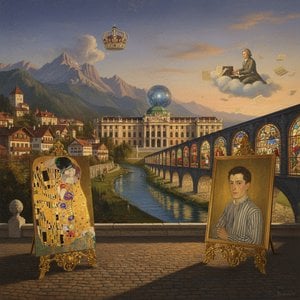
Fredericke Maria Beer
Gustav Klimt’s
Fredericke Maria Beer stands as a testament to Klimt's singular artistic vision—a portrait imbued with the shimmering elegance of Art Nouveau and underpinned by profound symbolic resonance. Painted in 1916 during his prolific “golden phase,” this artwork transcends mere representation; it delves into the psychological complexities of its subject, Fredericke Maria Beer, capturing her essence through subtle gestures and a carefully constructed visual narrative.
Klimt’s stylistic influences are palpable throughout Fredericke Maria Beer. Drawing heavily from the Art Nouveau movement—characterized by flowing lines, organic forms, and opulent ornamentation—Klimt skillfully blends these aesthetic principles with a meticulous realism. The intricate patterns adorning Fredericke’s dress and background are not merely decorative; they serve as conduits for conveying mood and emotion, mirroring Klimt's broader exploration of themes like femininity, desire, and spirituality.
- Style: Symbolist Art Nouveau
- Artist: Gustav Klimt
- Date: 1916
- Medium: Oil on Canvas
The composition itself is deliberately understated yet powerfully suggestive. Fredericke Maria Beer occupies a serene landscape—a deliberate choice that contrasts with the dynamism of Klimt’s other works, emphasizing her stillness and contemplative gaze. Surrounding her are figures engaged in activities – a man holding an umbrella, another wielding a bow and arrow – creating a tableau vivant that speaks to broader societal concerns of the time. Notably, Klimt incorporates symbolic elements: the umbrella represents protection and resilience; the bow and arrow symbolize strength and determination; and a bird—a recurring motif in Klimt’s oeuvre—represents freedom and aspiration.
Klimt's mastery of oil paint is evident in the rich textures and luminous colors that imbue Fredericke Maria Beer with an unparalleled sense of depth and vibrancy. He achieves this remarkable feat through layering techniques—building up translucent glazes to create subtle gradations of tone and color—resulting in a surface that appears to shimmer with reflected light. This meticulous attention to detail underscores Klimt’s commitment to capturing not just the visual appearance but also the psychological state of his subject.
Beyond its aesthetic beauty, Fredericke Maria Beer holds a significant place in art history as one of Klimt’s most celebrated portraits—a masterpiece that exemplifies his ability to fuse artistic innovation with profound emotional expression. Its enduring appeal lies in its capacity to provoke contemplation about identity, femininity, and the complexities of human relationships.
The painting resides within the Hofmuseum Vienna, Austria, a repository of imperial treasures and artifacts dedicated to preserving Austrian cultural heritage. Visiting this museum offers an invaluable opportunity to immerse oneself in the artistic legacy of Klimt and experience firsthand the grandeur of Viennese Habsburg art.
Klimt’s fascination with Art Nouveau stemmed from its rejection of academic conventions, favoring instead organic forms and decorative embellishments that celebrated beauty and sensuality. He sought to capture not just Fredericke Maria Beer's likeness but also her inner life—her emotions, aspirations, and vulnerabilities—through a masterful orchestration of color, texture, and symbolism.
Consider the deliberate use of gold leaf, a hallmark of Klimt’s “golden phase.” This opulent material wasn’t merely decorative; it symbolized wealth, divinity, and immortality—concepts central to Klimt's spiritual worldview. The shimmering surface reflects light in an ethereal manner, creating an illusion of depth and enhancing the painting’s mystical atmosphere.
Furthermore, observe how Klimt skillfully integrates oriental motifs into the landscape backdrop. These elements represent a fascination with Eastern cultures and philosophies, reflecting Klimt’s intellectual curiosity and his desire to explore alternative perspectives on human experience. The inclusion of figures engaged in activities—such as the man holding an umbrella and the bowman—adds narrative complexity, hinting at broader societal anxieties about warfare and resilience.
Ultimately, Fredericke Maria Beer stands as a poignant reminder of Klimt’s artistic genius—a portrait that transcends its formal elements to convey a powerful message about the human condition. It invites viewers to contemplate themes of beauty, spirituality, and vulnerability, cementing its place among the most enduring images of the Art Nouveau era.
The Hofmuseum Vienna meticulously preserves this artwork, ensuring that future generations can appreciate Klimt’s artistic vision and delve into the rich cultural heritage of Austria. Its presence within the museum underscores the importance of safeguarding artistic treasures and fostering dialogue about their significance.



 Voorvertoning
 Bestel handgeschilderde reproductie
 Verstuur
 Delen
Delen
 Details bekijken

 Download
 Vergelijkbare items
 Röntgenonderzoek
 Diavoorstelling
 Statistieken


 Lees meer






































 De optie voor glas is alleen beschikbaar bij een formaat kleiner dan 110 cm.