GRATIS KUNSTADVIES

x
Bestel schilderij Bestel schilderijKoop afbeelding in hoge resolutie Koop afbeelding in hoge resolutie VerstuurVerstuur
DetailsDetails Toevoegen aan favorieten Toevoegen aan favorieten DownloadDownload Vergelijkbare werkenVergelijkbare werken RöntgenfotoRöntgenfoto DiavoorstellingDiavoorstelling

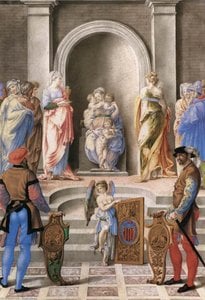
Pietà

Experience the poignant beauty of Giulio Clovio's Pietà – a masterful Renaissance illumination showcasing Mary cradling Jesus after crucifixion, bathed in dramatic light and imbued with profound emotion.

Giulio Clovio (1498-1578) was de grootste illuminator van de Hoogrenaissance, beroemd om zijn complexe miniaturen en het versmelten van schilderstijlen in manuscriptkunst. Ontdek meesterwerken zoals de Farnese Hours!

Giclée / Kunstafdruk

Giclée- of canvasafdruk van museumkwaliteit met snelle productie en flexibele afwerkingsopties.

P118B $10
P118H $10
P118W $10
P438Z $10
P508JH $12
P508YH $12
P805H $10
P805Z $10
P919BZ $10
P919G $10
P919XJ $10
P959ZH $10
P968JZ $12
W106C $8
W218G $10
W218JH $8
W218Y $10
W307PJ $10
W316G $10
W316PJ $8
W316Y $10
W398PJ $8
W4111J $10
W500HY $15
W500JH $15
W692G $12
W849H $8
W940BG $15
W953PJ $8

Standard
custom
CM
INCH

Kies uit onze vooraf ingestelde maten die overeenkomen met de originele verhoudingen van het kunstwerk.

breedte
hoogte

U kunt uw eigen afmetingen opgeven om in een specifieke lijst of ruimte te passen. Als de door u gekozen maat niet overeenkomt met de proporties van het originele kunstwerk, zullen wij de afbeelding bijsnijden of uitbreiden met een gespiegelde of effen rand. Een digitaal mockup wordt ter goedkeuring naar u verzonden voordat de productie begint.
Houd er rekening mee dat de preview op het scherm de werkelijke bijsneding of uitbreiding niet weergeeft. Alleen de mockup toont de uiteindelijke compositie nauwkeurig.
Hoewel aangepaste maten beschikbaar zijn, raden wij aan een afmeting uit de vooraf bepaalde lijst te kiezen om de originele proporties te behouden.

Wereldwijde levering () binnen 2 weken in plaats van de standaard 4/5 weken. (2 juli)

why_choose_icon
Gratis wereldwijde expressverzending
why_choose_icon
Hoogwaardig linnen canvas
why_choose_icon
Volledige verzendverzekering
why_choose_icon
Garantie op terugbetaling van invoerrechten
why_choose_icon
Garantie op exacte kleurweergave
why_choose_icon
60 dagen retourbeleid (alleen bij defecten)
why_choose_icon
100% Geld-terug-garantie
why_choose_icon
Korting bij meerdere afnames

Totaalprijs

-

reproduction

Pietà

Giclée / Kunstafdruk

Afmetingen reproductie

-

Eindtotaal

-

Snelle feiten

  • Year: 1550
  • Movement: Renaissance
  • Medium: Illumination
  • Notable elements or techniques: Dramatic chiaroscuro, meticulous detail
  • Artistic style: High Renaissance
  • Dimensions: 368 x 257 cm
  • Title: Pietà

Kunstquiz

Er is slechts één correct antwoord op elke vraag.

Vraag 1:
What artistic movement is Giulio Clovio’s Pietà primarily associated with?
Vraag 2:
The painting utilizes dramatic lighting to emphasize Mary's face. What is the primary purpose of this technique?
Vraag 3:
What is the symbolic significance of Mary wearing a blue cloak?
Vraag 4:
The Pietà depicts Jesus Christ lying in Mary's lap. What is a key characteristic of Renaissance depictions of religious figures?
Vraag 5:
Which saint is depicted standing behind Mary and Jesus in the painting?

Beschrijving verzamelobject

A Testament to Sorrow and Divine Grace: Exploring Giulio Clovio’s Pietà

Giulio Clovio's Pietà stands as an unparalleled achievement in manuscript illumination, marking the final flourish of a tradition that had begun centuries earlier. Born Juraj Julije Klović in Grižane, Croatia, in 1498, Clovio ascended to artistic prominence amidst the vibrant currents of the Italian Renaissance, establishing himself as arguably the greatest illuminator of his time and securing his place as the last significant master within a lineage tracing back to Byzantine icon painting. His journey exemplifies unwavering dedication to elevating the humble miniature into an astonishingly sophisticated art form—a testament to both technical mastery and profound artistic vision. The Cardinal Grimani Commission: Shaping Artistic Destiny Clovio’s ascent began with his entry into the service of Cardinal Marino Grimani in Venice, a patronage that proved transformative. Recognizing Clovio's exceptional talent, Grimani entrusted him with the monumental task of adorning the Grimani Hours—a lavish liturgical manuscript destined for the Venetian Benedictine Monastery of San Giorgio Maggiore. This commission solidified Clovio’s reputation and propelled him to the forefront of artistic innovation, fostering a collaborative environment that encouraged experimentation and refined his distinctive style. Renaissance Innovation: Mastering Technique and Light Clovio's Pietà exemplifies the Renaissance preoccupation with realism and humanist ideals—a departure from the stylized conventions of Gothic art. He skillfully employed techniques honed over years of experience, meticulously layering translucent glazes onto gold leaf to achieve breathtaking luminosity and depth. The meticulous application of pigment—primarily ultramarine blue derived from lapis lazuli—demonstrates an astonishing understanding of color theory and contributes significantly to the painting’s ethereal quality. Furthermore, Clovio's masterful use of chiaroscuro—the dramatic interplay between light and shadow—captures the emotional core of the scene, conveying Mary’s profound grief and unwavering devotion with remarkable sensitivity. Symbolism Rooted in Faith: Decoding Visual Language Beyond its technical brilliance, the Pietà resonates deeply with Christian symbolism. The Virgin Mary cradles the lifeless body of Jesus Christ, embodying compassion and maternal sacrifice—themes central to medieval theology. The pyramidal composition reinforces stability and conveys a sense of solemn grandeur, reflecting the spiritual aspirations of the Renaissance era. The drapery folds are rendered with meticulous precision, mirroring classical sculptural forms and emphasizing the idealized beauty of human anatomy. Moreover, the subtle gestures of Mary and Jesus communicate unspoken emotions—a poignant reminder of humanity’s vulnerability in the face of divine judgment. Emotional Resonance: Capturing Sacred Sorrow The Pietà transcends mere visual representation; it evokes a powerful emotional response in viewers. Clovio's depiction of Mary’s sorrowful gaze compels contemplation on themes of loss, faith, and redemption—universal experiences that resonate across cultures and epochs. The painting’s subdued palette—dominated by blues and golds—creates an atmosphere of solemn reverence, inviting reflection on the mysteries of Christian belief. Ultimately, Clovio's Pietà remains a timeless masterpiece—a poignant celebration of divine grace expressed through exquisite artistry and unwavering devotion to preserving sacred tradition.
  • Provenance: Grimani Hours
  • Medium: Gold Leaf, Tempera Pigments
  • Dimensions: 368 x 257 cm

Biografie van de kunstenaar

Een Kroatische Lichtstraal van de Italiaanse Renaissance

Giulio Clovio, geboren als Juraj Julije Klović in 1498 te midden van de glooiende heuvels van Grižane, Kroatië, staat als een cruciaal figuur die de laatgotische traditie van manuscriptverluchting verbindt met de opkomende Hoogrenaissance. Hoewel zijn wortels in het Koninkrijk Kroatië lagen, was het in Italië dat Clovio’s artistieke genie werkelijk tot bloei kwam, wat hem de reputatie opleverde als wellicht de grootste verluchter van zijn tijd en de laatste belangrijke meester in een stamboom die eeuwen terugreikt. Zijn verhaal is er een van uitzonderlijk talent, vindingrijk mecenaat en een onwankelbare toewijding aan het transformeren van de miniatuur tot een adembenemend verfijnde kunstvorm.

De vroege jaren van Clovio’s leven blijven gehuld in mysterie. Men vermoedt dat hij zijn eerste artistieke training heeft genoten binnen monastieke kringen nabij Rijeka, maar op achttienjarige leeftijd leidde zijn ambitie hem naar Italië. De intrede in het huishouden van kardinaal Marino Grimani bleek een keerpunt; hier, onder de begeleiding van de kardinaal, verfijnde Clovancio zijn vaardigheden als schilder en begon hij de minutieuze techniek te ontwikkelen die zijn carrière zou definiëren. Hij absorbeerde invloeden van de vooraanstaande kunstenaars van die tijd—Giulio Romano en Girolamo dai Libri speelden beiden een rol in de vorming van zijn stijl—maar hij vond al snel zijn eigen pad, waarbij hij een uitzonderlijk vermogen toonde om de grandeur van de Renaissance-schilderkunst te vertalen naar een miniatuurformaat.

De Kunst van de Miniatuur: Een Synthese van Stijlen

Clovio’s kunstenaarschap ging niet enkel over het kopiëren van bestaande stijlen; het draaide om het versmelten ervan. Hij slaagde er meesterlijk in om de delicate precisie van de Noord-Europese verluchting te combinerende met de dynamische composities en levendige kleurenpaletten die zo kenmerkend waren voor de Italiaanse Renaissance-meesters zoals Rafaël, Michelangelo en Tiziaan. Deze fusie is bijzonder zichtbaar in zijn verluchte manuscripten, waar figuren een sculpturale kwaliteit bezitten, landschappen vervagen in atmosferisch perspectief en elk detail—van de plooien in de draperie tot de schittering van juwelen—met verbazingwekkende nauwkeurigheid is weergegeven.

Zijn werk voor kardinaal Domenico Grimani, waaronder het uiterst gedetailleerde commentaar op de Brief van Paulus aan de Romeinen (nu ondergebracht in het Sir John Soane's Museum), toonde zijn ontluikende talent en vestigde zijn reputatie. De miniaturen in dit manuscript zijn niet louter illustraties; het zijn miniatuurschilderijen op zich, doordrenkt met narratieve kracht en emotionele diepgang. De bekering van Sint Paulus wordt afgebeeld met een dramatische intensiteit die zelden wordt gezien in verluchte manuscripten.

Mecenaat, Reizen en Artistieke Bloei

Clovio’s carrière was onlosmakelijk verbonden met de machtige beschermheren die zijn uitzonderlijke gaven herkenden. Na zijn tijd bij de familie Grimani diende hij aan het Hongaarse hof van koning Lodewijk II, waar hij werken schiep zoals “De Uitspraak van Paris” en “Lucretia”. De voortijdige dood van de koning tijdens de Slag bij Mohács dreef Clovio terug naar Rome, waar hij erin slaagde om voortdurend invloedrijke steunzoekers aan zich te binden.

Zijn band met kardinaal Alessandro Farnese bleek bijzonder vruchtbaar. Het was voor Farnese dat Clovio zijn magnum opus creëerde: de Farnese Hours, een weelderig verlucht getijdenboek dat in 1546 werd voltooid na negen jaar onvermoeibaar werk. Dit meesterwerk, dat nu deel uitmaakt van de Morgan Library in New York, bevat achtentwintig miniaturen die scènes uit zowel het Oude als het Nieuwe Testament uitbeelden, met als hoogtepunt een spectaculaire dubbelpagina die de processie van Corpus Christi in Rome verbeeldt. De Farnese Hours is niet alleen een getuigenis van Clovio’s technische bekwaamheid, maar ook een reflectie van zijn diepe begrip van de iconografie en de theologische thema's van de Renaissance.

Een Verlicht Erfgoed

De invloed van Clovio reikte verder dan het domein van de manuscriptverluchting. Hij was een gerespecteerd figuur in artistieke kringen en sloot vriendschap met kunstenaars als Pieter Bruegel de Oude—die zelfs een miniatuur bijdroeg aan een van Clovio’s werken—en El Greco, die verschillende portretten van de meester-verluchter schilderde. In deze portretten plaatste El Greco hem naast Michelangelo, Rafaël en Tiziaan als zijn eigen grote invloeden. Deze portretten dienen als krachtige visuele verklaringen van Clovio’s status binnen de kunstgemeenschap.

Hoewel hij voornamelijk in het miniatuurformaat werkte, was de impact van Clovio op de Renaissance-kunst aanzienlijk. Hij verhief de status van verluchting van een ambacht naar een schone kunst, waarmee hij de potentie voor expressieve kracht en technische virtuositeit bewees. Zijn vermogen om de geest van de Hoogrenaissance te vangen binnen de beperkingen van een klein formaat verzekerde hem een plaats als een van de meest gevierde kunstenaars van zijn tijd—een Kroatische lichtstraal wiens nalatenschap de wereld van de kunst tot op de dag van vandaag blijft verlichten.

Giulio Clovio

Giulio Clovio

1498 - 1578 , Kroatië

Belangrijkste feiten

  • Artistic Movement Or Style: Hoogrenaissance
  • Artists Or Movements Influenced By This Artist: ['El Greco']
  • Artists Who Influenced This Artist:
    • Giulio Romano
    • Girolamo dai Libri
  • Date Of Birth: 1498
  • Date Of Death: 1578
  • Full Name: Giulio Clovio
  • Nationality: Kroatisch-Italiaans
  • Notable Artworks:
    • Farnese Hours
    • Towneley Lectionary
    • Soane Manuscript
  • Place Of Birth: Grižane, Kroatië