Giovanni Oberti: Sculpting Time and Atmosphere
Born in Bergamo, Italy, in 1982, Giovanni Oberti’s work represents a compelling dialogue between landscape, abstraction, and the very essence of time itself. His artistic journey, rooted in the rigorous training at the Accademia Carrara of Fine Arts in Bergamo – where he graduated in 2006 with a thesis exploring the evolving role of the spectator from photography's invention to the present – has led him to create installations that are both deeply contemplative and strikingly physical. Oberti isn’t merely depicting scenes; he’s constructing experiences, inviting viewers to engage with the ephemeral qualities of existence through meticulously orchestrated processes.
Early influences likely stemmed from his Italian heritage and a keen awareness of the natural world. However, Oberti's work transcends simple representation, delving into concepts of memory, sedimentation, and the subtle shifts that define our perception of reality. His artistic practice is characterized by a deliberate layering – a ‘stratification,’ as he describes it – where objects are imbued with meaning through their interaction with time and environment. He carefully selects elements—dust, humidity, light—and allows them to unfold within his installations, creating a tangible record of transformation.
The Language of Accumulation
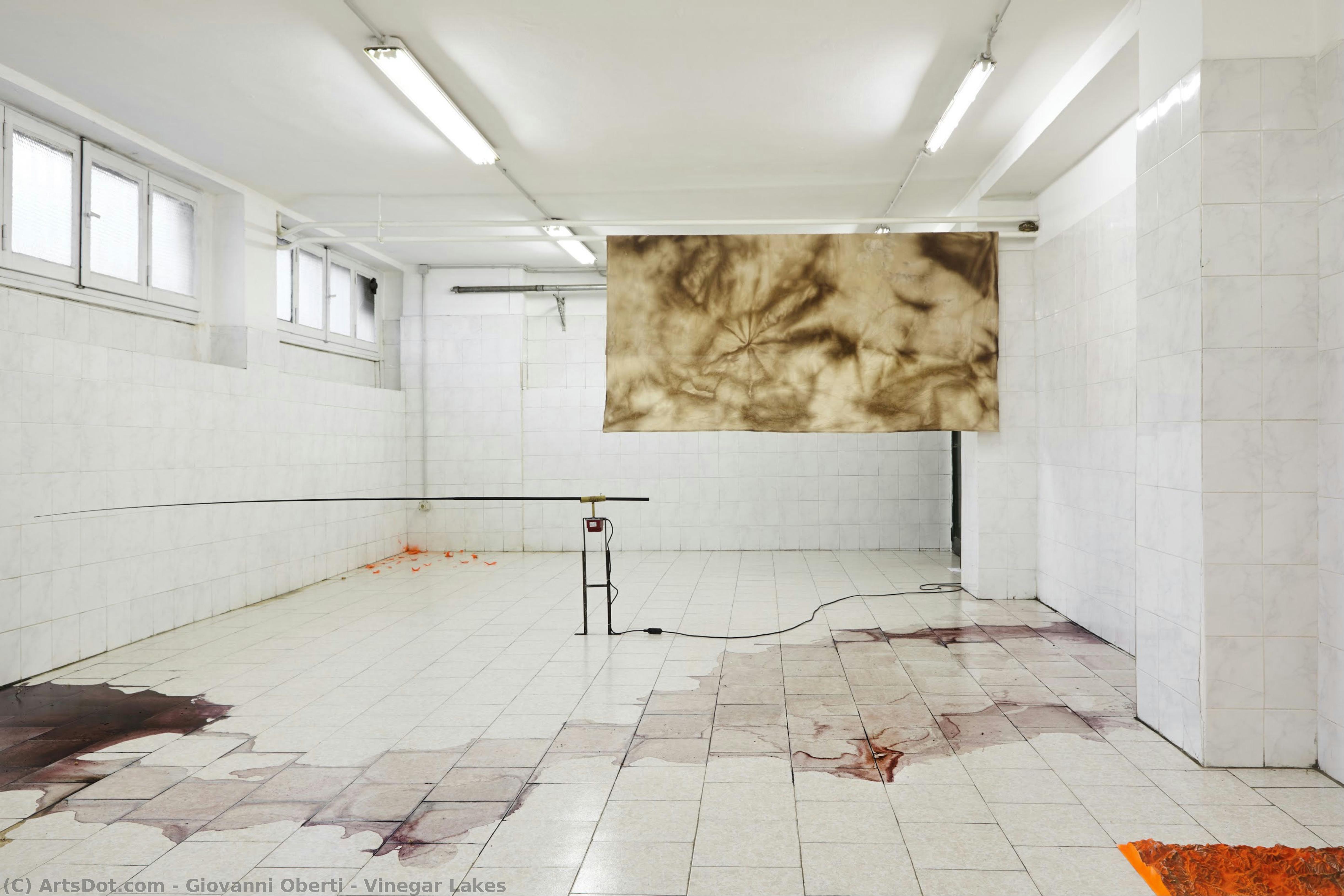
A key element in understanding Oberti’s work is his fascination with the accumulation of materials and processes. He often cites the concept of “time production,” drawing parallels between natural phenomena – like evaporation and sedimentation – and the artistic process itself. As articulated in a recent installation at Careof Milan, he seeks to give visible form to the diurnal passage of time, transforming intangible elements into palpable ‘living’ matter. This isn't about creating static objects; it’s about documenting a dynamic system, revealing the subtle shifts that occur over days and weeks.
The “Untitled (8)” series exemplifies this approach. Within Careof Milan, Oberti created a space where water gradually diminished through evaporation, only to be re-introduced each evening. The resulting limescale deposits on the concrete floor served as a visual testament to this cyclical process – a tangible record of time’s relentless flow. Similarly, in “Untitled (Pedestal for Dust),” he collected dust generated by the gallery's use, elevating it onto a pedestal and presenting it as a meditation on entropy and reintegration. These works aren’t simply about collecting materials; they are about observing their transformation and documenting the traces left behind.
Technique and Materials
Oberti’s technical approach is characterized by a quiet precision and an understanding of material properties. He frequently employs simple, readily available materials – water, dust, light, humidity—to achieve complex effects. The use of neon lights in “Untitled (Pedestal for Dust)” adds a layer of symbolic resonance, referencing both numerology and the cyclical nature of time. The deliberate placement of these elements within the gallery space is crucial; Oberti meticulously considers how they interact with each other and with the viewer’s perception.
His work often incorporates elements of site-specificity, responding directly to the unique characteristics of each installation location. This commitment to context underscores his belief that art should engage actively with its environment, creating a dialogue between the artwork and its surroundings. The use of materials like calcare (limestone) further emphasizes this connection to place and time.
Exhibitions and Recognition
Giovanni Oberti’s work has been exhibited both nationally in Italy and internationally, including at the Tile Project Space in Milan, on his personal website, and within prestigious galleries such as Galleria Milano. His participation in workshops and residencies demonstrates a commitment to ongoing artistic exploration and collaboration. His inclusion in talent prizes like the ATP Diary and the Talent Prize further validates his position as a rising star in contemporary Italian art.
Oberti’s work continues to evolve, pushing the boundaries of traditional sculptural practices while retaining a deep connection to fundamental concepts of time, memory, and the materiality of existence. His installations offer viewers a unique opportunity to contemplate these themes through immersive experiences that are both visually arresting and profoundly thought-provoking.



 Print kopen
 Verstuur
 Delen
Delen
 Details

 Download
 Vergelijkbare werken
 Röntgenfoto
 Diavoorstelling
 Lees meer






































 De optie voor glas is alleen beschikbaar bij een formaat kleiner dan 110 cm.





