x
VoorvertoningVoorvertoning Bekijk in ARBekijk in AR Bestel print Bestel printBestel handgeschilderde reproductie Bestel handgeschilderde reproductie VerstuurVerstuur
Details bekijkenDetails bekijken Toevoegen aan favorieten Toevoegen aan favorieten DownloadDownload Vergelijkbare itemsVergelijkbare items RöntgenonderzoekRöntgenonderzoek DiavoorstellingDiavoorstelling

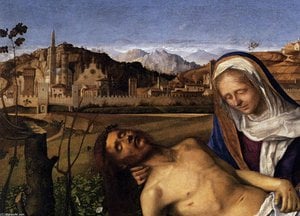
The Pity

'Pieta' was created in 1505 by Giovanni Bellini in High Renaissance style. Find more prominent pieces of religious painting at Wikiart.org – best visual art ...

Giovanni Bellini (1430-1516): De Venetiaanse meester achter serene Madonnen & adembenemende landschappen. Invloedrijk, met invloeden van Giorgione & Titian.

Koop een digitale afbeelding in hoge resolutie met verbeterde kwaliteit, die veel superieur is aan de online voorvertoning.

Elk bestand wordt met uiterste precisie voorbereid door onze interne specialisten, met behulp van geavanceerde tools en deskundige handmatige retouche. Wij garanderen dat elke afbeelding een uitzonderlijke helderheid, nauwkeurige kleurweergave en verfijnde details bezit.

Het uiteindelijke bestand wordt binnen 72 uur per e-mail geleverd, geoptimaliseerd voor direct gebruik in professionele, redactionele en printomgevingen. Dit is dezelfde kwaliteit waarop vooraanstaande designstudio's, uitgevers en galerieën vertrouwen.

Digitale afbeeldingen

Download een bestand met hoge resolutie voor persoonlijke weergave, afdrukken en creatieve projecten. (Bestel print Bestel printBestel handgeschilderde reproductie Bestel handgeschilderde reproductie)

Totaalprijs

$ 24,90

Inbegrepen bij elke bestelling van een digitale afbeelding

Professionele digitale levering, gegarandeerd

Wanneer u kiest voor WahooArt.com, ontvangt u niet alleen een afbeelding – u krijgt een professioneel verbeterd digitaal kunstwerk, met precisie vervaardigd en voorzien van een tevredenheidsgarantie. Dit is alles wat automatisch bij uw bestelling is inbegrepen:

shipping_icon
Snelle levering per e-mail

Uw hoogwaardige digitale afbeeldingsbestand wordt binnen 72 uur na bestelling naar u gemaild – klaar voor direct gebruik.

canvas_icon
AI-verbeterd digitaal bestand

Uw kunstwerk wordt professioneel geoptimaliseerd met behulp van geavanceerde AI-tools en handmatige bewerkingen, waardoor maximale details, helderheid en kleurnauwkeurigheid worden gegarandeerd.

insurance_icon
Gratis levenslange herlevering van digitale afbeeldingen

Je bestand per ongeluk verwijderd of kwijtgeraakt? Geen zorgen – we sturen het u op elk gewenst moment gratis opnieuw toe.

tax_icon
Geen invoerkosten – nooit

Geniet direct van uw kunstwerk zonder invoerrechten, belastingen of verzendkosten – digitale downloads zijn altijd belastingvrij.

color_icon
Garantie op kleurgetrouwheid

Met behulp van professionele hulpmiddelen en kleurbeheer zorgen wij ervoor dat uw digitale afbeelding de originele kleuren zo nauwkeurig mogelijk weergeeft.

return_icon
60 dagen tevredenheidsgarantie

Als u niet tevreden bent met uw digitale afbeelding, passen wij deze aan of storten wij 100% terug binnen 60 dagen – zonder vragen gesteld.

guarantee_icon
100% Geld-terug-garantie

Niet tevreden? Ontvang binnen 60 dagen na ontvangst van uw digitale bestand uw volledige aankoopbedrag terug – zonder vragen te stellen.

discount_icon
Korting bij grote bestellingen

Koop 3 afbeeldingen, bespaar 10% - Koop 5, bespaar 15% - Koop 10+, bespaar 20%. Ideaal voor creatieve projecten, galerieën en bureaus.

Snelle feiten

  • Influences:
    • Giorgione
    • Tintoretto
  • Artistic style: Venetian School
  • Subject or theme: Religious devotion
  • Dimensions: 65 x 90 cm
  • Location: Gallerie dell'Accademia, Venice
  • Medium: Oil on canvas
  • Title: The Pity

A Symphony of Sorrow: The Soul of Bellini’s Masterpiece

In the quiet, hallowed halls of the Gallerie dell'Accademia in Venice, there exists a window into the profound depths of human grief and divine compassion. Giovanni Bellini’s “The Pity,” completed in 1505, is not merely a painting; it is a visceral experience of spiritual reflection. As one of the undisputed titans of the High Renaissance, Bellini possessed an unparalleled ability to bridge the gap between the rigid traditions of Byzantine iconography and the burgeoning humanism of his era. In this work, we witness the pinnacle of Venetian mastery, where the heavy weight of mortality meets the ethereal lightness of grace. The scene captures a moment of devastating intimacy: Mary cradling the broken body of Jesus, a composition that resonates with an eternal, quiet ache that transcends the centuries.

The emotional landscape of the painting is as vast as the Venetian sky depicted in its background. Bellini utilizes a masterful chiaroscuro, manipulating light and shadow to sculpt the figures with a lifelike tenderness. The way the soft light falls upon the serene, yet lifeless, features of Christ and the sorrowful countenance of Mary invites the viewer into a state of meditative empathy. For the collector or the lover of fine art, this piece offers more than visual beauty; it provides a profound emotional anchor, a focal point for contemplation that brings a sense of historical gravity and spiritual peace to any space.

Technique and the Venetian Glow

To understand the brilliance of “The Pity,” one must appreciate Bellini’s revolutionary use of oil paint. Unlike the tempera methods of his predecessors, the slow-drying nature of oil allowed Bellini to achieve subtle tonal gradations and a luminous, translucent quality that seems to radiate from within the canvas itself. This technique is particularly evident in the rich, deep blues of Mary’s robes and the delicate, fleshy tones of Christ’s skin. The artist’s ability to layer glazes creates a sense of depth and atmosphere, making the lush greenery and the distant, castle-topped hill feel as though they are breathing within the frame.

The composition is a masterclass in balanced tension. While the central figures command our immediate attention through their emotional gravity, Bellini skillfully guides the eye toward the stylized Venetian landscape. This juxtaposition of the intimate, tragic foreground with the enduring, tranquil background serves to underscore the theme of eternal life amidst earthly suffering. For interior designers seeking to infuse a room with character and depth, a high-quality reproduction of this work offers a sophisticated interplay of color and light, capable of transforming a contemporary setting into a sanctuary of classical elegance.

A Legacy of Devotion and Artistry

The historical context of “The Pity” is deeply intertwined with the golden age of Venice. Born into a lineage of great painters, Giovanni Bellini refined the language of color that would define the Venetian school for generations. This painting, a devotional work likely intended for private contemplation, embodies the era's shift toward more humanized religious subjects. The tenderness of the maternal embrace reflects a growing interest in the human element of sacred narratives, making the divine feel accessible and profoundly relatable.

Owning or displaying a reproduction of such a masterpiece is an invitation to participate in this storied tradition. It is a piece that speaks to the enduring power of compassion and the beauty found in vulnerability. Whether placed in a curated gallery, a scholarly study, or a refined living space, “The Pity” serves as a timeless testament to Bellini’s genius—a work that continues to capture the hearts of those who find beauty in the delicate balance of sorrow and light.


Kunstenaarsbiografie

A Venetian Master: The Life and Legacy of Giovanni Bellini

Giovanni Bellini, a name inextricably linked to the heart of Venice, stands as a pivotal figure bridging the twilight of the Byzantine era and the dawn of the High Renaissance. Born around 1430 – though some sources suggest 1433 – into a family deeply rooted in the artistic traditions of the city, his life was a continuous evolution, marked by an unparalleled sensitivity to color, light, and the burgeoning humanism that would define the 16th century. The precise details of his familial relationships have long been debated; for years, Jacopo Bellini was considered his father, but modern scholarship increasingly points towards Jacopo being Giovanni’s elder half-brother, with Gentile Bellini as his nephew rather than sibling. Regardless of these intricate family dynamics, young Giovanni grew up immersed in a vibrant workshop, absorbing the foundational techniques and artistic principles from an early age. His initial training likely involved mastering the traditional tempera methods prevalent at the time, but it was his innate talent for observation, coupled with a profound emotional intelligence, that would ultimately distinguish him as a truly exceptional artist.

Early Influences and Artistic Foundations

The artistic landscape of 15th-century Venice presented a fascinating confluence of influences – a unique blend of Byzantine grandeur, the emerging styles of Florence, and the distinctive Venetian tradition. The city’s position as a major trading hub exposed its artists to diverse cultural currents and ideas from across Europe and beyond. Simultaneously, the enduring legacy of Byzantium continued to exert a powerful pull on Venetian art, particularly in its use of rich colors, elaborate ornamentation, and spiritual themes. Bellini's early works reflect this complex interplay of influences. Initially, his style bore the unmistakable mark of his father, Jacopo, and his brother, Gentile, characterized by meticulous detail, a restrained emotional palette, and a focus on formal precision. However, even within these early pieces, subtle hints of his future brilliance began to emerge – a delicate handling of light, an increasing interest in naturalistic settings, and a remarkable ability to imbue religious figures with a palpable sense of human pathos and vulnerability. The influence of Andrea Mantegna, his brother-in-law, is also readily apparent during this period, particularly in the clarity of line, the monumental scale of figures, and the use of perspective – elements that would profoundly shape Bellini’s own artistic development. Bellini's early commissions often involved collaborative projects, allowing him to hone his skills alongside some of Venice’s most accomplished painters.

The Revolution of Oil Paint: A New Language for Color

Giovanni Bellini’s true breakthrough came with the adoption and masterful exploitation of oil paint. While not the inventor of this technique – it had been introduced to Italy from the East earlier in the century – Bellini was among the first Venetian artists to fully embrace its potential, transforming the very language of painting. Unlike tempera, which demanded a swift, linear approach and often resulted in brittle colors, oil paint allowed for unprecedented blending, richer hues, subtle gradations of tone, and a remarkable degree of luminosity. This newfound freedom fundamentally altered Bellini’s artistic process, enabling him to create paintings that possessed an astonishing depth and vibrancy. His use of color became increasingly sophisticated, moving away from the often-harsh, overly bright palette favored by earlier Venetian painters towards a more nuanced, harmonious, and emotionally resonant range of tones. He masterfully captured the effects of light and atmosphere, imbuing his landscapes with a sense of serenity, mystery, and profound realism – a departure from the stylized representations common in previous generations. This revolutionary approach to oil paint not only transformed Bellini’s own work but also laid the foundation for the distinctive style that would come to define the Venetian school—a style celebrated throughout Europe for its sensuousness, coloristic richness, and atmospheric perspective.

Major Works and Artistic Evolution

As Giovanni Bellini matured, his artistic vision continued to evolve with remarkable sophistication. His altarpieces, such as those created for the churches of San Zaccaria and Santa Corona, demonstrate his ability to construct complex compositions filled with symbolic meaning, intricate detail, and profound emotional resonance. The *Transfiguration*, now housed in the Capodimonte Museum in Naples, stands as a prime example of this artistic evolution – a serene depiction of Christ’s transformation combined with a masterful use of light, color, and perspective. He also served as conservator of the paintings within Doge's Palace, further solidifying his position as Venice’s leading artist and cultural figure. Throughout his career, Bellini explored a wide range of subjects – from religious scenes to portraits, landscapes, and mythological narratives—each imbued with his unique artistic sensibility. His later works are characterized by a heightened sense of spirituality, a greater emphasis on the emotional expression of figures, and an increasingly lyrical use of color.

A Lasting Legacy: Influence and Remembrance

Giovanni Bellini’s impact extended far beyond his own lifetime. He became a mentor to a generation of younger painters, including Giorgione and Titian, who would inherit his techniques, aesthetic principles, and artistic vision—adapting them to their own individual styles and contributing to the golden age of Venetian painting. His influence can be seen in countless works created by artists throughout Europe, solidifying his place as one of the most important figures in Western art history. Bellini’s legacy is not simply one of technical brilliance; it is a testament to the power of art to transcend time and connect us to the enduring values of human experience. From the serene beauty of his Madonnas to the dramatic intensity of his religious scenes, Bellini's work continues to inspire awe and admiration centuries after its creation—a vibrant reminder of Venice’s artistic heritage and a profound exploration of the mysteries of faith, beauty, and the human spirit.

Giovanni Bellini

Giovanni Bellini

1433 - 1516 , Italië

Belangrijkste feiten

  • Artistic Movement Or Style: Venetiaanse School
  • Artists Or Movements Influenced By This Artist:
    • Giorgione
    • Titian
  • Artists Who Influenced This Artist:
    • Jacopo Bellini
    • Gentile Bellini
    • Mantegna
  • Date Of Birth: c. 1430
  • Date Of Death: 1516
  • Full Name: Giovanni Bellini
  • Nationality: Italiaans
  • Notable Artworks:
    • St. Jerome
    • Transfiguratie
  • Place Of Birth: Venetië, Italië