GRATIS KUNSTADVIES

x
Bestel schilderij Bestel schilderijKoop afbeelding in hoge resolutie Koop afbeelding in hoge resolutie VerstuurVerstuur
DetailsDetails Toevoegen aan favorieten Toevoegen aan favorieten DownloadDownload Vergelijkbare werkenVergelijkbare werken RöntgenfotoRöntgenfoto DiavoorstellingDiavoorstelling

Juli

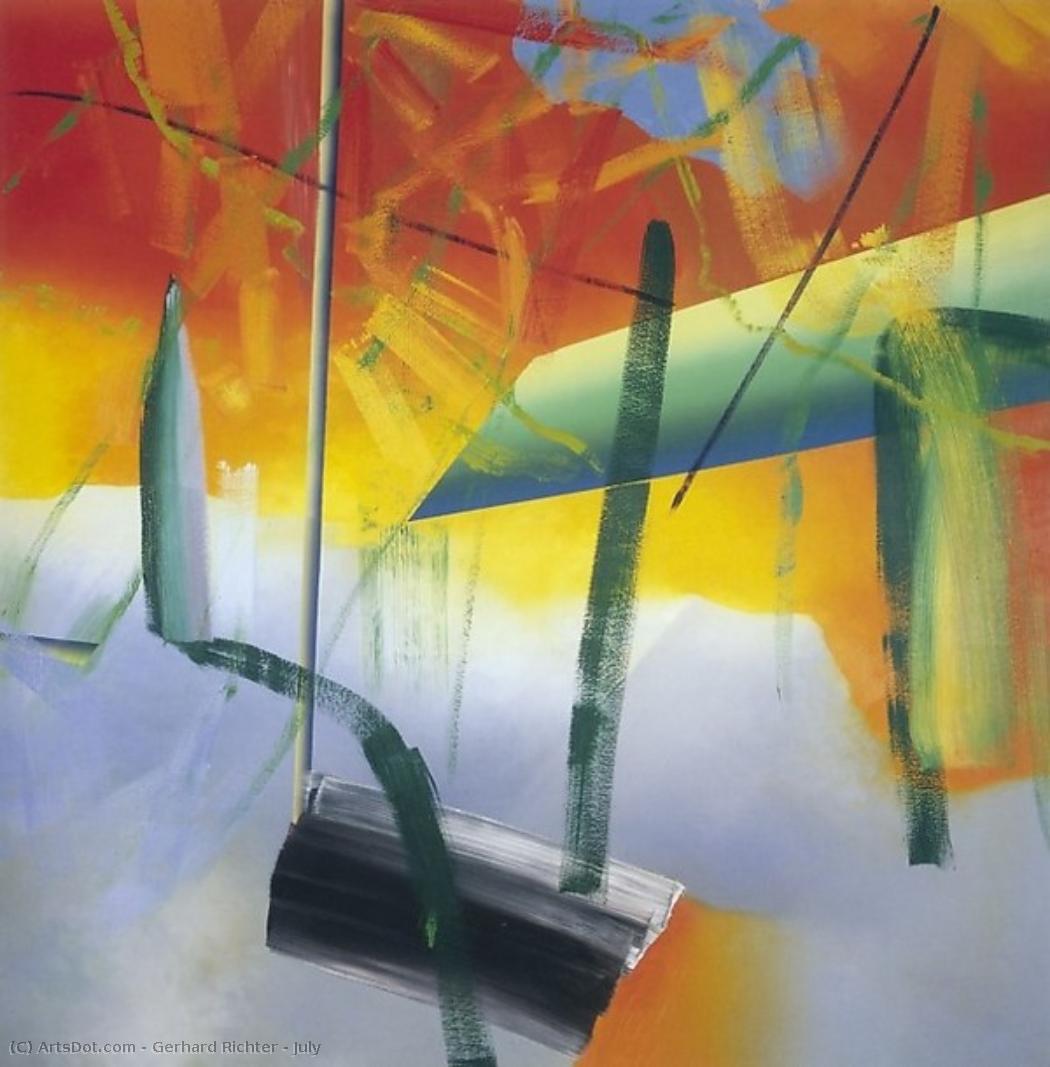
Ontdek 'Juli' (1983) van Gerhard Richter, een fascinerende abstracte meesterwerk die levendige kleuren en dynamische texturen laat zien. Een belangrijk werk van een leidende hedendaagse kunstenaar.

Gerhard Richter (1932): Bekend om abstracte & fotorealistische schilderijen, 'Capitalist Realism' en kleurkaarten. Een invloedrijke Duitse kunstenaar die de hedendaagse kunst definieert.

Giclée / Kunstafdruk

Giclée- of canvasafdruk van museumkwaliteit met snelle productie en flexibele afwerkingsopties.

P118B $10
P118H $10
P118W $10
P438Z $10
P508JH $12
P508YH $12
P805H $10
P805Z $10
P919BZ $10
P919G $10
P919XJ $10
P959ZH $10
P968JZ $12
W106C $8
W218G $10
W218JH $8
W218Y $10
W307PJ $10
W316G $10
W316PJ $8
W316Y $10
W398PJ $8
W4111J $10
W500HY $15
W500JH $15
W692G $12
W849H $8
W940BG $15
W953PJ $8

Standard
custom
CM
INCH

Kies uit onze vooraf ingestelde maten die overeenkomen met de originele verhoudingen van het kunstwerk.

breedte
hoogte

U kunt uw eigen afmetingen opgeven om in een specifieke lijst of ruimte te passen. Als de door u gekozen maat niet overeenkomt met de proporties van het originele kunstwerk, zullen wij de afbeelding bijsnijden of uitbreiden met een gespiegelde of effen rand. Een digitaal mockup wordt ter goedkeuring naar u verzonden voordat de productie begint.
Houd er rekening mee dat de preview op het scherm de werkelijke bijsneding of uitbreiding niet weergeeft. Alleen de mockup toont de uiteindelijke compositie nauwkeurig.
Hoewel aangepaste maten beschikbaar zijn, raden wij aan een afmeting uit de vooraf bepaalde lijst te kiezen om de originele proporties te behouden.

Wereldwijde levering () binnen 2 weken in plaats van de standaard 4/5 weken. (2 juli)

why_choose_icon
Gratis wereldwijde expressverzending
why_choose_icon
Hoogwaardig linnen canvas
why_choose_icon
Volledige verzendverzekering
why_choose_icon
Garantie op terugbetaling van invoerrechten
why_choose_icon
Garantie op exacte kleurweergave
why_choose_icon
60 dagen retourbeleid (alleen bij defecten)
why_choose_icon
100% Geld-terug-garantie
why_choose_icon
Korting bij meerdere afnames

Totaalprijs

-

reproduction

Juli

Giclée / Kunstafdruk

Afmetingen reproductie

-

Eindtotaal

-

Snelle feiten

  • Artistic style: Abstract
  • Title: July
  • Notable elements or techniques: Blurred effect
  • Artist: Gerhard Richter
  • Year: 1983

Kunstquiz

Er is slechts één correct antwoord op elke vraag.

Vraag 1:
In what year was Gerhard Richter’s ‘July’ created?
Vraag 2:
What is a prominent visual element featured centrally in the painting ‘July’?
Vraag 3:
Gerhard Richter is renowned for his diverse artistic style. What are some of the techniques he frequently employs?
Vraag 4:
Based on his biography, Gerhard Richter's early life was significantly impacted by what historical events?
Vraag 5:
What is the approximate size of 'July'?

Beschrijving verzamelobject

Een Symphonie van Abstractie: Het Ontcijferen van Gerhard Richter’s “July”

Gerhard Richter's "July," geschapen in 1983, is een kunstwerk dat niet meteen geheimen prijsgeeft. Met een imposante afmeting van 250 x 250 cm domineert het de aandacht met zijn enorme schaal en het complexe spel van kleur en textuur over zijn oppervlakte. Het is geen landschap weergegeven met fotografische precisie – Richter verkende zowel fotorealisme als abstractie – maar eerder een distillatie van sensatie, een visuele echo van een zomerse gebeurtenis gevangen niet in detail, maar in gevoel. Het schilderij staat centraal rond een verticale element, vaak beschreven als een paal of stok, die dient als anker middenin bewegende vormen. Een boot verschijnt aan de rechterkant, suggererend een waterlandschap, terwijl hints van vegetatie en zelfs vogellijk leven opkomen uit de aangebrachte verflagen. Twee figuren zijn subtiel geïntegreerd in het beeld, waarvan hun aanwezigheid een menselijke schaal geeft aan de abstracte ruimte. Het is een werk dat lange tijd aandacht vraagt, belonend de kijker met nieuwe ontdekkingen bij elke terugblik. Een kunstwerk dat je blijft fascineren en inspireren.

De Meester van Meerdere Stijlen: Richter’s Artistieke Reis

Gerhard Richter werd geboren in Dresden, Duitsland, in 1932, en zijn levensgeschiedenis staat nauw verbonden met de tumultueuze geschiedenis van het postoorlogse Duitsland – een context die diepgaand heeft gevormd tot zijn artistieke visie. Zijn vroegste opleiding vond plaats als tekenaar en decorbouwer voor het toneel, maar hij vervolgde daarna formele studies aan de Dresden Academie voor Kunstnijverheidskunst. Richter’s eerste werk demonstreerde een betrokkenheid bij abstractie, beïnvloed door kunstenaars zoals Picasso en Arp, maar zijn verdere exploratie van fotorealisme – zorgvuldig het licht weergegeven foto's in olie overdoop – bracht hem aanvankelijk internationale erkenning. Echter, om Richter te definiëren met één stijl zou betekenen dat je zijn artistieke ambitie misinterpreteert. Hij weigert zich bewust te laten categoriseren, en verandert voortdurend tussen verschillende benaderingen, waardoor de grenzen tussen representatie en abstractie vervagen. Een kunstenaar die altijd op zoek is naar nieuwe vormen van expressie.

Een Analyse van “July”: Kleur, Textuur en Beweging

“July” is een voorbeeld van Richter’s stijl waarin hij kleur en textuur gebruikt om emotie over te brengen zonder directe natuurlijke afbeeldingen weer te geven. De dominante groene kleur van de paal draagt bij aan een gevoel van stabiliteit en vertrouwen, terwijl de bewegende vormen rondom het paal een dynamische energie oproepen die doet denken aan het zomerse licht. De verschillende kleuren – blauw, groen en wit – creëren een harmonieuze balans tussen natuurlijke elementen en emotionele expressie. Richter’s techniek bestaat uit het gebruik van meerdere lagen verf, waardoor hij een oppervlakte krijgt dat lijkt op een fotografie maar ook een gevoel voor beweging en licht bevat. Een prachtige manier om de essentie van een zomerse ervaring vast te leggen.

Historische Context en Symbolisme

Het schilderij werd gemaakt tijdens een periode waarin Richter’s kunstpraktijk sterk werd beïnvloed door de geschiedenis van Duitsland na de Tweede Wereldoorlog. De angst voor het oorlogsgeweld en de zoektocht naar nieuwe vormen van schoonheid waren teruggekeerd, wat zich uit in zijn kunstwerken. Richter gebruikte vaak afbeeldingen van oude werken om zijn stijl te ontwikkelen, waardoor hij een directe verbinding aanging met kunstgeschiedenis en een kritische kijk op het verleden bood. De titel "July" verwijst naar een zomerse maand, maar ook naar een gevoel van nostalgie en eenvoud – thema’s die Richter regelmatig verkende in zijn werk. Een kunstwerk dat je doet nadenken over de schoonheid van het natuurlijke wereld en de kracht van emotionele expressie.

Waarom Deze Reproduktie?

Een hoogwaardige reproductie van “July” biedt een prachtige manier om Richter’s kunst naar huis te halen en zijn stijl te laten aanschouwen zonder de kosten en inspanningen die bij het bezitten van het origineel gaan gepaard. Laat je inspireren door deze iconische afbeelding en voeg een vleugje kunstgeschiedenis toe aan jouw interieur! Een prachtige manier om de essentie van Richter’s kunstwerk vast te leggen en te delen met anderen.

Vergelijkbare kunstwerken


Biografie van de kunstenaar

A Life Shaped by Division: The Early Years and Artistic Formation of Gerhard Richter

Gerhard Richter’s story is inextricably linked to the fractured history of 20th-century Germany. Born in Dresden in 1932, his childhood unfolded under the shadow of a rising National Socialist regime. This formative period, marked by displacement – his family moved several times during the war years – instilled within him a profound sense of uncertainty and a questioning spirit that would permeate his artistic practice for decades to come. The idyllic landscapes of his early upbringing in Reichenau and Waltersdorf were soon disrupted by conflict, leaving an indelible mark on his psyche. His father, though not a fervent supporter of the Nazi party, navigated the complexities of life under authoritarian rule as a schoolteacher, while his mother fostered a love for literature and music within the family. This duality – a pragmatic acceptance of circumstance alongside a yearning for cultural expression – became a defining characteristic of Richter’s own artistic approach. He began formal training at the Dresden Academy of Fine Arts in 1951, initially immersed in the tradition of socialist realism demanded by the East German state. However, even within this constrained environment, a desire for artistic freedom simmered beneath the surface, fueled by a growing dissatisfaction with ideological constraints and a longing to explore more expansive creative possibilities.

Escaping Constraints: Düsseldorf and the Exploration of Style

The year 1961 proved pivotal. Richter, along with his wife Marianne Eufinger, made the daring decision to flee East Germany, seeking refuge in the burgeoning art scene of Düsseldorf. This move marked a radical shift in his artistic trajectory. The West German landscape offered a liberating environment where experimentation and innovation were not only permitted but actively encouraged. In Düsseldorf, he encountered a vibrant community of artists grappling with questions of identity, representation, and the legacy of history. He quickly began to dismantle the rigid stylistic conventions of socialist realism, embarking on a period of intense exploration that would define his early mature work. This era saw him oscillate between seemingly disparate approaches – from photorealism, meticulously recreating photographic images with astonishing precision, to abstract compositions characterized by bold colors and dynamic brushstrokes. His collaboration with Sigmar Polke led to the coining of the term ‘Capitalist Realism,’ a deliberately ambiguous label that reflected their shared skepticism towards established artistic norms and their appropriation of imagery from advertising and mass media. This period wasn’t about finding *a* style, but rather questioning the very notion of stylistic coherence, embracing contradiction as a fundamental principle.

Blurring Boundaries: Photorealism, Abstraction, and the Power of Chance

Richter's artistic vocabulary expanded throughout the 1960s and beyond, encompassing a remarkable range of techniques and themes. His photorealistic paintings, often based on family photographs or newspaper images, are not merely copies of reality but rather investigations into the nature of perception and representation. By meticulously rendering these images with an almost clinical detachment, he forces viewers to confront the inherent ambiguity of photographic truth. Simultaneously, Richter delved deeper into abstraction, creating canvases layered with vibrant colors and gestural marks. These abstract works are often created using a unique technique involving squeegees – tools typically used for cleaning windows – which he drags across the surface of the canvas, manipulating the paint in unpredictable ways. This embrace of chance and spontaneity is central to his artistic philosophy, allowing him to relinquish control and invite unexpected outcomes. His ‘Color Charts,’ systematic arrangements of colored squares, further challenge traditional notions of artistic expression, questioning the very definition of painting itself. These works are not about individual aesthetic preferences but rather about exploring the inherent properties of color and its organizational possibilities.

The Weight of History: From Dresden to Recognition

Richter’s early years in Dresden were profoundly shaped by the devastation of World War II and the subsequent division of Germany. The city, heavily bombed during the war, was a landscape of rubble and reconstruction – a constant reminder of loss and trauma. This experience deeply influenced his artistic sensibility, fostering a sense of fragility and impermanence that would permeate much of his work. His early training at the Dresden Academy of Fine Arts provided him with a solid foundation in traditional techniques, but it also exposed him to the constraints of socialist realism – an ideology he increasingly resisted. The decision to leave East Germany in 1961 was not simply a matter of artistic freedom; it was a desperate attempt to escape the stifling atmosphere of political control and ideological conformity. Düsseldorf offered him a new beginning, a space where he could experiment without fear of censorship or reprisal. Despite initial struggles, Richter gradually gained recognition for his innovative approach, establishing himself as one of the leading figures in contemporary German art.

A Legacy of Ambiguity: Gerhard Richter Today

Gerhard Richter’s work continues to be exhibited and studied worldwide, cementing his place as one of the most important artists of our time. His paintings are characterized by their technical mastery, their emotional depth, and their profound engagement with complex social and historical themes. He has consistently resisted easy categorization, refusing to be defined by any single style or movement. This deliberate ambiguity is a key element of his artistic practice, inviting viewers to engage in critical dialogue and to interpret his work on their own terms. Richter’s influence can be seen in the work of countless artists who have followed in his footsteps, drawn to his innovative techniques and his unwavering commitment to artistic exploration. He remains a vital force in contemporary art, continuing to challenge conventions and to provoke audiences with his thought-provoking and deeply resonant work. His paintings are not simply beautiful objects; they are windows into the complexities of human experience – reflections on memory, identity, and the search for meaning in a world marked by uncertainty and change.
Gerhard Richter

Gerhard Richter

1932 - , Duitsland

Belangrijkste feiten

  • Artistic Movement Or Style:
    • Fotorealism
    • Abstractie
    • Kapitalistisch Realisme
  • Artists Or Movements Influenced By This Artist: ['Hedendaagse schilders']
  • Artists Who Influenced This Artist:
    • Pablo Picasso
    • Jean Arp
  • Date Of Birth: 9 februari 1932
  • Full Name: Gerhard Richter
  • Nationality: Duits
  • Notable Artworks:
    • Abstract Painting 610-1
    • Gilbert
    • S. with Child
    • Oktober 18, 1977
  • Place Of Birth: Dresden, Duitsland
Ontdek kunstwerken georganiseerd op thema's, stijlen en kenmerken.