A Nocturnal Drama Unveiled
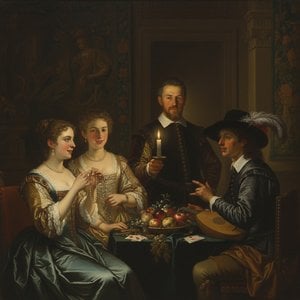
In the flickering glow of an unseen flame, Gerard van Honthorst’s The Procuress invites the viewer into a clandestine world of whispered secrets and moral ambiguity. Painted in 1625, this masterpiece serves as a breathtaking testament to the Dutch Golden Age, capturing a moment of theatrical tension that feels almost voyeuristic. The scene unfolds within a dimly lit interior, where the boundaries between light and shadow are not merely stylistic choices but narrative protagonists. As one gazes upon the composition, the eye is immediately drawn to the interplay of figures: a young woman with a provocative allure, an older woman acting as the intermediary, and a man whose presence suggests a transaction of much more than mere currency. It is a painting that does not just depict a scene; it breathes with the heavy, humid atmosphere of a Roman night.
The emotional resonance of the work lies in its ability to evoke a sense of palpable suspense. There is an intimacy here that borders on the uncomfortable, pulling the observer into a private encounter where social graces are stripped away by the raw necessity of desire and greed. For the collector or the lover of fine art, this piece offers more than just visual beauty; it provides a window into the psychological complexities of the human condition, making it an intellectually stimulating addition to any curated collection.
The Mastery of Tenebrism and Light
To understand The Procuress is to understand the genius of the man known as Gherardo delle Notti—Gerard of the Nights. Honthorst’s technical prowess is defined by his profound command of tenebrism, a technique characterized by violent contrasts between deep, impenetrable shadows and brilliant, localized highlights. Influenced heavily by the revolutionary Caravaggio, Honthorst mastered the art of "artificial lighting," where the light source—often a candle or a small lamp hidden from view—sculpts the figures out of the darkness. This method creates a sculptural quality in the flesh tones and a luxurious texture in the fabrics, from the shimmering silks to the heavy velvets.
The technique serves a dual purpose: it directs the viewer's gaze with surgical precision and heightens the dramatic stakes of the narrative. The way light catches the edge of a porcelain bowl or illuminates a seductive smile creates a rhythmic movement across the canvas, ensuring that the eye never rests too long on one spot but instead wanders through the shadows, searching for the next revelation. For interior designers, this dramatic use of chiaroscuro offers an unparalleled sense of depth and luxury, providing a focal point that can anchor a room with its profound architectural weight and classical elegance.
Symbolism and the Moral Landscape
Beyond its technical brilliance, The Procuress is a rich tapestry of social commentary and symbolic meaning. During the 17th century, such genre paintings often functioned as moralizing tales, warning against the vices of lust and avarice. The very title suggests a transaction of questionable morality, where the "matchmaker" facilitates encounters driven by passion and profit. Every element within the frame—the way a hand rests near a purse, the specific arrangement of objects on the table, and the suggestive glances exchanged between characters—contributes to a larger discourse on the fragility of virtue in an era of burgeoning mercantile wealth.
The painting captures the tension of the Dutch Golden Age, a period where unprecedented prosperity met deep-seated religious and ethical scrutiny. By bringing these themes into a domestic setting, Honthorst makes the high drama of morality accessible and intensely personal. Owning a reproduction of such a work is an opportunity to possess a piece of history that continues to provoke thought, offering a sophisticated layer of storytelling to any living space. It is a celebration of the shadows as much as the light, reminding us that the most compelling truths are often found in the dimmest corners of our existence.



 Bekijk op ware grootte
 Schakel over naar print
 Verstuur
 Delen
Delen
 Details bekijken
 Gids
Gids

 Download
 Vergelijkbare items
 Röntgenonderzoek
 Diavoorstelling
 Statistieken

 Lees meer






































 De optie voor glas is alleen beschikbaar bij een formaat kleiner dan 110 cm.