Biografie van de kunstenaar
Georges Seurat: De Wetenschap van Licht en de Poëzie van het Moderne Leven
Georges Pierre Seurat, geboren in Parijs op 2 december 1859, was meer dan een schilder; hij was een wetenschapper, een denker en een revolutionair die de kunstwereld voorgoed veranderde. Zijn leven, hoewel tragisch kort – hij stierf slechts 31 jaar oud – was intensief gericht op het ontrafelen van de mysteries van licht en kleur, resulterend in een unieke visuele taal die bekend staat als Pointillisme en Neo-Impressionisme. Seurat’s jeugd, gekenmerkt door een comfortabele burgerlijke omgeving, legde de basis voor zijn latere artistieke ambities. Na een solide opleiding aan de École Municipale de Sculpture et Dessin en later de prestigieuze École des Beaux-Arts, waar hij studeerde onder Henri Lehmann, begon Seurat zich af te keren van de traditionele academische normen. Hij zocht naar een manier om de werkelijkheid weer te geven die verder ging dan het louter observeren; hij wilde de wetenschap achter de waarneming begrijpen en deze kennis in zijn kunst integreren.
Van Academisme naar Chromoluminarisme: Een Wetenschappelijke Revolutie
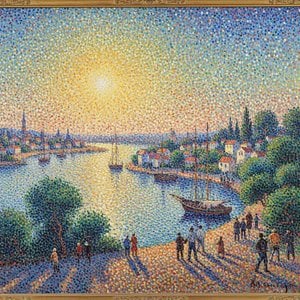
Seurat’s artistieke ontwikkeling was geen plotselinge sprong, maar een geleidelijke evolutie, aangedreven door onverzadigbare nieuwsgierigheid en rigoureuze experimenten. Zijn vroege werk vertoonde nog invloeden van de academische traditie, met tekenvaardigheid en respect voor gevestigde compositiewetten. Maar al snel begon hij deze conventies in twijfel te trekken, op zoek naar een meer systematische benadering van het schilderen. Hij verdiepte zich in de kleurenleer, bestudeerde de werken van wetenschappers zoals Michel Eugène Chevreul en Ogden Rood, die de optische effecten van naast elkaar geplaatste kleuren onderzochten. Deze studies vormden de basis voor zijn baanbrekende techniek: chromoluminarisme – de wetenschap van kleur – en de praktische toepassing ervan, Pointillisme. Het idee was simpel maar revolutionair: kleine, afzonderlijke puntjes van pure kleur op het doek aanbrengen, in de hoop dat het oog van de toeschouwer deze optisch zou vermengen en zo een levendig, stralend effect zou creëren. Dit ging verder dan alleen helderdere kleuren; het was een poging om te begrijpen hoe het menselijk visuele systeem licht en kleur waarneemt en die kennis te benutten om een dynamischer en boeiender schilderij te creëren. Seurat’s voorbereiding op zijn grootschalige composities was even indrukwekkend: met Conté krijt maakte hij gedetailleerde tekeningen op ruw papier, waarbij hij de plaatsing van elke punt zorgvuldig plande – een bijna wiskundig precisie in zijn artistieke proces.
Iconische Werken en Artistieke Visie: Een Blik op La Grande Jatte
Het hoogtepunt van Seurat’s onderzoek en experimenten is wellicht het best te zien in A Sunday Afternoon on the Island of La Grande Jatte (1884-1886), een monumentaal werk dat het begin markeerde van het Neo-Impressionisme. Dit iconische schilderij, waarop Parijzenaars genieten van een ontspannen middag aan de Seine, toont zijn pointillistische techniek in al haar glorie. De figuren, weergegeven als zorgvuldig geplaatste puntjes kleur, lijken te fonkelen en te vibreren met licht, waardoor een sfeer van serene stilte ontstaat. Alfalfa, Saint-Denis (1886-1887) toont zijn toepassing van de kleurenleer op een landschap, terwijl eerdere werken zoals Landscape at Saint-Ouen (1882-1883) zijn evoluerende stijl en groeiende interesse in het vastleggen van licht en sfeer onthullen. Zelfs afbeeldingen van het moderne Parijse leven, zoals The Eiffel Tower (1889), werden getransformeerd door zijn unieke techniek, waarbij een harmonieuze combinatie van industriële moderniteit en artistieke innovatie werd bereikt. Bathers at Asnières (1884), een ander belangrijk werk, verkende thema's als ontspanning en modern leven met zijn kenmerkende stijl, en voorspelde de meer verfijnde aanpak die te zien is in *La Grande Jatte*. Deze schilderijen waren niet zomaar representaties van scènes; ze waren zorgvuldig opgebouwde visuele experimenten, ontworpen om de mogelijkheden van kleur en waarneming te verkennen.
Een Duurzaam Erfgoed: Invloed en Historische Betekenis
Ondanks een tragisch kort leven – Seurat stierf op slechts 31-jarige leeftijd in 1891 – was zijn impact op de kunstwereld diepgaand en verreikend. Zijn werk daagde traditionele artistieke conventies uit, waardoor de weg werd geopend voor talloze daaropvolgende bewegingen. De nadruk op subjectieve expressie en de verkenning van nieuwe technieken resoneerde met kunstenaars die wilden breken met beperkingen. Seurat’s invloed is te zien in het werk van de Fauvisten, die felle kleuren en expressieve penseelstreken omarmden; de Cubisten, die vormen ontleed in geometrische vormen; en de Abstract Expressionisten, die emotionele intensiteit en spontane gebaren prioriteerden. Seurat’s wetenschappelijke benadering van het schilderen, hoewel aanvankelijk controversieel, verbredde uiteindelijk de definitie van artistieke mogelijkheden. Hij toonde aan dat kunst zowel intellectueel rigoureus als emotioneel ontroerend kon zijn – een synthese die kunstenaars tot op de dag van vandaag inspireert. Seurat’s nalatenschap strekt zich uit voorbij zijn technische innovaties; hij heeft een oeuvre achtergelaten dat de essentie van het moderne leven vastlegt met ongeëvenaarde precisie en schoonheid, waardoor hij zijn plaats als een ware pionier van de moderne kunst heeft verworven. Zijn schilderijen blijven getuigenissen van de kracht van observatie, experimenten en de onvermoeibare menselijke wens om de wereld om ons heen te begrijpen door de lens van artistieke expressie.



 Voorvertoning
 Bestel handgeschilderde reproductie
 Verstuur
 Delen
Delen
 Details bekijken

 Download
 Vergelijkbare items
 Röntgenonderzoek
 Diavoorstelling
 Stats
Stats


 Lees meer






































 De optie voor glas is alleen beschikbaar bij een formaat kleiner dan 110 cm.