Biografie van de kunstenaar
Early Life and the Call of the Frontier
George Catlin, geboren in Wilkes-Barre, Pennsylvania, in 1796, was een man die bestemd was om een brug te slaan tussen werelden – de gevestigde Amerikaanse samenleving van zijn tijd en de snel verdwijnende culturen van Native American stammen. Zijn jeugd werd diep ingeprent met verhalen over het achterland, verhalen verteld door zijn moeder, Polly Sutton, die zelf de angstaanjagende ervaring had meegemaakt om tijdens een inheemse aanval gevangen te worden genomen. Deze verhalen ontketenden binnen jonge Catlin een fascinatie voor het Westen, een land dat zowel gevaarlijk als diep romantisch werd ervaren. Hoewel hij aanvankelijk getraind was in de rechten, ontdekte hij zijn ware roeping niet in de rechtszaal, maar in het vastleggen van de essentie van een manier van leven die hij vreesde te zien verdwijnen. Hij verliet de juridische praktijk na slechts twee jaar, gedreven door een artistieke drang en een groeiend overtuiging dat de tradities en verschijningen van Native American stammen zorgvuldig gedocumenteerd moesten worden voor de eeuwigheid. Dit was niet alleen nieuwsgierigheid uit interesse, maar ook een gevoel van urgentie, een voorspelling dat de westwaartse expansie deze culturen onvermijdelijk zou veranderen. Zijn vroege werk omvatte gravures die scènes langs het Erie Kanaal toonden, aantoond zijn technische vaardigheid en aandacht voor detail – kwaliteiten die later, in zijn ambitieuzere projecten, een kenmerk zouden worden. Deze initiële inspanningen vormden een cruciale basis, honing zijn observatievermogen en vestigden zijn toewijding aan visueel vertellen.
Documenting a Vanishing World: The Indian Gallery
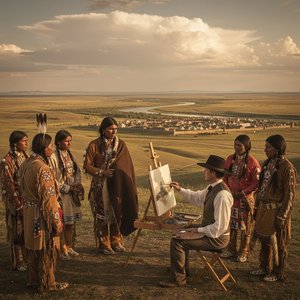
Catlin’s meest opmerkelijke prestatie was ongetwijfeld de creatie van “The Indian Gallery”, een buitengewone collectie van meer dan 500 schilderijen die bestemd waren om het leven en de cultuur van Native American stammen te portretteren. Beginnend in de jaren dertig, begon hij op vijf uitgebreide expedities naar het Amerikaanse Westen, waarbij hij langs de Missouri River reisde en zich vestigde in gebieden bewoond door stammen zoals de Mandan, Sioux, Blackfeet en Choctaw. Hij was niet alleen een waarnemer; Catlin verdiepte zich in deze gemeenschappen, participeerde aan ceremonies, getuige van dagelijks leven en sloot vriendschappen met stamhoofden. Zijn schilderijen zijn opmerkelijk voor hun realisme en levendige kleuren, die niet alleen fysieke portretten vastleggen, maar ook een gevoel van de waardigheid en complexiteit van Native American gebruiken. Sham Fight, Mandan Boys (1832-1833), bijvoorbeeld, toont een levendig tafereel van een speelse mock-slag tussen jonge Mandan krijgers, wat de atletiek en gemeenschapsgeest van de stam weergeeft. Evenzo geeft zijn portret van Mó-sho-la-túb-bee, He Who Puts Out and Kills, Chief of the Tribe een krachtige leider weer met een onwrikbare blik, die zowel autoriteit als wijsheid uitstraalt. Catlin’s stijl wordt gekenmerkt door minutieuze details, vaak met uitgebreide achtergronden die context bieden aan zijn onderwerpen – landschappen, tipis, ceremoniële objecten - allemaal weergegeven met een scherp oog voor nauwkeurigheid. Hij streefde ernaar Native American’s niet te presenteren als stereotypische ‘wilden’, maar als individuen met rijke culturele tradities en complexe sociale structuren, waardoor hij de heersende vooroordelen van zijn tijd uitdaagde.
Challenges and Recognition: A Life Dedicated to Preservation
Ondanks het artistieke belang en historische betekenis van The Indian Gallery, stond Catlin voor aanzienlijke uitdagingen in het verwerven van erkenning en financiële steun voor zijn werk. Hij had de collectie gepland om aan de Amerikaanse overheid te schenken, in de hoop dat deze gereserveerd zou worden als een nationaal erfgoed, maar zijn initiële voorstellen werden herhaaldelijk afgewezen. Ondanks dit bleef hij zijn galerie op tournee brengen, het tentoonstellen in Londen, Parijs en Berlijn tijdens de jaren 1840 en 1850, wat de fascinatie van grote publieken wekte. Hij publiceerde ook verschillende boeken die zijn reizen en waarnemingen beschreven, waaronder Manners, Customs, and Condition of the North American Indians (1841) en Last Rambles Amongst the Indian Tribes of the Rocky Mountains and the Andes (1868), wat zijn reputatie als een toonaangevende autoriteit op Native American cultuur verder versterkte. Toch bleven financiële moeilijkheden hem gedurende zijn hele leven achtervolgen. In een wanhoopspoging om een deel van zijn investering terug te verdienen, creëerde hij een kleinere “cartoon collectie” van meer dan 400 schilderijen, maar zelfs deze inspanning leverde geen substantiële opbrengsten op. Deze periode werd gekenmerkt door voortdurende strijd en een aangrijpend ironisch detail – een man die toegewijd was aan het bewaren van een cultuur die dreigde uit te sterven, vocht om zijn eigen overleving.
Legacy and Historical Significance
George Catlin overleed in 1872, nalatend een erfenis die tot op de dag van vandaag resoneert. Hoewel zijn werk niet volledig werd gewaardeerd tijdens zijn leven, is het sindsdien erkend als een onschatbare historische bron van Native American leven vóór de ingrijpende veranderingen die door westwaartse expansie werden gebracht. Zijn schilderijen bieden een blik op culturen die vaak verkeerd begrepen of genegeerd werden in de mainstream narratieven. Prairie Meadows Burning (1832), met zijn dramatische weergave van een gecontroleerde verbranding en begeleidende ruiters, vangt niet alleen het landschap maar ook de intieme relatie tussen Native American’s en hun omgeving. Pipestone Quarry, Coteau Des Prairies illustreert de spirituele betekenis van deze heilige plaats voor vele stammen. Catlin’s minutieuze documentatie biedt inzichten in tribal gebruiken, sociale structuren, religieuze overtuigingen en artistieke tradities - informatie die verloren zou zijn gegaan als hij niet met toewijding had gewerkt aan het bewaren ervan. Zijn werk dient als een krachtig bewijs van de noodzaak tot culturele bescherming en de behoefte om vooroordelen uit te dagen over inheemse volkeren. Hij was niet alleen een kunstenaar; hij was een chroniqueur, een getuige en een gepassioneerde pleitbezorger voor een verdwijnende manier van leven - een erfenis die tot op de dag van vandaag inspireert en ons begrip van Amerikaanse geschiedenis en cultuur vormt.



 Voorvertoning
 Bestel handgeschilderde reproductie
 Verstuur
 Delen
Delen
 Details bekijken

 Download
 Vergelijkbare items
 Röntgenonderzoek
 Diavoorstelling
 Statistieken


 Lees meer






































 De optie voor glas is alleen beschikbaar bij een formaat kleiner dan 110 cm.