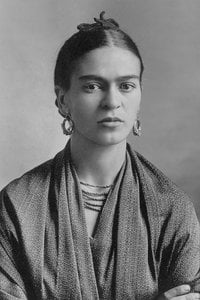
Kunstenaarsbiografie
Magdalena Carmen Frida Kahlo y Calderón: Een Leven Gesmeed in Pijn en Passie
Frida Kahlo, een naam die synoniem staat voor kracht, kwetsbaarheid en onverzettelijkheid, was meer dan slechts een kunstenaar; ze was een symbool van de menselijke geest. Geboren op 6 juli 1907 in Coyoacán, Mexico-Stad, werd haar leven gekenmerkt door fysiek lijden en emotionele ontberingen, ervaringen die onlosmakelijk verweven raakten met de intens persoonlijke en symbolische beelden waarvoor ze wereldwijd bewonderd wordt. Haar vader, Guillermo Kahlo, een Duitse-Mexicaanse fotograaf, stimuleerde haar intellectuele nieuwsgierigheid en artistieke aanleg vanaf jonge leeftijd. Echter, Frida’s jeugd werd getekend door ziekte; op zesjarige leeftijd contracteerde ze polio, wat resulteerde in een permanente loopplast en impact had op haar fysieke ontwikkeling. Deze vroege confrontatie met kwetsbaarheid zou een terugkerend thema worden in haar werk, haar perspectief vormend op het lichaam, pijn en veerkracht. Zelfs voordat het verwoestende ongeluk dat een groot deel van haar artistieke traject definieerde, had Frida een scherp bewustzijn van haar eigen fysicaliteit en de inherente breekbaarheid ervan.
Het Gebroken Lichaam, De Bloeiende Kunst
In 1925 veranderde een tragisch busongeluk Frida’s leven voorgoed. Ze liep catastrofale verwondingen op – breuken in haar wervelkolom, bekken en been, onder andere. Gedurende een lange periode van herstel, vaak bedlegerig en ingezwachteld, vond ze troost en expressie door het schilderen. Haar moeder zorgde voor een ezel die geschikt was om te gebruiken terwijl ze lag, waardoor de beperkingen van haar fysieke toestand werden getransformeerd in een ruimte voor artistieke verkenning. Het was tijdens deze periode dat Frida begon met zelfportretten, met een onwrikbare intensiteit. Onmogelijk om naar buiten te gaan, richtte ze haar blik naar binnen, documenteerde nauwgezet haar eigen beeld als middel om haar pijn, zowel fysiek als emotioneel, te begrijpen en te confronteren. Deze vroege werken waren niet louter representaties van haar uiterlijk; ze waren viscerale verkenningen van identiteit, kwetsbaarheid en de blijvende kracht van de menselijke geest. Het ongeluk was niet slechts een tragedie; het was een katalysator die haar artistieke potentieel ontgrendelde, haar dwong om haar eigen sterfelijkheid te confronteren en betekenis te vinden in lijden.
Een Stormachtige Verbinding en Artistiek Bloeien
Frida’s leven nam een nieuwe keerpunt in 1929 toen ze trouwde met de gerenommeerde Mexicaanse muurschilder Diego Rivera. Hun relatie was een gepassioneerd maar stormachtig avontuur, gekenmerkt door intense liefde, ontrouw, artistieke rivaliteit en periodes van scheiding en verzoening. Ondanks de emotionele turbulentie bleek Rivera een belangrijke invloed op Frida’s artistieke ontwikkeling. Hij moedigde haar unieke visie aan, bood constructieve kritiek terwijl hij de rauwe kracht en originaliteit van haar werk erkende. Onder zijn begeleiding, en door haar eigen onophoudelijke experimenten, begon Frida's stijl samen te komen, elementen van Mexicaanse volkskunst, realisme en surrealisme combinerend tot een kenmerkende visuele taal. Haar schilderijen werden steeds symbolischer, waarbij thema’s als identiteit, het menselijk lichaam, pijn, dood en de complexiteit van vrouwelijke ervaringen werden verkend. Ze vermeed het om haar eigen lijden af te beelden; in plaats daarvan omarmde ze het als een centraal thema in haar werk, persoonlijke trauma transformeerend in universele verklaringen over de menselijke conditie.
Symbolen van Lijden, Veerkracht en Identiteit
Frida Kahlo staat wellicht het meest bekend om haar zelfportretten, die gekenmerkt worden door hun onverbiddelijke eerlijkheid en symbolische diepte. Werken zoals De Twee Frida's (1939), een krachtige weergave van haar dubbele identiteit na haar scheiding van Rivera, laten haar vermogen zien om interne conflicten te externaliseren door middel van opvallende visuele metaforen. Zelfportret met Distelketting en Kolibri (1940) is doordrenkt van symboliek – de distels vertegenwoordigen pijn, de kolibri symbool voor hoop en veerkracht, en de zwarte kat een voortbode van pech. De Gebroken Kolom (1944), een hartverscheurend portret van haar fysisch lijden, toont Frida’s torso opengebroken om een instortende Ionische kolom in plaats van haar wervelkolom te onthullen, samengehouden door riemen en doorboord met spijkers. Zelfs Henry Ford Hospital (1932), een rauwe en diep persoonlijke weergave van haar miskraam, toont haar bereidheid om taboes met onwrikbare eerlijkheid te confronteren. Deze schilderijen zijn niet louter representaties van pijn; ze zijn daden van verzet, verklaringen van zelfstandigheid in het aangezicht van tegenspoed.
Een Blijvend Erfgoed
Frida Kahlo’s invloed reikt verder dan de wereld van kunst. Ze was een cultureel icoon die traditionele genderrollen en maatschappelijke verwachtingen uitdaagde door haar leven en werk. Haar omarming van de Mexicaanse cultuur en identiteit hielp het profiel ervan op internationaal niveau te verhogen, en haar onwrikbare weergave van pijn resoneerde met publieken over de hele wereld, waardoor ze een symbool werd van veerkracht en kracht. Ze werd een belangrijk figuur voor Chicanos in de Verenigde Staten, die hun culturele erfgoed en worstelingen vertegenwoordigde. Hoewel ze weigerde te worden gecategoriseerd als Surrealist, vertoont haar werk overeenkomsten met het onderzoek door deze beweging naar het onderbewuste en droomachtige beelden. Vandaag de dag wordt Frida Kahlo gevierd als een van de belangrijkste kunstenaars van de 20e eeuw, wiens nalatenschap generaties blijft inspireren om hun identiteit te omarmen, tegenspoed te confronteren en zichzelf authentiek uit te drukken. Haar kunst blijft een getuigenis van de blijvende kracht van de menselijke geest om schoonheid en betekenis te vinden, zelfs in de donkerste tijden.



 Voorvertoning
 Schakel over naar print
 Verstuur
 Delen
Delen
 Details bekijken

 Download
 Vergelijkbare items
 Röntgenonderzoek
 Diavoorstelling
 Statistieken

 Lees meer