Voorvertoning Bekijk in AR Bestel handgeschilderde reproductie Schakel over naar digitale afbeeldingen Verstuur
Details bekijken Gids Toevoegen aan favorieten Download Vergelijkbare items Röntgenonderzoek Diavoorstelling Q&A Statistieken

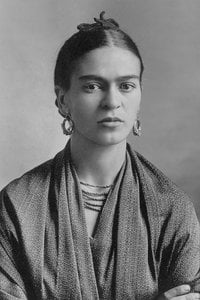
Self-Portrait 4

A surreal self-portrait by Frida Kahlo featuring a woman with a pencil mustache and multiple clocks, capturing the artist’s iconic style and poignant exploration of identity and pain. Discover this captivating artwork and bring its unique beauty into your space.

Ontdek Frida Kahlo (1907-1954): iconische zelfportretten, surrealisme & Mexicaans erfgoed. Thema's van identiteit, pijn, veerkracht & haar feministisch legacy.

Giclée / Kunstafdrukken

Giclée- of canvasafdruk van museumkwaliteit met een snelle productie en flexibele afwerkingsmogelijkheden. ( Bestel handgeschilderde reproductie Schakel over naar digitale afbeeldingen)

Corner sample of the P118B picture frame: gegoten polystyreen, 5 cm wide and 3 cm thick
P118B €10
Corner sample of the P118H picture frame: gegoten polystyreen, 5 cm wide and 3 cm thick
P118H €10
Corner sample of the P118W picture frame: gegoten polystyreen, 5 cm wide and 3 cm thick
P118W €10
Corner sample of the P438Z picture frame: gegoten polystyreen, 5.5 cm wide and 3.5 cm thick
P438Z €10
Corner sample of the P508JH picture frame: gegoten polystyreen, 7 cm wide and 3.5 cm thick
P508JH €12
Corner sample of the P508YH picture frame: gegoten polystyreen, 7 cm wide and 3.5 cm thick
P508YH €12
Corner sample of the P805H picture frame: gegoten polystyreen, 5 cm wide and 3.5 cm thick
P805H €10
Corner sample of the P805Z picture frame: gegoten polystyreen, 5 cm wide and 3.5 cm thick
P805Z €10
Corner sample of the P919BZ picture frame: gegoten polystyreen, 7 cm wide and 3.5 cm thick
P919BZ €10
Corner sample of the P919G picture frame: gegoten polystyreen, 7 cm wide and 3.5 cm thick
P919G €10
Corner sample of the P919XJ picture frame: gegoten polystyreen, 7 cm wide and 3.5 cm thick
P919XJ €10
Corner sample of the P959ZH picture frame: gegoten polystyreen, 5 cm wide and 3 cm thick
P959ZH €10
Corner sample of the P968JZ picture frame: gegoten polystyreen, 6 cm wide and 4 cm thick
P968JZ €12
Corner sample of the W106C picture frame: massief hout, 5 cm wide and 3 cm thick
W106C €8
Corner sample of the W218G picture frame: massief hout, 5 cm wide and 3 cm thick
W218G €10
Corner sample of the W218JH picture frame: massief hout, 5 cm wide and 3 cm thick
W218JH €8
Corner sample of the W218Y picture frame: massief hout, 5 cm wide and 3 cm thick
W218Y €10
Corner sample of the W307PJ picture frame: massief hout, 6 cm wide and 3 cm thick
W307PJ €10
Corner sample of the W316G picture frame: massief hout, 6 cm wide and 3 cm thick
W316G €10
Corner sample of the W316PJ picture frame: massief hout, 6 cm wide and 3 cm thick
W316PJ €8
Corner sample of the W316Y picture frame: massief hout, 6 cm wide and 3 cm thick
W316Y €10
Corner sample of the W398PJ picture frame: massief hout, 5 cm wide and 3 cm thick
W398PJ €8
Corner sample of the W4111J picture frame: massief hout, 6.5 cm wide and 3.5 cm thick
W4111J €10
Corner sample of the W500HY picture frame: massief hout, 7 cm wide and 5 cm thick
W500HY €15
Corner sample of the W500JH picture frame: massief hout, 7 cm wide and 5 cm thick
W500JH €15
Corner sample of the W692G picture frame: massief hout, 8 cm wide and 4 cm thick
W692G €12
Corner sample of the W849H picture frame: massief hout, 5 cm wide and 3 cm thick
W849H €8
Corner sample of the W940BG picture frame: massief hout, 7.5 cm wide and 4.5 cm thick
W940BG €15
Corner sample of the W953PJ picture frame: massief hout, 6 cm wide and 3.5 cm thick
W953PJ €8

Standaardformaat
op maat gemaakt
CM
INCH

Kies uit onze vooraf ingestelde maten die overeenkomen met de originele verhoudingen van het kunstwerk.

breedte
hoogte

Voer de gewenste breedte en hoogte in, passend bij uw lijst of muur. Een afdruk kan alleen worden ingekort en nooit groter worden gemaakt dan het origineel; een formaat met andere verhoudingen zal daarom een deel van de afbeelding verliezen. Wij sturen u een digitaal mockup ter goedkeuring voordat we tot drukwerk overgaan. De afbeelding op deze pagina toont niet de werkelijke uitsnede — dit is alleen te zien op het mockup.

Wereldwijde levering () binnen 2 weken in plaats van de standaard 4/5 weken. (30 oktober)

Gratis wereldwijde expressverzending
Hoogwaardig linnen canvas
Volledige verzendverzekering
Garantie op terugbetaling van invoerrechten
Garantie op exacte kleurweergave
Retourbeleid van 100 dagen (alleen bij defecten)
100% Geld-terug-garantie
Korting bij meerdere afnames

Totaalprijs

€ 61

Self-Portrait 4

Giclée / Kunstafdrukken

Afmetingen reproductie

-

Eindtotaal

€ 61

Snelle feiten

  • Year: 1954
  • Movement: Surrealism
  • Medium: Painting
  • Influences: Mexican Folk Art
  • Subject or theme: Identity, Pain

A Surreal Reflection: Unpacking Frida Kahlo’s “Self-Portrait 4”

Frida Kahlo's "Self-Portrait 4," painted in an unknown date, is a powerfully evocative work that plunges the viewer into the intensely personal and often unsettling world of one of art history’s most compelling figures. This particular self-portrait transcends mere representation; it’s a meticulously constructed tableau of pain, resilience, and a profound engagement with time itself. The subject, Frida herself, sits poised before us in a simple white dress, her gaze direct and unwavering – a characteristic feature of her oeuvre that demands an immediate connection.

  • The Iconography of Time: The presence of multiple clocks is undeniably the most striking element of the painting. Positioned strategically around Frida—one prominently on her right, another subtly in the upper left corner, and a smaller one near the bottom right – they immediately evoke themes of mortality, memory, and the relentless passage of time. This preoccupation with temporality was deeply rooted in Kahlo’s own life experiences, marked by chronic illness, surgeries, and periods of profound isolation. The clocks aren't simply decorative; they are potent symbols of her struggle to control her physical and emotional state within the constraints of a life often defined by suffering.
  • Surrealism and Personal Narrative: Kahlo’s work is frequently categorized as surrealist, though she herself resisted this label. Instead, it's more accurate to describe it as intensely personal symbolism. The inclusion of an airplane in the upper portion of the canvas adds another layer of complexity, suggesting a yearning for escape, a desire to transcend earthly limitations, or perhaps a commentary on the rapidly changing world around her. This juxtaposition of domesticity (the clock) with the expansive possibilities of flight creates a dynamic tension that is central to Kahlo’s artistic vision.

Technique and Materials: A Window into the Artist's Process

Executed in Kahlo’s signature style, “Self-Portrait 4” likely employs oil paints on canvas – a medium she favored throughout her career. Her meticulous brushwork is evident in the detailed rendering of Frida’s features, particularly her expressive eyes and the subtle textures of her dress. The use of color is restrained, dominated by muted tones that contribute to the painting's melancholic mood. Kahlo’s technique was characterized by a deliberate layering of paint, creating a rich impasto effect that adds depth and texture to the surface. This tactile quality invites close observation and encourages viewers to engage with the artwork on a physical level.

  • Mirroring Pain: The pencil mustache, a recurring motif in Kahlo’s self-portraits, is often interpreted as a symbol of her masculine side, her strength, or even a defiant gesture against societal expectations.
  • Precision and Detail: Kahlo's attention to detail—from the folds of her dress to the reflection in the clocks—demonstrates her commitment to capturing not just an image but also a feeling, a state of being.

Historical Context and Frida’s Legacy

"Self-Portrait 4" was created during a period of intense personal and artistic growth for Kahlo. Following her devastating bus accident in 1925, which left her with lifelong physical limitations and emotional trauma, she began to channel her pain and experiences into her art. Her work became a powerful form of self-expression, allowing her to confront her suffering head-on and to reclaim agency over her own narrative. Kahlo’s unflinching honesty and vulnerability have resonated deeply with audiences for decades, establishing her as an icon of female empowerment and artistic innovation.

  • A Voice for the Marginalized: Kahlo's work challenged conventional notions of beauty and femininity, offering a raw and authentic portrayal of a woman’s life.
  • Enduring Influence: Her influence can be seen in contemporary artists who continue to explore themes of identity, trauma, and resilience through their own creative practices.

Emotional Impact and Artistic Value

"Self-Portrait 4" is more than just a beautiful painting; it’s a profound meditation on the human condition. The artwork's unsettling yet captivating atmosphere invites viewers to contemplate questions of mortality, identity, and the nature of suffering. Its enduring power lies in its ability to connect with our deepest emotions and to remind us of the importance of embracing vulnerability and finding strength in adversity. This hand-painted reproduction offers a unique opportunity to own a piece of art history – a tangible connection to one of the 20th century’s most significant artistic voices.

Veelgestelde vragen

Hoe kan ik een print van "Self-Portrait 4" door Frida Kahlo verkrijgen?

Om een print van "Self-Portrait 4" door Frida Kahlo te bestellen, kunt u terecht op de Fine Art Print pagina: een fine art print op katoenen canvas of archiefwaardig canvaspapier.

Kan ik "Self-Portrait 4" door Frida Kahlo bekijken voordat ik bestel?

Op de Voorvertoning-pagina van "Self-Portrait 4" kunt u het kunstwerk bekijken voordat u bestelt.

Is "Self-Portrait 4" door Frida Kahlo eerder licht of donker van kleur?

De waargenomen helderheid van "Self-Portrait 4" door Frida Kahlo is bright. Deze kan worden afgestemd op de lichtinval in de beoogde ruimte.


Biografie kunstenaar

Magdalena Carmen Frida Kahlo y Calderón: Een Leven Gesmeed in Pijn en Passie

Frida Kahlo, een naam die synoniem staat voor kracht, kwetsbaarheid en onverzettelijkheid, was meer dan slechts een kunstenaar; ze was een symbool van de menselijke geest. Geboren op 6 juli 1907 in Coyoacán, Mexico-Stad, werd haar leven gekenmerkt door fysiek lijden en emotionele ontberingen, ervaringen die onlosmakelijk verweven raakten met de intens persoonlijke en symbolische beelden waarvoor ze wereldwijd bewonderd wordt. Haar vader, Guillermo Kahlo, een Duitse-Mexicaanse fotograaf, stimuleerde haar intellectuele nieuwsgierigheid en artistieke aanleg vanaf jonge leeftijd. Echter, Frida’s jeugd werd getekend door ziekte; op zesjarige leeftijd contracteerde ze polio, wat resulteerde in een permanente loopplast en impact had op haar fysieke ontwikkeling. Deze vroege confrontatie met kwetsbaarheid zou een terugkerend thema worden in haar werk, haar perspectief vormend op het lichaam, pijn en veerkracht. Zelfs voordat het verwoestende ongeluk dat een groot deel van haar artistieke traject definieerde, had Frida een scherp bewustzijn van haar eigen fysicaliteit en de inherente breekbaarheid ervan.

Het Gebroken Lichaam, De Bloeiende Kunst

In 1925 veranderde een tragisch busongeluk Frida’s leven voorgoed. Ze liep catastrofale verwondingen op – breuken in haar wervelkolom, bekken en been, onder andere. Gedurende een lange periode van herstel, vaak bedlegerig en ingezwachteld, vond ze troost en expressie door het schilderen. Haar moeder zorgde voor een ezel die geschikt was om te gebruiken terwijl ze lag, waardoor de beperkingen van haar fysieke toestand werden getransformeerd in een ruimte voor artistieke verkenning. Het was tijdens deze periode dat Frida begon met zelfportretten, met een onwrikbare intensiteit. Onmogelijk om naar buiten te gaan, richtte ze haar blik naar binnen, documenteerde nauwgezet haar eigen beeld als middel om haar pijn, zowel fysiek als emotioneel, te begrijpen en te confronteren. Deze vroege werken waren niet louter representaties van haar uiterlijk; ze waren viscerale verkenningen van identiteit, kwetsbaarheid en de blijvende kracht van de menselijke geest. Het ongeluk was niet slechts een tragedie; het was een katalysator die haar artistieke potentieel ontgrendelde, haar dwong om haar eigen sterfelijkheid te confronteren en betekenis te vinden in lijden.

Een Stormachtige Verbinding en Artistiek Bloeien

Frida’s leven nam een nieuwe keerpunt in 1929 toen ze trouwde met de gerenommeerde Mexicaanse muurschilder Diego Rivera. Hun relatie was een gepassioneerd maar stormachtig avontuur, gekenmerkt door intense liefde, ontrouw, artistieke rivaliteit en periodes van scheiding en verzoening. Ondanks de emotionele turbulentie bleek Rivera een belangrijke invloed op Frida’s artistieke ontwikkeling. Hij moedigde haar unieke visie aan, bood constructieve kritiek terwijl hij de rauwe kracht en originaliteit van haar werk erkende. Onder zijn begeleiding, en door haar eigen onophoudelijke experimenten, begon Frida's stijl samen te komen, elementen van Mexicaanse volkskunst, realisme en surrealisme combinerend tot een kenmerkende visuele taal. Haar schilderijen werden steeds symbolischer, waarbij thema’s als identiteit, het menselijk lichaam, pijn, dood en de complexiteit van vrouwelijke ervaringen werden verkend. Ze vermeed het om haar eigen lijden af te beelden; in plaats daarvan omarmde ze het als een centraal thema in haar werk, persoonlijke trauma transformeerend in universele verklaringen over de menselijke conditie.

Symbolen van Lijden, Veerkracht en Identiteit

Frida Kahlo staat wellicht het meest bekend om haar zelfportretten, die gekenmerkt worden door hun onverbiddelijke eerlijkheid en symbolische diepte. Werken zoals De Twee Frida's (1939), een krachtige weergave van haar dubbele identiteit na haar scheiding van Rivera, laten haar vermogen zien om interne conflicten te externaliseren door middel van opvallende visuele metaforen. Zelfportret met Distelketting en Kolibri (1940) is doordrenkt van symboliek – de distels vertegenwoordigen pijn, de kolibri symbool voor hoop en veerkracht, en de zwarte kat een voortbode van pech. De Gebroken Kolom (1944), een hartverscheurend portret van haar fysisch lijden, toont Frida’s torso opengebroken om een instortende Ionische kolom in plaats van haar wervelkolom te onthullen, samengehouden door riemen en doorboord met spijkers. Zelfs Henry Ford Hospital (1932), een rauwe en diep persoonlijke weergave van haar miskraam, toont haar bereidheid om taboes met onwrikbare eerlijkheid te confronteren. Deze schilderijen zijn niet louter representaties van pijn; ze zijn daden van verzet, verklaringen van zelfstandigheid in het aangezicht van tegenspoed.

Een Blijvend Erfgoed

Frida Kahlo’s invloed reikt verder dan de wereld van kunst. Ze was een cultureel icoon die traditionele genderrollen en maatschappelijke verwachtingen uitdaagde door haar leven en werk. Haar omarming van de Mexicaanse cultuur en identiteit hielp het profiel ervan op internationaal niveau te verhogen, en haar onwrikbare weergave van pijn resoneerde met publieken over de hele wereld, waardoor ze een symbool werd van veerkracht en kracht. Ze werd een belangrijk figuur voor Chicanos in de Verenigde Staten, die hun culturele erfgoed en worstelingen vertegenwoordigde. Hoewel ze weigerde te worden gecategoriseerd als Surrealist, vertoont haar werk overeenkomsten met het onderzoek door deze beweging naar het onderbewuste en droomachtige beelden. Vandaag de dag wordt Frida Kahlo gevierd als een van de belangrijkste kunstenaars van de 20e eeuw, wiens nalatenschap generaties blijft inspireren om hun identiteit te omarmen, tegenspoed te confronteren en zichzelf authentiek uit te drukken. Haar kunst blijft een getuigenis van de blijvende kracht van de menselijke geest om schoonheid en betekenis te vinden, zelfs in de donkerste tijden.

Frida Kahlo

Frida Kahlo

1907 - 1954 , Mexico

Belangrijkste feiten

  • Artistic Movement Or Style: Surrealisme, volkskunst
  • Artists Or Movements Influenced By This Artist:
    • Chicano kunst
    • Feministische kunstenaars
  • Artists Who Influenced This Artist:
    • Mexicaanse volkskunstenaars
    • Europese renaissance schilders
  • Date Of Birth: 6 juli 1907
  • Date Of Death: 1954
  • Full Name: Magdalena Carmen Frida Kahlo y Calderón
  • Nationality: Mexicaans
  • Notable Artworks:
    • De twee Frida's
    • Zelfportret met doornenkraag
    • De gebroken kolom
    • Henry Ford ziekenhuis
  • Place Of Birth: Coyoacán, Mexico
Ontdek kunstwerken georganiseerd op thema, stijl en kenmerk.