

Giclée- of canvasafdruk van museumkwaliteit met een snelle productie en flexibele afwerkingsmogelijkheden. ( Bestel handgeschilderde reproductie Schakel over naar digitale afbeeldingen)





























Kies uit onze vooraf ingestelde maten die overeenkomen met de originele verhoudingen van het kunstwerk.

Voer de gewenste breedte en hoogte in, passend bij uw lijst of muur. Een afdruk kan alleen worden ingekort en nooit groter worden gemaakt dan het origineel; een formaat met andere verhoudingen zal daarom een deel van de afbeelding verliezen. Wij sturen u een digitaal mockup ter goedkeuring voordat we tot drukwerk overgaan. De afbeelding op deze pagina toont niet de werkelijke uitsnede — dit is alleen te zien op het mockup.
Wereldwijde levering () binnen 2 weken in plaats van de standaard 4/5 weken. (20 november)
Lost
Afmetingen reproductie
Frederick McCubbin's "Lost," painted in 1886, isn’t merely a depiction of the Australian outback; it’s a profound meditation on vulnerability, isolation, and the enduring pull of the wilderness. The painting immediately arrests the viewer with its muted palette – ochre yellows, dusty browns, and slate greys dominate, creating an atmosphere thick with both heat and impending storm. At the heart of the composition stands a young girl, her posture suggesting a hesitant step forward, a tentative exploration into a landscape that simultaneously offers beauty and threatens to swallow her whole. She’s not actively lost in the traditional sense; rather, she embodies a state of being adrift, a poignant symbol of innocence confronting the vastness and indifference of nature.
McCubbin's style is firmly rooted in the Heidelberg School movement, yet “Lost” transcends simple landscape painting. He employs a loose, expressive brushstroke – a hallmark of Impressionism – to capture not just the visual appearance of the scene but also its emotional resonance. The trees, rendered with a subtle blend of greens and browns, seem to lean inwards, creating a sense of enclosure and unease. The distant horizon is deliberately blurred, emphasizing the girl’s isolation and the overwhelming scale of the Australian interior. Notice how McCubbin masterfully uses light; it's diffused and melancholic, casting long shadows that heighten the painting’s somber mood.
The genesis of “Lost” is inextricably linked to a real-life tragedy: the disappearance of Clara Crosbie, a twelve-year-old girl, in the Yarra Valley in 1885. Local newspapers reported on her ordeal extensively, and McCubbin was deeply affected by the story. While the precise inspiration remains debated – some believe he directly painted from memory of the event, others suggest it sparked a broader contemplation of childhood vulnerability within the harsh Australian landscape – the painting undeniably carries the weight of this local legend. The girl’s attire—a simple dress and shawl—and her posture evoke a sense of quiet desperation, mirroring the accounts of Clara's ordeal.
Beyond the specific story, “Lost” taps into broader Australian folklore surrounding the bush – tales of lost children, dangerous wildlife, and the unforgiving nature of the land. It’s a narrative deeply embedded in the national psyche, reflecting anxieties about settlement, survival, and the relationship between humanity and the natural world. The painting speaks to a fundamental tension: the allure of the outback's beauty juxtaposed with its inherent dangers.
The symbolism within “Lost” is layered and subtly powerful. The girl herself represents innocence, vulnerability, and perhaps even a lost connection to childhood. Her solitary figure against the vast landscape underscores the insignificance of human existence in the face of nature’s immensity. The trees, traditionally symbols of strength and resilience, here seem almost menacing, guarding secrets and offering no comfort. Even the distant, hazy horizon suggests an uncertain future, a sense of being perpetually adrift.
McCubbin's masterful use of color and composition contributes significantly to the painting’s emotional impact. The muted tones evoke feelings of melancholy, loneliness, and quiet contemplation. The lack of vibrant colors reinforces the sense of isolation and vulnerability. “Lost” isn’t a visually dramatic work; its power lies in its understated portrayal of human emotion within a stark and unforgiving landscape. It invites viewers to contemplate their own relationship with nature, their place in the world, and the enduring mysteries of the Australian bush.
Reproductions of “Lost” capture the essence of McCubbin’s original vision while retaining a remarkable level of detail. When selecting a high-quality reproduction, consider the medium—canvas prints offer the most authentic representation of the painting's texture and color palette. The scale is also important; larger reproductions allow for a more immersive experience, drawing viewers into the painting’s evocative atmosphere. “Lost” would be an exceptional addition to any interior space, serving as a poignant reminder of Australia’s rich artistic heritage and the enduring beauty—and inherent challenges—of its landscape.
De kleuren van "Lost" vormen een Earthy palet. Deze classificatie beschrijft de dominante kleurfamilies.
De kleuren van "Lost" door Frederick McCubbin hebben een Balanced Soft verzadiging. Verzadiging beschrijft hoe levendig of gedempt de kleuren zijn.
Het originele "Lost" door Frederick McCubbin wordt bewaard in National Gallery of Victoria, Melbourne, Australië. Een reproductie maakt het mogelijk om het werk thuis tentoon te stellen.


1855 - 1917 , Australië

Master the art of curation with our expert guide to collecting high-end stylistic reproductions. Discover how hand-painted oil masterpieces and bespoke commissions bring historical prestige and unparalleled texture to luxury interiors and professional design projects.
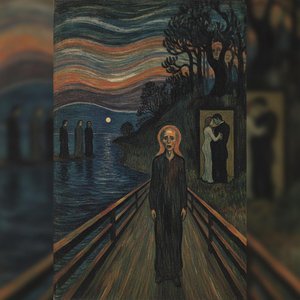
Journey through the raw emotion of Expressionism with our curated guide to Edvard Munch's top 25 masterpieces. Explore the stories behind his most iconic works and find museum-quality art reproductions for your collection. Discover all masterpieces on WahooArt.com.

Master the secrets of chiaroscuro, sfumato, and symbolism through expert analysis. Explore the profound power of light and shadow today.

Explore the profound emotional depth of German Romanticism and Caspar David Friedrich. Discover the sublime power of the soul today.
 Voorvertoning
 Verstuur
 Delen
Delen
 Details bekijken
 Gids
Gids

 Download
 Vergelijkbare items
 Röntgenonderzoek
 Diavoorstelling
 Vraag & antwoord
 Statistieken


 Lees meer









 De optie voor glas is alleen beschikbaar bij een formaat kleiner dan 110 cm.


