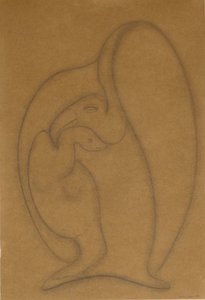
Frederick John Mulhaupt: A Master of Cape Ann’s Light
Frederick John Mulhaupt (1871-1938) stands as a pivotal figure in the late 19th and early 20th century American art scene, particularly renowned for his evocative depictions of the coastal landscapes and working harbors of Gloucester, Massachusetts. More than simply a painter of picturesque views, Mulhaupt captured the very essence of Cape Ann – its rugged beauty, the rhythms of maritime life, and the shifting light that defined its character. His work represents a significant contribution to the burgeoning American Impressionist movement, blending elements of Luminism with a distinctly regional sensibility.
Born in Rockport, Missouri, in 1871, Mulhaupt’s early life was shaped by the vastness and solitude of the Midwest. He began his artistic journey as a sign painter, an experience that instilled in him a keen eye for detail and color. This practical training provided a solid foundation before he pursued formal studies at the Kansas City School of Design and later at the prestigious Art Institute of Chicago. It was during his time in Chicago that Mulhaupt honed his skills and began to develop his unique style, influenced by the Impressionist masters then gaining prominence on the European continent.
The Influence of Paris and a Return to America
Seeking further artistic development, Mulhaupt embarked on a transformative journey to Europe in 1904. He spent several years studying in Paris, immersing himself in the vibrant art scene and absorbing the techniques of Impressionism. This period proved crucial in shaping his approach to painting, encouraging him to prioritize capturing fleeting moments of light and atmosphere over precise representation. Upon returning to America, Mulhaupt established a studio in New York City, maintaining connections with the artistic community and exhibiting his work at prominent venues like the National Academy of Design.
However, it was the allure of Cape Ann that ultimately drew him back to the United States. Beginning around 1907, Mulhaupt spent each summer residing in Gloucester, a small fishing town on the North Shore of Massachusetts. This period proved to be the most prolific and influential of his career. The dramatic coastline, the bustling harbor, and the weathered faces of the fishermen provided an endless source of inspiration. He meticulously documented these scenes, employing a distinctive style characterized by loose brushstrokes, vibrant colors, and a masterful understanding of light and shadow.
A Distinctive Style: Luminism and Regional Identity
Mulhaupt’s paintings are often categorized as Impressionist, yet they possess qualities that set them apart. His work is deeply rooted in Luminism, an approach championed by artists like John Frederick Kensett, which emphasizes the effects of light on surfaces. However, Mulhaupt infused this technique with a distinctly regional identity, capturing the unique atmosphere and character of Cape Ann. He wasn’t simply painting pretty pictures; he was conveying a sense of place – the smell of salt air, the sounds of the harbor, and the spirit of the working community.
His compositions frequently feature boats, fishermen, and glimpses of the surrounding landscape, often bathed in the golden light of sunrise or sunset. Mulhaupt’s brushwork is loose and expressive, creating a sense of movement and immediacy. He skillfully rendered the textures of weathered wood, rough seas, and worn clothing, imbuing his paintings with a remarkable level of detail and realism. Despite this attention to detail, his work never feels overly labored; rather, it possesses an effortless quality that belies the artist’s considerable skill.
Legacy and Recognition
Frederick John Mulhaupt's contribution to American art is significant, particularly within the context of regionalist painting. He became a respected figure in Gloucester’s thriving artistic community, establishing the North Shore Art Artists Association and mentoring numerous young artists. His paintings are now held in prestigious collections across the United States, including the Fogg Museum at Harvard University, the Indianapolis Museum of Art, and the Smithsonian American Art Museum. Mulhaupt's legacy endures as a testament to his ability to capture the beauty and spirit of Cape Ann – a place that continues to inspire artists today.
Mulhaupt died in Gloucester in 1938, leaving behind a body of work that offers a captivating glimpse into a bygone era. His paintings serve as a poignant reminder of the enduring power of art to capture not only visual beauty but also the essence of place and time.



 Bekijk op ware grootte
 Schakel over naar print
 Verstuur
 Delen
Delen
 Details bekijken
 Gids voor studentenkunstwerken

 Download
 Vergelijkbare items
 Röntgenonderzoek
 Diavoorstelling
 Statistieken
 Lees meer