VoorvertoningVoorvertoning Bekijk in ARBekijk in AR Bestel handgeschilderde reproductie Bestel handgeschilderde reproductieSchakel over naar digitale afbeelding Schakel over naar digitale afbeelding VerstuurVerstuur
Details bekijkenDetails bekijken Toevoegen aan favorieten Toevoegen aan favorieten DownloadDownload Vergelijkbare itemsVergelijkbare items RöntgenonderzoekRöntgenonderzoek DiavoorstellingDiavoorstelling StatistiekenStatistieken

Florinda

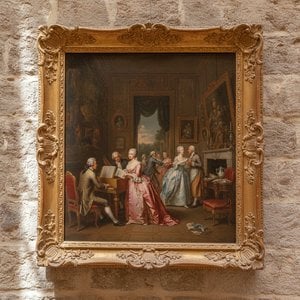
Verken 'Florinda' van Winterhalter – een adembenemende schilderij uit 1853 van aristocratische figuren in de natuur. Bewonder het rijke detail en historische elegantie. Een opmerkelijk kunstwerk voor uw interieur.

Franz Xaver Winterhalter (1805-1873): De hofschilder van koninklijke families! Bekend om zijn elegante portretten van vorsten en aristocratie uit de 19e eeuw. Een meester in het vastleggen van grandeur en persoonlijkheid.

Giclée / Kunstafdrukken

Giclée- of canvasafdruk van museumkwaliteit met een snelle productie en flexibele afwerkingsmogelijkheden. (Bestel handgeschilderde reproductie Bestel handgeschilderde reproductieSchakel over naar digitale afbeelding Schakel over naar digitale afbeelding)

P118B $10
P118H $10
P118W $10
P438Z $10
P508JH $12
P508YH $12
P805H $10
P805Z $10
P919BZ $10
P919G $10
P919XJ $10
P959ZH $10
P968JZ $12
W106C $8
W218G $10
W218JH $8
W218Y $10
W307PJ $10
W316G $10
W316PJ $8
W316Y $10
W398PJ $8
W4111J $10
W500HY $15
W500JH $15
W692G $12
W849H $8
W940BG $15
W953PJ $8

Standaardformaat
op maat gemaakt
CM
INCH

Kies uit onze vooraf ingestelde maten die overeenkomen met de originele verhoudingen van het kunstwerk.

breedte
hoogte

U kunt uw eigen afmetingen opgeven om in een specifieke lijst of ruimte te passen. Als de door u gekozen maat niet overeenkomt met de proporties van het originele kunstwerk, zullen wij de afbeelding bijsnijden of uitbreiden met een gespiegelde of effen rand. Een digitaal mockup wordt ter goedkeuring naar u verzonden voordat de productie begint.
Houd er rekening mee dat de preview op het scherm de werkelijke bijsneding of uitbreiding niet weergeeft. Alleen de mockup toont de uiteindelijke compositie nauwkeurig.
Hoewel aangepaste maten beschikbaar zijn, raden wij aan een afmeting uit de vooraf bepaalde lijst te kiezen om de originele proporties te behouden.

Wereldwijde levering () binnen 2 weken in plaats van de standaard 4/5 weken. (11 september)

why_choose_icon
Gratis wereldwijde expressverzending
why_choose_icon
Hoogwaardig linnen canvas
why_choose_icon
Volledige verzendverzekering
why_choose_icon
Garantie op terugbetaling van invoerrechten
why_choose_icon
Garantie op exacte kleurweergave
why_choose_icon
Retourbeleid van 100 dagen (alleen bij defecten)
why_choose_icon
100% Geld-terug-garantie
why_choose_icon
Korting bij meerdere afnames

Totaalprijs

$ 69

reproduction

Florinda

Giclée / Kunstafdrukken

Afmetingen reproductie

-

Eindtotaal

$ 69

Snelle feiten

  • year: 1853
  • artist: Franz Xaver Winterhalter
  • dimensions: {'height': 178, 'unit': 'cm', 'width': 246}
  • subject: Group of people in a natural setting, possibly engaged in a ritual or celebration
  • title: Florinda
  • notable_elements:
    • Dynamic poses and interactions
    • Warm and earthy color palette
    • Dramatic use of light and shadow

Kunstquiz

Er is slechts één goed antwoord op elke vraag.

Vraag 1:
Who is the artist of the painting 'Florinda'?
Vraag 2:
In what year was 'Florinda' created?
Vraag 3:
What is the primary subject matter of 'Florinda'?
Vraag 4:
Which artistic style is 'Florinda' most associated with?

Een Verfijnde Ontmoeting in de Natuur: Florinda van Franz Xaver Winterhalter

Franz Xaver Winterhalter’s “Florinda” (1853) is meer dan een schilderij; het is een doorgang naar een wereld van elegante ontspanning en gedeelde vreugde. Deze adembenemende olieverf, afkomstig uit de gouden eeuw van de Europese kunst, toont een groep vrouwen die zich in harmonie bevinden binnen een weelderige natuurlijke omgeving. Winterhalter, een meester in het vastleggen van aristocratische grandeur, heeft hier een moment van pure vreugde gevangen, waarin de interacties tussen de figuren een gevoel van gemeenschap en verbondenheid oproepen.

De compositie van “Florinda” is een bewijs van Winterhalter’s artistieke oog voor detail. Een centrale groep vrouwen, gerangschikt in een losse cirkel, vormt het hart van het schilderij. De kunstenaar gebruikt vloeiende lijnen en organische vormen om een gevoel van beweging en vitaliteit te creëren. De zorgvuldige balans tussen licht en schaduw voegt diepte toe aan de scène, waardoor de kijker wordt uitgenodigd om in dit levendige tafereel te verdwijnen. De rijke texturen – van de zachte huid van de vrouwen tot de soepel vallende stof van hun kleding – getuigen van Winterhalter’s technische vaardigheid en zijn aandacht voor elk detail.

Een Palet van Warmte en Aarde

De kleurenpalet van “Florinda” is gedomineerd door warme, aardse tinten: bruin, goud en groen. Deze kleuren worden verrijkt door zachte nuances die een harmonieuze balans creëren. Winterhalter’s gebruik van licht en schaduw versterkt de driedimensionaliteit van de figuren en het landschap, waardoor de kijker wordt meegenomen in de sfeer van het schilderij. De warme kleuren roepen associaties op met natuurlijke schoonheid en een gevoel van welbehagen.

Historische Betekenis en Koninklijke Connecties

Franz Xaver Winterhalter was een van de meest gevraagde portretkunstenaars van zijn tijd, vooral bekend om zijn werk voor aristocraten en royalty. “Florinda” toont niet alleen zijn technische bekwaamheid, maar ook zijn vermogen om realisme te combineren met een romantische sensatie. De kunstenaar was een meester in het creëren van indrukken die zowel eerbiedwaardig als flatterend waren, waardoor hij een trouwe clientèle kon verwerven bij de elite. Het schilderij is een prachtig voorbeeld van deze vaardigheid – een ode aan de schoonheid en elegantie van de 19e-eeuwse Europese hofhouding.

Symboliek en Emotionele Impact

De natuurlijke setting van “Florinda” kan worden geïnterpreteerd als een symbool van zuiverheid of een verbinding met de aarde. De verre structuur, mogelijk een kasteel, kan staan voor beschaving of een plek van betekenis. Het schilderij straalt een gevoel van vreugde en saamhorigheid uit, waarbij de figuren op een manier interageren die een gedeelde ervaring suggereert. Deze sfeer van eenheid en feestelijkheid maakt “Florinda” tot een krachtig kunstwerk dat de kijker aanspoort tot contemplatie en verwondering. Het is een moment van stilte en schoonheid, gevangen voor altijd op het doek.

Afmetingen en Beschikbaarheid

Het schilderij meet 178 x 246 cm. WahooArt biedt hoogwaardige handgeschilderde reproducties van “Florinda” aan, beschikbaar in verschillende formaten om perfect te passen bij uw interieur. Geniet van de schoonheid en het verhaal achter dit iconische werk van kunst – een prachtige toevoeging aan elke verzameling.


Biografie van de kunstenaar

A Painter of Kings and Queens: The Life and Art of Franz Xaver Winterhalter

Franz Xaver Winterhalter, a name synonymous with the grandeur of 19th-century European courts, emerged from humble beginnings in the Black Forest village of Menzenschwand. Born in 1805, his journey from a rural upbringing to becoming one of Europe’s most sought-after portraitists is a testament to his talent, adaptability, and keen understanding of the art of flattering his subjects – a skill that ultimately defined his legacy. His story isn't merely about technical proficiency; it’s a chronicle of an era—the transition from Romanticism’s passionate intensity to the rigid formality of Victorian society, all reflected in the meticulously crafted images he produced for royalty and aristocracy across the continent.

Early Years and Artistic Foundations

Winterhalter’s early life was steeped in the rhythms of rural Germany. His father, a resin producer, and his brother Hermann, also an artist, provided a nurturing environment that fostered his creative spirit. Formal training began at a Benedictine monastery, instilling him with foundational skills in drawing and engraving – disciplines that would prove invaluable as he transitioned to Munich. There, he enrolled at the Academy of Arts, but found its rigid academic approach stifling. It was Joseph Karl Stieler, a master of fashionable portraiture, who truly shaped his artistic development during these formative years. Stieler’s influence instilled in Winterhalter an appreciation for capturing likeness with elegance and sophistication, laying the groundwork for his future success. This early exposure to both traditional techniques and contemporary trends would prove crucial as he navigated the complex world of European courts.

From Karlsruhe to Parisian Heights: Establishing a Royal Reputation

Winterhalter's breakthrough arrived in 1828 when he was appointed drawing master to Sophie Margravine of Baden at Karlsruhe. This appointment wasn’t simply a job; it was an entrée into the intricate network of European royalty. His talent for capturing likeness and imbuing his subjects with an air of refined elegance quickly gained recognition, leading to commissions from Grand Duke Leopold of Baden and his wife. However, it was Paris that truly cemented Winterhalter's fame. Arriving in the French capital in the 1830s, he skillfully navigated the artistic landscape, exhibiting genre scenes like *Il dolce Farniente* and *Il Decameron*, which showcased his academic training while hinting at a burgeoning Romantic sensibility. These works garnered critical attention, but it was his portraits that truly captivated the aristocracy. He became a favorite of King Louis-Philippe, executing over thirty commissions for the royal family and establishing himself as the go-to portraitist for those seeking to project an image of power, refinement, and dynastic legitimacy. His ability to blend realism with flattery – to present his sitters at their most idealized while remaining recognizably themselves – proved irresistible.

The Victorian Embrace: A Painter of Imperial Majesty

Winterhalter’s reputation extended beyond France, reaching the British Isles and capturing the attention of Queen Victoria. In 1841, he was summoned to England, initiating a prolific relationship that would see him create over one hundred portraits for the Royal Collection. These weren't merely official commissions; they were intimate glimpses into the lives of the royal family, often commissioned as personal gifts. His portrait of Queen Victoria in 1843, a small and exquisitely detailed work, exemplifies his ability to capture not just physical likeness but also a sense of personality and emotion. The painting, gifted by Victoria to Prince Albert, depicts the young queen with a vulnerable intimacy that belies her regal status. This success solidified Winterhalter’s position as *the* portraitist of European royalty, sought after by Empress Eugénie in France, Empress Elisabeth of Austria, and countless other noble figures. He became a master of dynastic image-making, shaping how these powerful families presented themselves to the world.

Style and Legacy: Beyond Likeness

While often criticized by artistic circles for prioritizing flattery over innovation, Winterhalter’s work holds a significant place in art history. His style is characterized by its meticulous detail, luminous color palette, and ability to capture the textures of fabrics and jewels with breathtaking realism. He skillfully blended Romantic sensibilities with Neoclassical precision, creating portraits that were both visually stunning and psychologically insightful. His paintings weren’t simply representations; they were carefully constructed narratives about power, status, and identity. Though he wasn't a revolutionary in the same vein as Delacroix or Courbet, his influence was pervasive. He established a standard for royal portraiture that endured for decades, and his works provide invaluable historical documentation of 19th-century European society. His legacy lies not just in the beauty of his paintings but also in their ability to transport us back to an era of opulent courts, intricate diplomacy, and unwavering social hierarchies. Today, his artworks continue to fascinate, offering a window into a world of elegance, ambition, and enduring artistic skill.

A Lasting Impression

Franz Xaver Winterhalter died in Frankfurt in 1873, leaving behind a vast body of work that continues to be celebrated for its technical brilliance and historical significance. His paintings can be found in prominent museums and royal collections around the world, including the National Portrait Gallery in London, the Musée d’Orsay in Paris, and Buckingham Palace.
  • His ability to capture the essence of his sitters, combined with his mastery of technique, ensured his place as a leading portraitist of his time.
  • He remains an important figure for understanding the visual culture of 19th-century Europe and the role of art in shaping perceptions of power and status.
  • His works offer a captivating glimpse into the lives of royalty and aristocracy, providing invaluable insights into their world.
Winterhalter’s story is a testament to the enduring power of portraiture – its ability to not only capture likeness but also to tell stories, shape perceptions, and leave an indelible mark on history.

Franz Xaver Winterhalter

Franz Xaver Winterhalter

1805 - 1873 , Duitsland

Belangrijkste feiten

  • Artistic Movement Or Style: Romanticisme, portrets
  • Artists Or Movements Influenced By This Artist: ['Neoclassicisme']
  • Artists Who Influenced This Artist:
    • Peter von Cornelius
    • Joseph Karl Stieler
  • Date Of Birth: 20 apr. 1805
  • Date Of Death: 8 jul. 1873
  • Full Name: Franz Xaver Winterhalter
  • Nationality: Duits
  • Notable Artworks:
    • Keizerin Eugénie
    • Florinda
    • Il dolce farniente
  • Place Of Birth: Menzenschwand, Duitsland
Ontdek kunstwerken georganiseerd op thema, stijl en kenmerk.