


Giclée- of canvasafdruk van museumkwaliteit met een snelle productie en flexibele afwerkingsmogelijkheden. ( Bestel handgeschilderde reproductie Schakel over naar digitale afbeeldingen)





























Kies uit onze vooraf ingestelde maten die overeenkomen met de originele verhoudingen van het kunstwerk.

Voer de gewenste breedte en hoogte in, passend bij uw lijst of muur. Een afdruk kan alleen worden ingekort en nooit groter worden gemaakt dan het origineel; een formaat met andere verhoudingen zal daarom een deel van de afbeelding verliezen. Wij sturen u een digitaal mockup ter goedkeuring voordat we tot drukwerk overgaan. De afbeelding op deze pagina toont niet de werkelijke uitsnede — dit is alleen te zien op het mockup.
Wereldwijde levering () binnen 2 weken in plaats van de standaard 4/5 weken. (8 november)
Red Dog
Afmetingen reproductie
Franz Moritz Wilhelm Marc (1880 – 1916), born in Munich, Germany, stands as one of the most influential figures in German Expressionism. His artistic journey began with a fascination for landscape painting under his father's tutelage but swiftly pivoted toward a deeper exploration of spirituality—a quest to distill the fundamental truths of existence into visual form.
Marc’s breakthrough came during his time at the Academy of Fine Arts in Munich, where he encountered Vincent van Gogh’s expressive canvases. This encounter profoundly impacted him, fostering an unwavering conviction that art possessed the capacity to transcend mere representation and evoke genuine spiritual experience. He believed that by capturing the essence of nature—particularly animals—artists could communicate a profound understanding of life's interconnectedness.
"Red Dog," painted in 1911, exemplifies Marc’s distinctive style – a cornerstone of Expressionism. Rejecting academic realism, he embraced bold color palettes and simplified forms to convey emotion rather than precise detail. Marc utilized tempera paint on canvas, a technique favored for its luminosity and ability to achieve vibrant hues. The artist meticulously applied thick layers of pigment, creating textured surfaces that mirrored the rugged beauty of the mountainous landscape.
Marc’s artistic endeavors unfolded against the backdrop of a turbulent era marked by social unrest and intellectual ferment. Expressionism emerged as a reaction to the perceived failings of bourgeois culture, seeking to express inner turmoil and confront existential anxieties. “Red Dog” reflects this spirit of rebellion, rejecting conventional aesthetic standards in favor of an uncompromising commitment to conveying psychological depth.
The painting’s central figure—a red dog—is laden with symbolic significance. Dogs have long been associated with loyalty, companionship, and instinctual wisdom within Western culture. Marc deliberately chose this animal to represent the primal forces of nature and, crucially, to embody spiritual harmony. The dog's upward gaze symbolizes aspiration toward transcendence, mirroring Marc’s own belief that art could illuminate the hidden realities of existence.
"Red Dog" transcends mere visual depiction; it invites contemplation and evokes a powerful emotional response. The dominant reds and oranges convey warmth, energy, and passion—reflecting Marc’s fervent desire to capture the vibrancy of life itself. Viewing this artwork is akin to stepping into a realm where form serves as conduit for feeling, prompting viewers to consider questions of beauty, truth, and the enduring power of artistic expression.
"Red Dog" door Franz Marc kan via de AR-weergave-pagina van het kunstwerk op uw eigen muur worden geproefd met behulp van augmented reality op een compatibel apparaat.
De röntgenweergave van "Red Dog" door Franz Marc is te vinden op de Röntgenanalyse-pagina van het kunstwerk: een interactieve verkenning van het beeld door middel van elf optische lagen.
Franz Marc maakte "Red Dog" op 31-jarige leeftijd. De kunstenaar werd geboren in 1880 en het werk dateert uit 1911.


1880 - 1916 , Duitsland
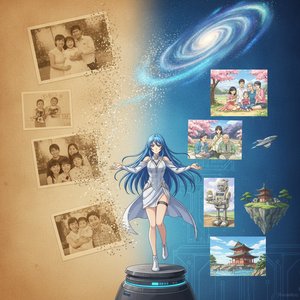
Step into the spotlight with WahooArt's AI-driven transformation. Turn your photos into stunning, hand-painted anime oil masterpieces. Experience the perfect fusion of cutting-edge technology and museum-grade craftsmanship to create a timeless pop-culture legacy for your home.
 Voorvertoning
 Verstuur
 Delen
Delen
 Details bekijken
 Gids
Gids

 Download
 Vergelijkbare items
 Röntgenonderzoek
 Diavoorstelling
 Vraag & antwoord
 Statistieken

 Lees meer









 De optie voor glas is alleen beschikbaar bij een formaat kleiner dan 110 cm.


