

Giclée- of canvasafdruk van museumkwaliteit met een snelle productie en flexibele afwerkingsmogelijkheden. ( Bestel handgeschilderde reproductie Schakel over naar digitale afbeeldingen)





























Kies uit onze vooraf ingestelde maten die overeenkomen met de originele verhoudingen van het kunstwerk.

Voer de gewenste breedte en hoogte in, passend bij uw lijst of muur. Een afdruk kan alleen worden ingekort en nooit groter worden gemaakt dan het origineel; een formaat met andere verhoudingen zal daarom een deel van de afbeelding verliezen. Wij sturen u een digitaal mockup ter goedkeuring voordat we tot drukwerk overgaan. De afbeelding op deze pagina toont niet de werkelijke uitsnede — dit is alleen te zien op het mockup.
Wereldwijde levering () binnen 2 weken in plaats van de standaard 4/5 weken. (8 november)
The Lacemaker
Afmetingen reproductie
In the quiet corners of the Dutch Golden Age, there exists a profound beauty found not in grand spectacles, but in the rhythmic, meditative pulse of everyday life. The Lacemaker serves as a breathtaking window into this era of domestic tranquility. The painting captures a young woman lost in the delicate, painstaking labor of her craft, her focus so absolute that the world around her seems to dissolve into a soft, atmospheric haze. As she sits before her work, the viewer is invited to share in her solitude, experiencing a moment of stillness that feels both timeless and deeply intimate. This is not merely a portrait of a worker; it is an invitation to appreciate the dignity found in concentration and the quiet grace of a life lived with purpose.
The composition is a masterclass in the fijnschilder style, a technique synonymous with the legendary Dutch masters of Leiden. Every inch of the canvas vibrates with meticulous detail, from the intricate patterns of the lace to the heavy, tactile presence of the crimson and black patterned cloth draped across the table. The artist employs a sophisticated use of light—a soft, diffused glow that seems to emanebate from an unseen window, casting gentle shadows that lend a remarkable three-dimensionality to the scene. This subtle manipulation of luminosity creates a sense of depth, pulling the viewer into the room and making the textures of fabric, porcelain, and skin feel almost touchable. For the discerning collector or interior designer, this level of technical brilliance offers a piece that commands attention through its subtlety rather than through loud, jarring colors.
Beyond its surface beauty, The Lacemaker is rich with the symbolic language of the 17th century. The act of lacemaking itself was often viewed as a metaphor for virtue, patience, and the careful weaving of one's destiny. The woman’s composed posture and downward gaze reflect a sense of moral fortitude and intellectual engagement, suggesting that even the most humble domestic tasks can be elevated to an art form. The presence of the mirror on the table adds a layer of introspective depth, reflecting her image back to us and creating a psychological loop that emphasizes themes of self-reflection and the duality of public duty versus private thought.
The color palette is intentionally balanced to evoke a sense of calm yet sophisticated elegance. The vibrant red of the tablecloth provides a striking counterpoint to the muted, pearlescent tones of the woman’s attire, ensuring that the eye is drawn naturally toward her hands—the very site of her creative struggle and triumph. This careful orchestration of color and light makes the painting an ideal centerpiece for a curated space, offering a sense of historical weight and refined taste. Whether placed in a sunlit study or a more formal gallery setting, a high-quality reproduction of this masterpiece brings with it an aura of serenity and a profound connection to the enduring legacy of Dutch excellence.
Het Portrait-formaat van "The Lacemaker" door Frans van Mieris wordt aanbevolen voor een Living Room. Formaat en ruimte samen bepalen de ideale plaatsing van een reproductie.
De emotionele toon die is vastgelegd voor "The Lacemaker" door Frans van Mieris is Calm. Het vat het gevoel samen dat het werk uitdrukt.
"The Lacemaker" door Frans van Mieris heeft een Muted verzadiging.

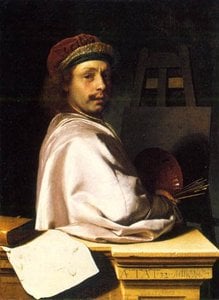
1635 - 1681 , Nederland

Explore the profound brilliance of the Dutch Golden Age. Discover how unprecedented prosperity birthed a revolution of light, realism, and everyday beauty, creating timeless masterpieces that continue to inspire the world's most discerning art collectors.
Embark on a journey through the Dutch Golden Age. Discover how masters like Rembrandt and Vermeer used chiaroscuro to manipulate light and shadow, creating timeless depth and spiritual resonance in art history's most captivating masterpieces.

Embark on a sophisticated journey through the Dutch Golden Age. Unveil the dramatic brilliance of Rembrandt’s chiaroscuro and the expressive landscapes of 17th-century masters in this authoritative exploration of light, shadow, and enduring artistic legacy.
 Voorvertoning
 Verstuur
 Delen
Delen
 Details bekijken
 Gids
Gids

 Download
 Vergelijkbare items
 Röntgenonderzoek
 Diavoorstelling
 Vraag & antwoord
 Statistieken


 Lees meer









 De optie voor glas is alleen beschikbaar bij een formaat kleiner dan 110 cm.


