Een Leven in Viscerale Intensiteit
Francis Bacon, een naam die synoniem staat voor de meest rauwe emotionele expressie in de kunst van de 20ste eeuw, werd geboren in Dublin, Ierland, in 1909. Zijn ware artistieke roeping vond echter haar vervulling in het turbulente landschap van het naoorlogse Groot-Brittannië. Een onzekere jeugd, gekenmerkt door frequente verhuizingen vanwege de gezondheid van zijn moeder, zaaide een gevoel van ontworteling dat diepgaand zijn wereldbeeld zou beïnvloeden en uiteindelijk zijn doeken zou doordringen. Een complexe relatie met zijn strenge vader en een hechte band met zijn kindermeisje, Jessie Lightfoot, kleurden de emotionele sfeer van zijn vormende jaren verder. Aanvankelijk aangetrokken door paardenraces en een leven vol gokken, zwierf Bacon rond voordat hij zich eind twintig volledig aan de schilderkunst wijdde – een late start die misschien juist de urgentie en intensiteit van zijn latere werk versterkte. Hij ontving geen formele opleiding, maar smidde zijn eigen pad, absorbeerde invloeden uit diverse bronnen en ontwikkelde een uniek onrustwekkende visuele taal.
De Crucible van Vroege Invloeden
Bacons artistieke ontwaken was niet direct, maar eerder een geleidelijke accumulatie van indrukken. Het werk van Pablo Picasso, met name de vervormde figuren uit zijn vroege Kubistische periode, bleek cruciaal bij het bevrijden van hem van traditionele representatie. Verdere inspiratie vond hij in de spookachtige fotografie van Egon Schiele, wiens expressieve vervormingen van de menselijke vorm resoneerden met Bacons eigen opkomende fascinatie voor de fragiliteit en kwetsbaarheid van het bestaan. Een toevallige ontmoeting met Sergei Eisensteins film *Pantserkruiser Potemkin* bleek echter een cruciale katalysator te zijn. De viscerale beelden uit de film, in het bijzonder een close-up van een schreeuwend gezicht, werd een blijvend motief in Bacons werk, dat oerangst en de diepten van menselijk lijden vertegenwoordigde. Hij bewonderde ook de Oude Meesters, met name Diego Velázquez, wiens *Portret van Paus Innocentius X* hij beroemd zou herinterpreteren gedurende zijn carrière, waarbij hij de autoritaire pausfiguur transformeerde in een gekwelde schim. Deze invloeden waren niet louter stilistische appropriaties; ze werden geabsorbeerd en getransmuteerd door Bacons eigen unieke gevoeligheid, wat resulteerde in een artistieke visie die zowel diep persoonlijk als universeel resonerend was.
Het Smeden van een Eigen Stijl: Vervorming en Isolatie
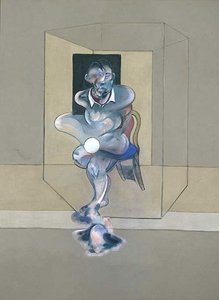
Bacons doorbraak kwam met *Drie studies voor figuren aan de voet van het kruis* (1944), een werk dat schokte en betoverde in het naoorlogse Londen. Dit triptiek vestigde zijn kenmerkende stijl – vervormde, gefragmenteerde figuren geïsoleerd binnen claustrofobische ruimtes. Het waren geen afbeeldingen van religieuze martelaarschap, maar eerder viscerale verkenningen van menselijk leed, ontdaan van enig troostend narratief of spirituele troost. Zijn schilderijen kenmerken zich vaak door vage of oplossende vormen, die een gevoel van psychische onrust en fysieke kwetsbaarheid overbrengen. Hij gebruikte frequent geometrische structuren – kooien, dozen – om zijn onderwerpen te omsluiten, waardoor hun isolatie en machteloosheid werd benadrukt. Bacons palet was doorgaans gedempt en somber, wat de donkere thema's die hij verkende weerspiegelde, hoewel doorspekt met uitbarstingen van intense kleur die de emotionele impact versterkten. Het gebruik van deze kooien was niet louter een compositorisch hulpmiddel; het symboliseerde de inherente beperkingen en dwang die aan het menselijk bestaan werden opgelegd. Hij zocht naar het vastleggen van niet alleen *hoe* dingen eruitzagen, maar *hoe ze voelden*, door innerlijke toestanden van angst, vrees en wanhoop met brute eerlijkheid op het canvas te vertalen.
Thema's van Sterfelijkheid, Kwelling en de Menselijke Conditie
Gedurende zijn productieve carrière keerde Bacon herhaaldelijk terug naar bepaalde motieven: de kruisiging als symbool van lijden; portretten die in de psychologische intensiteit van zijn onderwerpen doordrongen, vaak vrienden en geliefden zoals George Dyer; en zelfportretten die dienden als introspectieve verkenningen van identiteit en sterfelijkheid. Zijn *Studie naar Velázquez’s Portret van Paus Innocentius X* (1953) serie is misschien wel een van zijn meest iconische prestaties, waarbij hij Velázquez' waardige portret transformeerde in een schreeuwende verschijning, die existentiële angst belichaamde. De portretten van George Dyer, zijn volatiele geliefde, zijn bijzonder ontroerend, en vangen zowel de intensiteit van hun verbinding als de dreigende schaduw van tragedie vast. Bacons werk ging niet over het afbeelden van specifieke individuen; het ging om het verkennen van universele thema's van menselijke kwetsbaarheid, isolatie en de onvermijdelijkheid van de dood. Hij schuwde de donkere aspecten van het bestaan niet, maar confronteerde ze rechtstreeks, waardoor kijkers gedwongen werden hun eigen sterfelijkheid en angsten onder ogen te zien.
Een Blijvende Erfenis: Het Uitdagen van Conventies
Francis Bacons impact op de kunst van de 20ste eeuw is onmiskenbaar. Hij daagde traditionele noties van representatie uit, verwierp geïdealiseerde schoonheid ten gunste van een rauwe, compromisloze weergave van de menselijke conditie. Zijn werk heeft generaties kunstenaars diepgaand beïnvloed en de weg geëffend voor nieuwe vormen van expressie en het uitdagen van conventionele artistieke grenzen.
- Naoorlogse Expressionisme: Bacon wordt beschouwd als een sleutelfiguur in deze beweging, die kunstenaars beïnvloedt met zijn gedurfde stijl en psychologische diepgang.
- Veilingrecords & Museumtentoonstellingen: Zijn schilderijen blijven hoge prijzen opleveren op veilingen en worden tentoongesteld in grote musea over de hele wereld, waardoor zijn plaats in de kunstgeschiedenis wordt verstevigd.
- Het confronteren van Waarheden: Bacons erfenis ligt in zijn vermogen om ongemakkelijke waarheden over het menselijk bestaan te confronteren en die ervaringen te vertalen in krachtige en onvergetelijke beelden.
Ondanks een turbulent persoonlijk leven, gekenmerkt door gokken, drinken en complexe relaties, bleef hij toegewijd aan zijn kunst tot zijn dood in 1992. Hij liet een oeuvre achter dat nog steeds resoneert met het publiek van vandaag, en ons eraan herinnert hoe fragiel het bestaan is en de blijvende kracht van kunst om de donkerste hoeken van de menselijke ziel te confronteren.
Zijn schilderijen zijn niet louter beelden; ze zijn viscerale ervaringen – een getuigenis van de aanhoudende kracht van kunst om te provoceren, te verontrusten en uiteindelijk, de complexiteit van het menselijk zijn te verlichten.



 Bekijk op ware grootte
 Koop handgeschilderd kunstwerk
 Verstuur
 Delen
Delen
 Details bekijken
 Gids
Gids

 Download
 Vergelijkbare items
 Röntgenonderzoek
 Diavoorstelling
 Statistieken

 Lees meer






































 De optie voor glas is alleen beschikbaar bij een formaat kleiner dan 110 cm.